On a small Indonesian island, forty-four women are restoring reefs
Location
Gili Air, Indonesia
Year
2026
Coral Catch is doing something simple and radical: removing the barriers that kept Indonesian women out of marine conservation, and letting the reef do the rest.
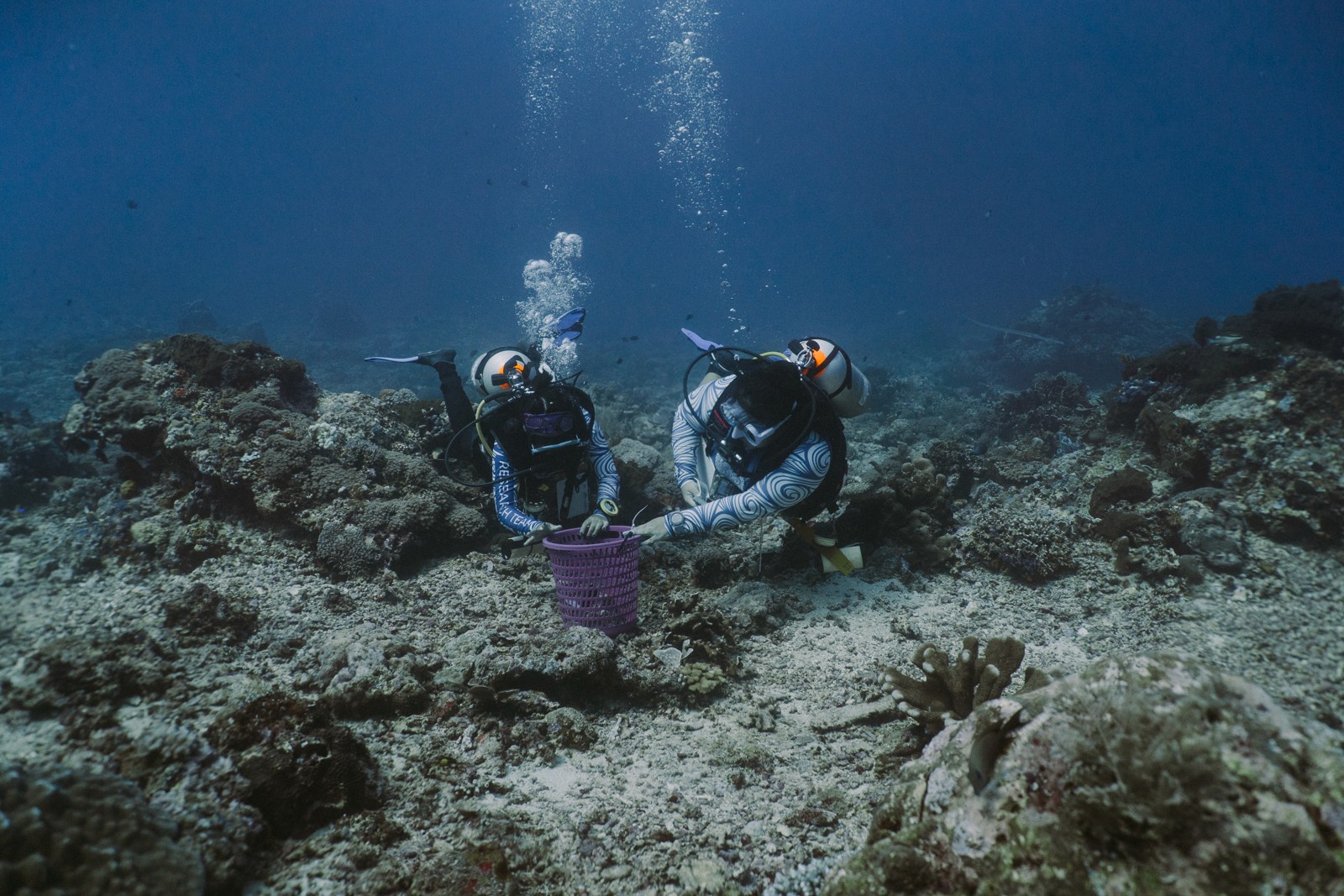
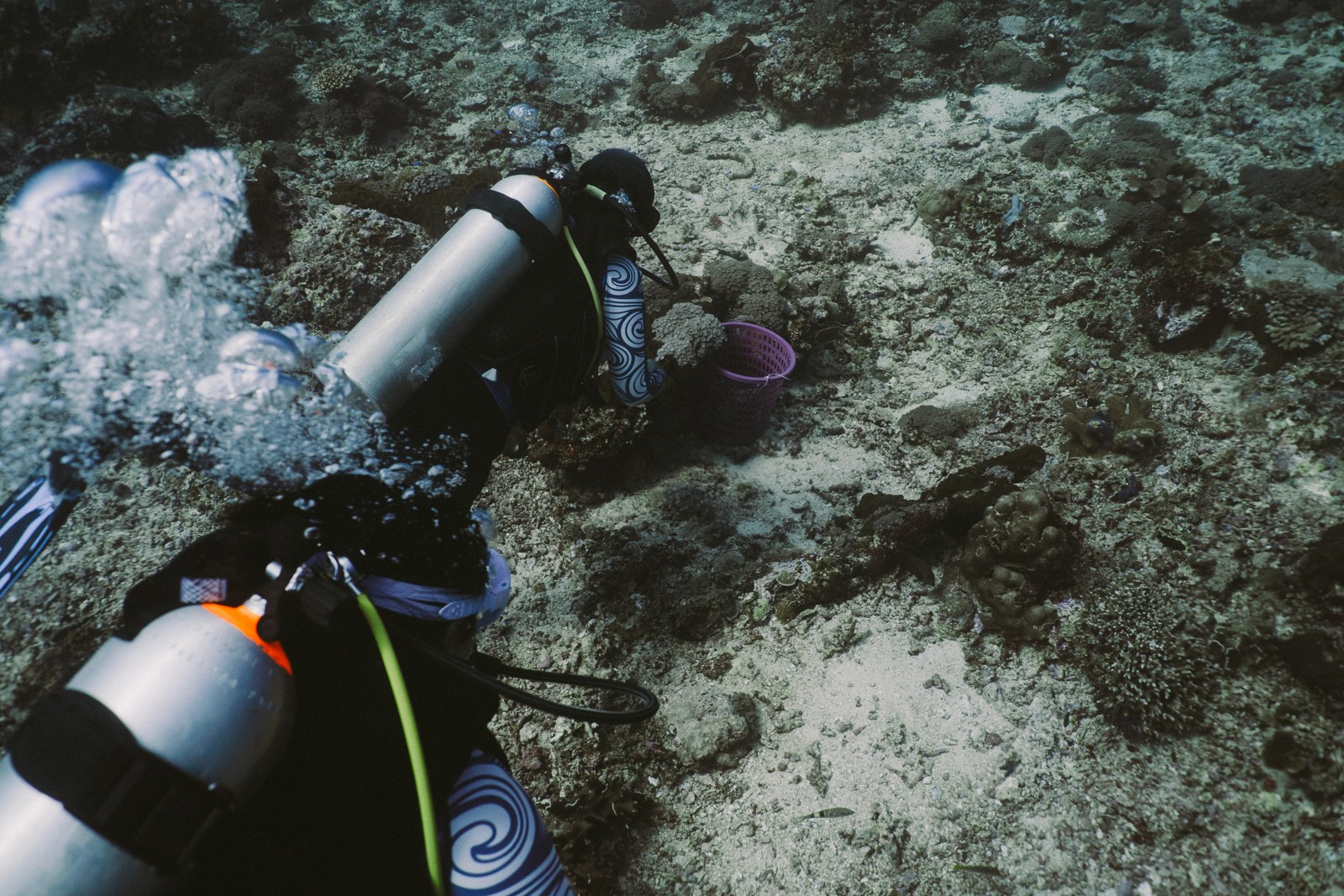
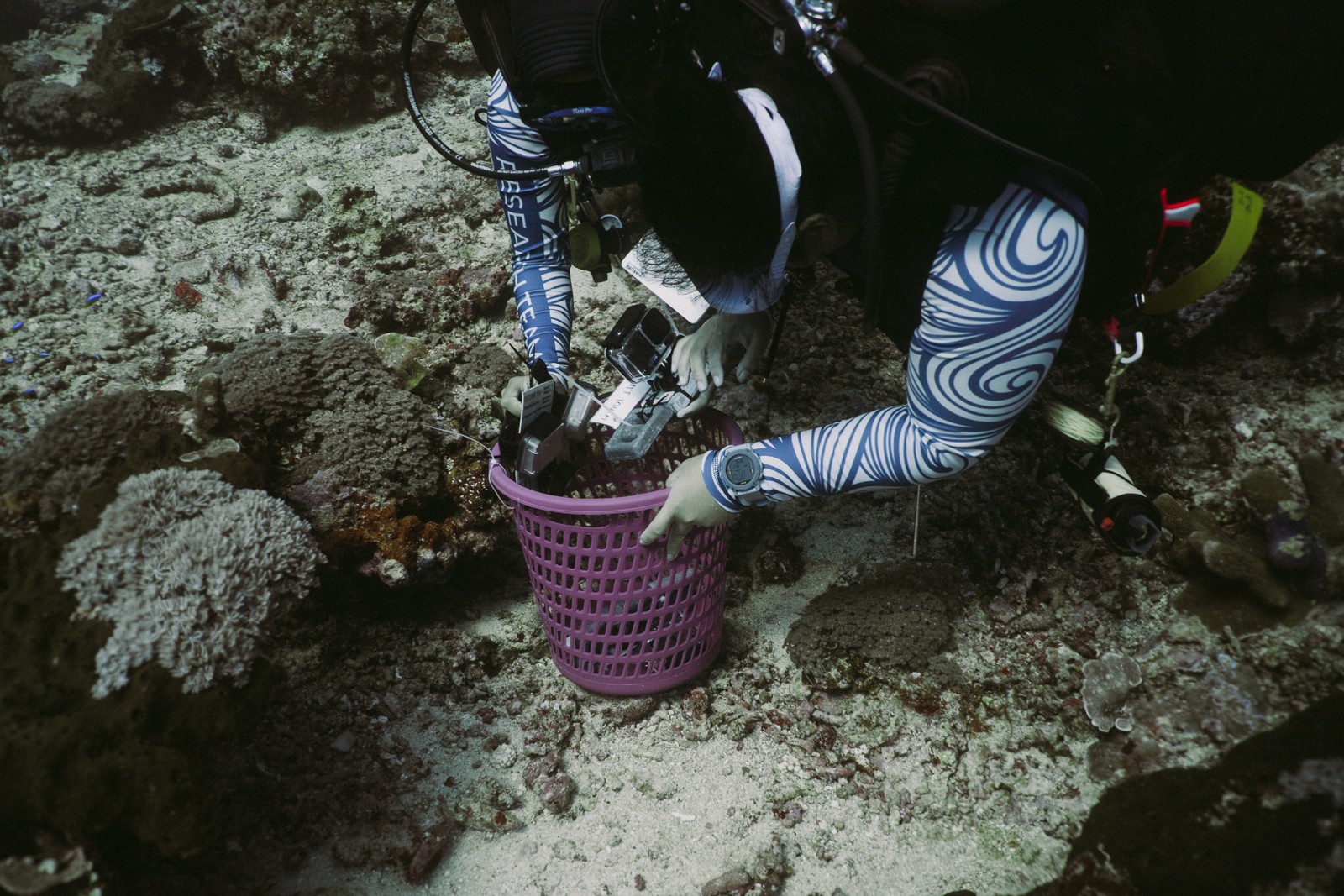
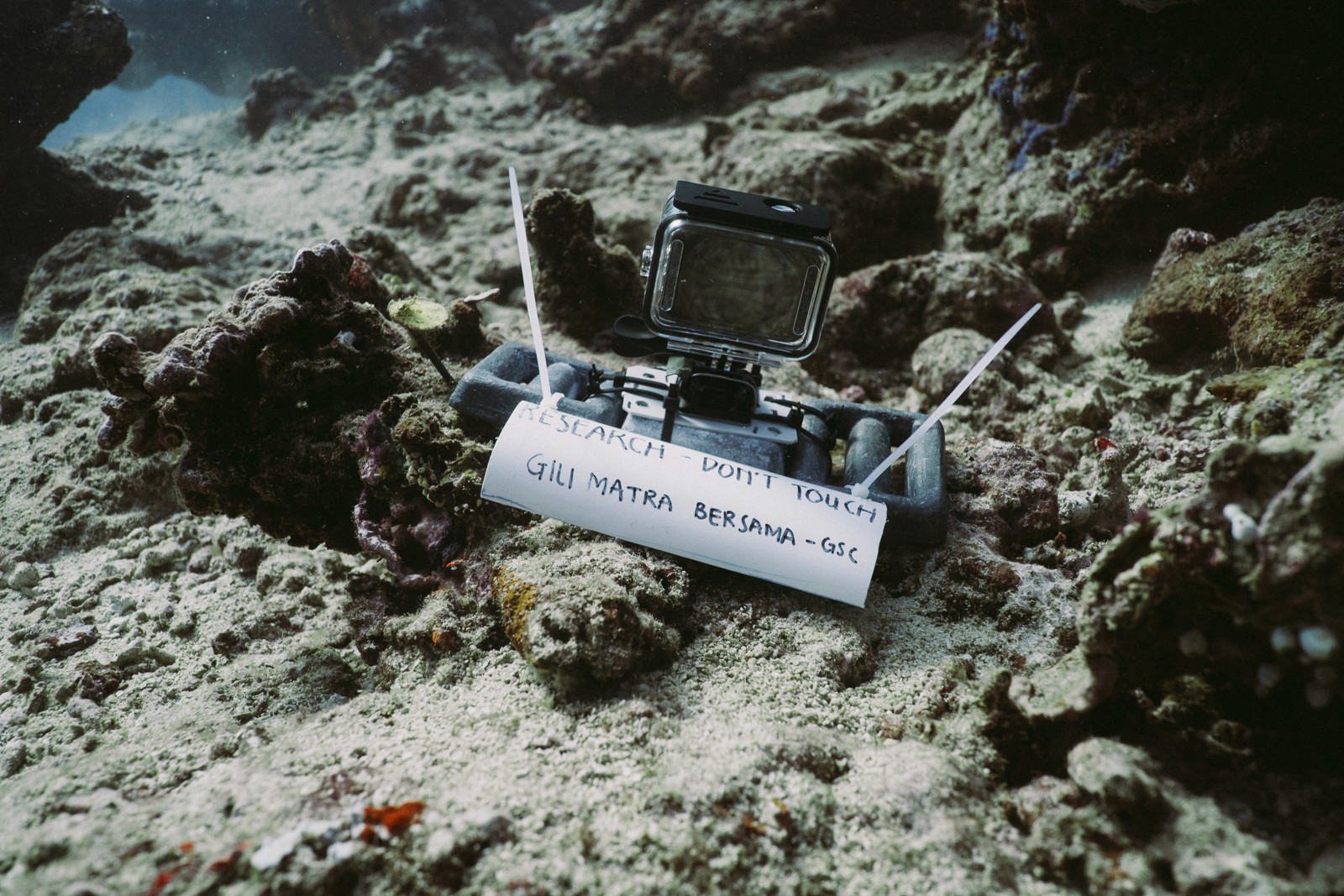
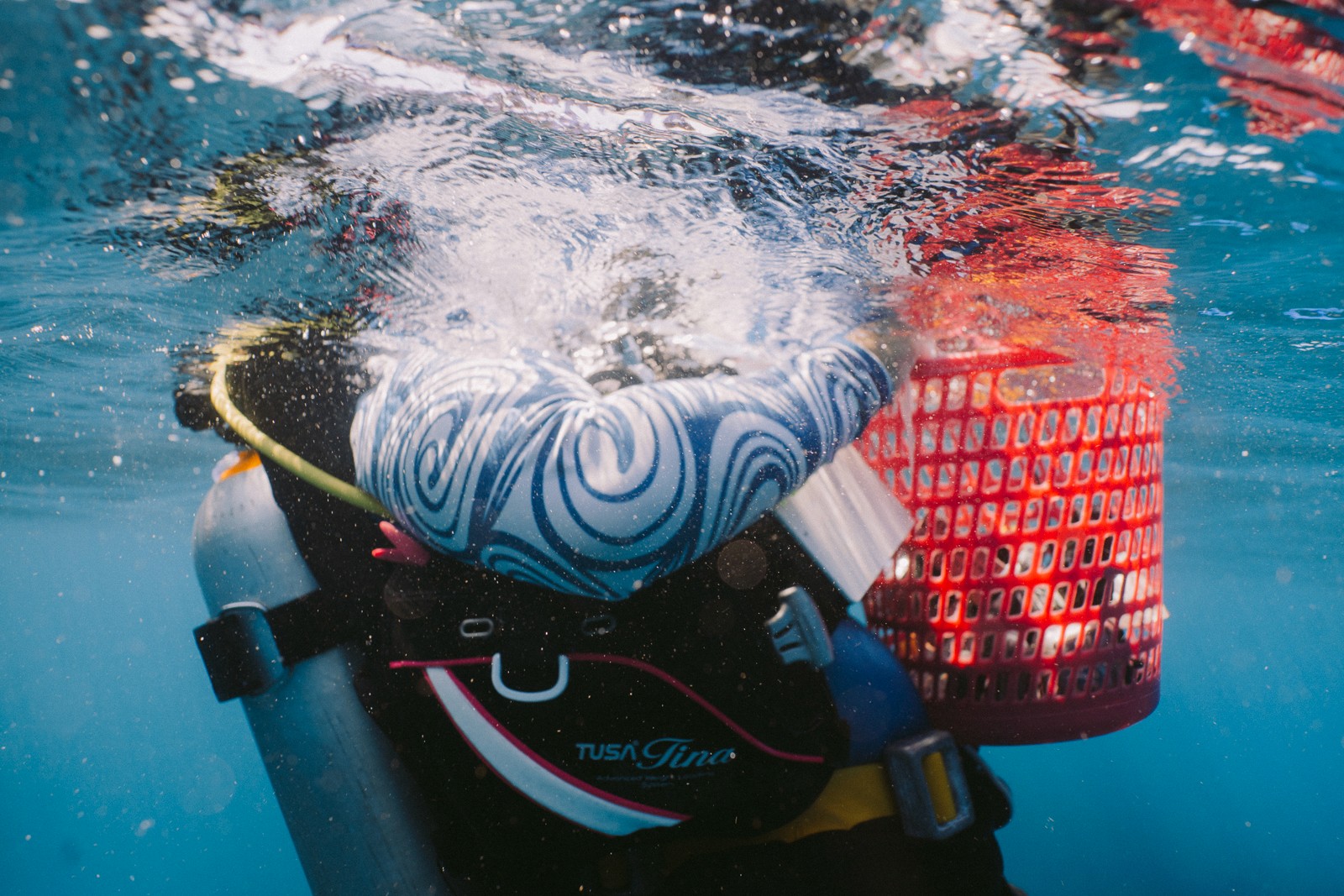
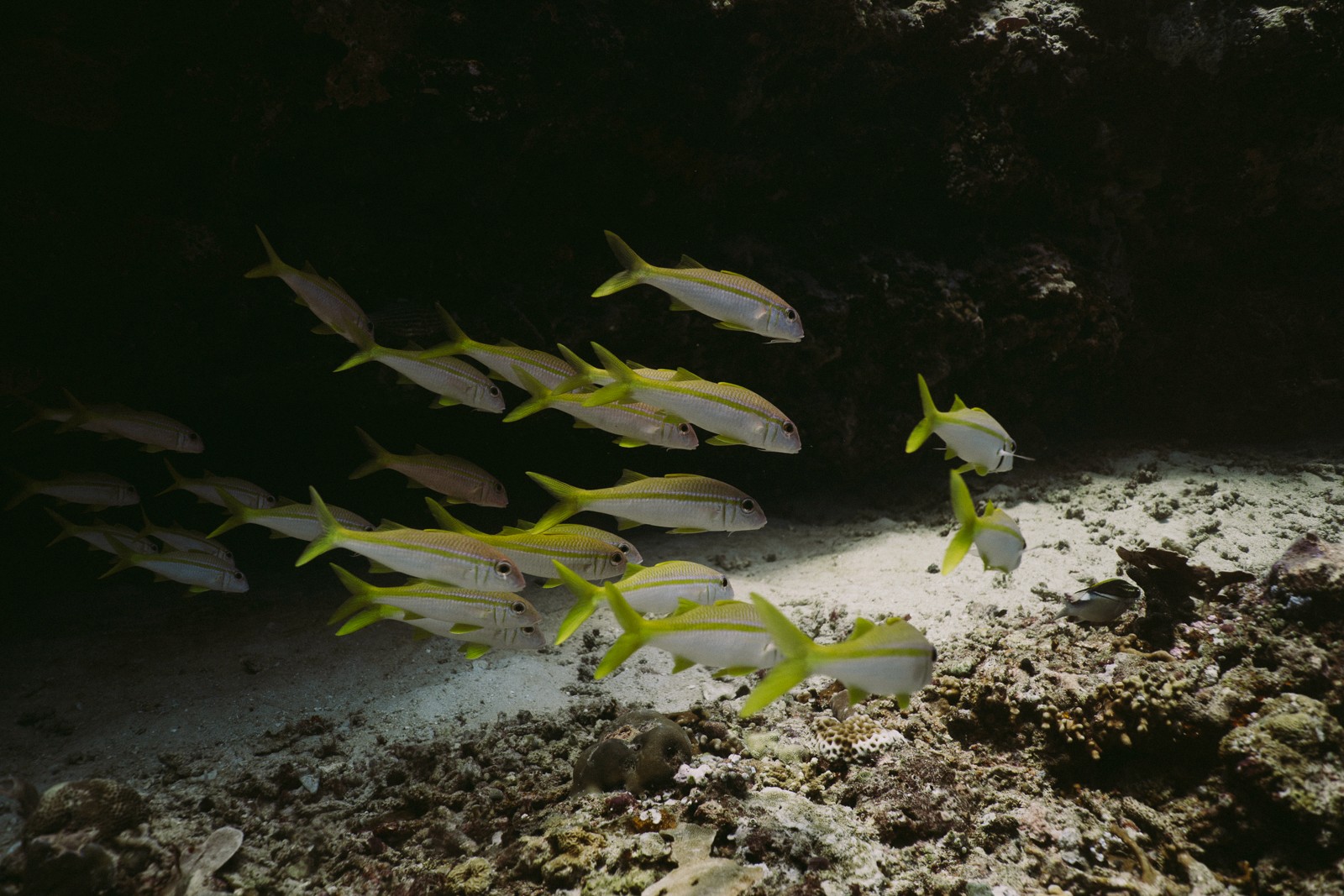
The boat cuts through the water, the day so clear it seems unreal. Coral Catch and Gili Shark Conservation teams together, heading to the shark nursery area off Gili Trawangan. As we drop into the ocean, some meters below, three of the women move as if they own the place. Tania, Abel and Ina lead us straight to the cave. They know this site like the backs of their hands. The bucket they carry holds their research gear: two GoPros, each weighted for the seafloor. They swim decisively towards the cave, leave the bucket and start retrieving the previous gear. Around them, white-tip reef sharks rest in their caves. The cameras will stay here for one hour, recording every diver who comes too close, every flash that fires, every hand that grabs the reef. This is research. This is also protection.
On busy mornings at Shark Point, dive boats gather above as divers descend to visit the sharks resting below. Increased tourism activity around the site, from crowding near the cave entrance to constant camera flashing, is exactly what Tania’s camera traps and acoustic recorders are designed to study. Her research aims to better understand the impact of tourism on shark behavior and provide recommendations to help protect the site for the future.
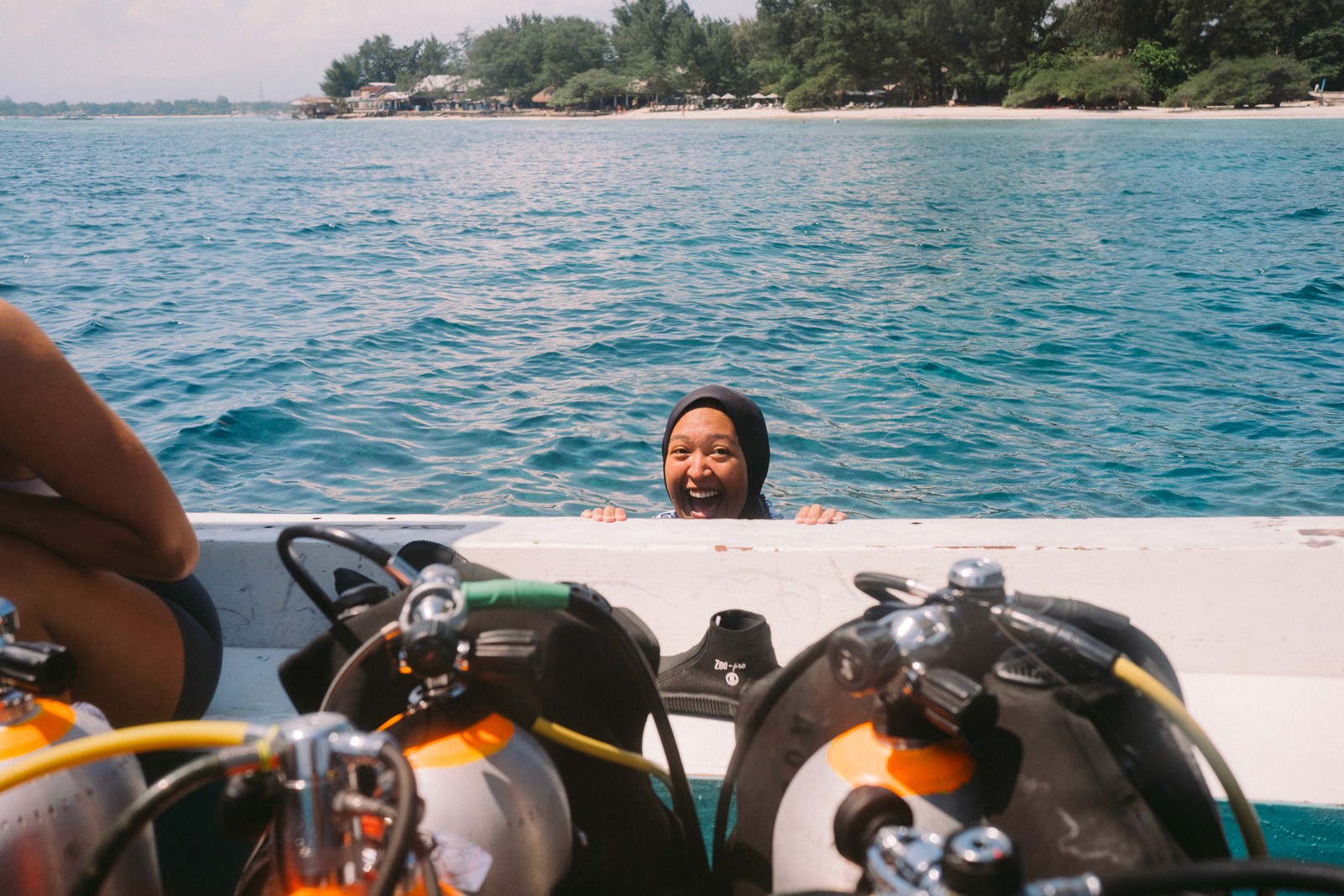
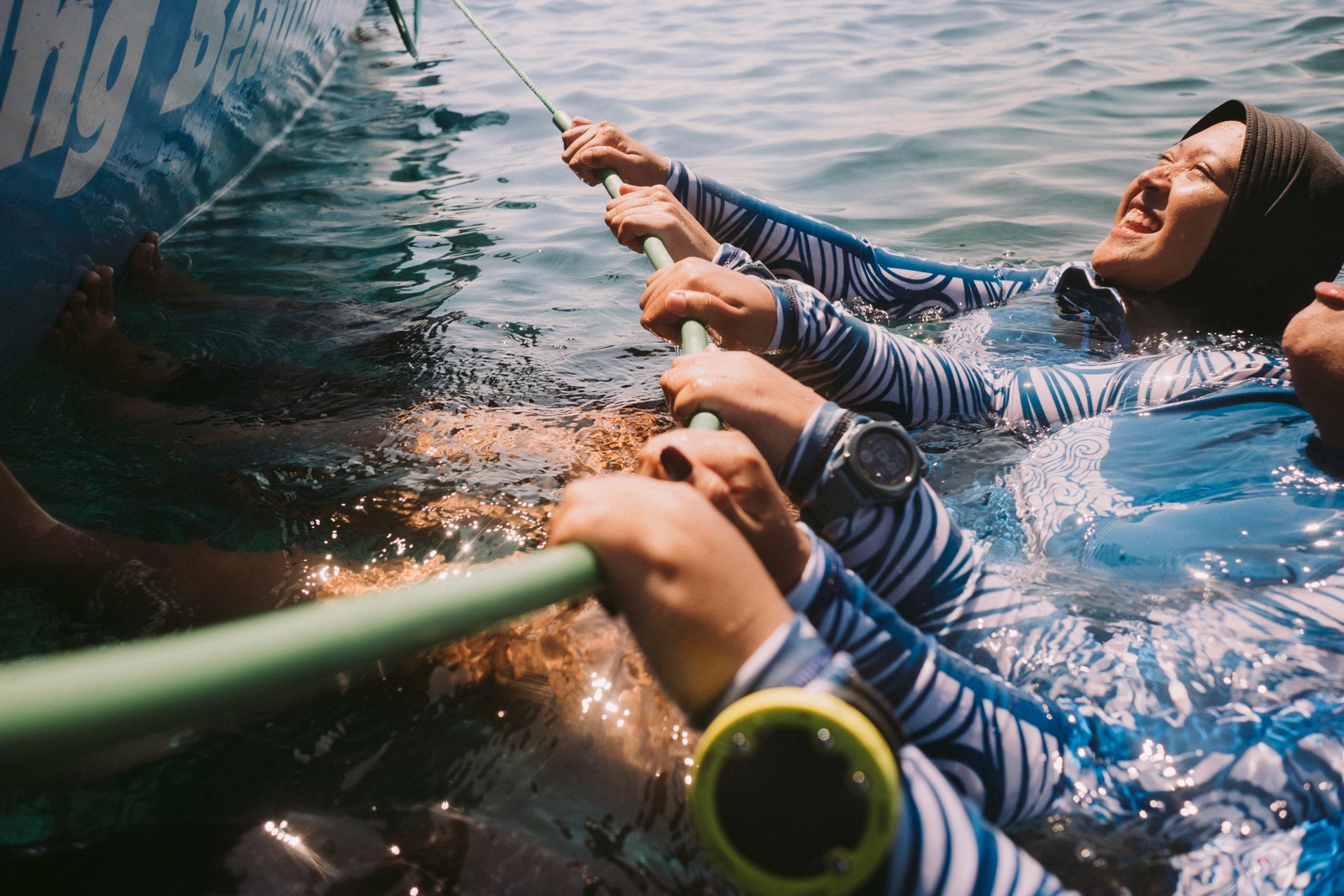
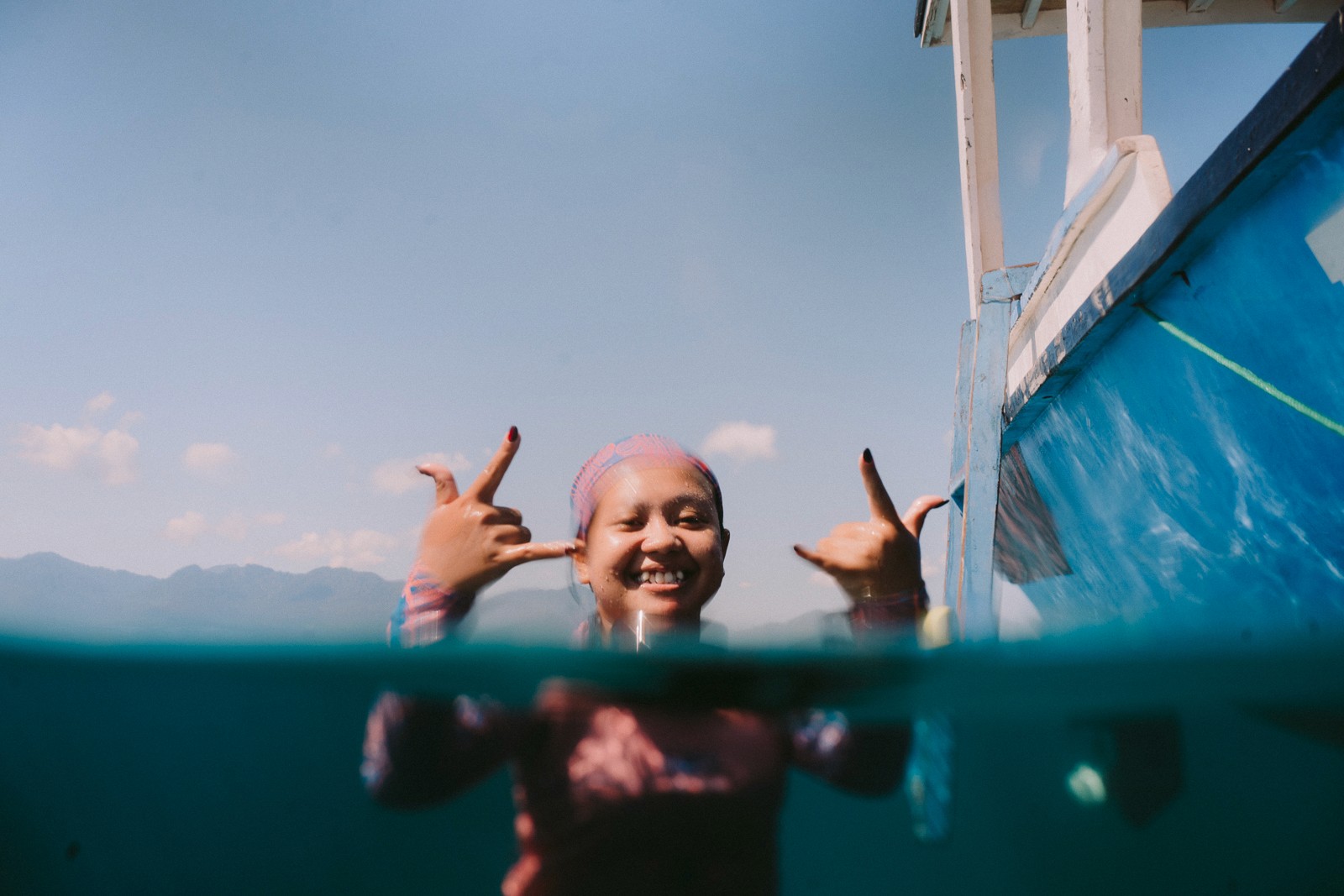
Back on the surface, between dives, the women jump from the boat rail into the clear water, laughing. The sun is high, some of us hiding from it, the island green behind them. This is work, but it's also the kind of work that feels like a gift. Five years ago, none of them imagined they’d be here. “You won’t be alone” Tania says later, when I ask what she'd tell her younger self. "That's what Coral Catch empowered me. You would feel alone (when starting this career), but with the right people around, with the right mindset, with the right heart and motivation, you will figure it out. You don't have to be worried.”
Tania arrived on Gili Air in January 2025 with a clear goal: become a marine researcher. She grew up in Tangerang, a city far from the ocean. But her parents made sure she experienced nature anyway: aquariums, safaris, National Geographic documentaries together. "We were exploring together, learning together," she says. It was their first time too.
Nine weeks later, Tania walked out a scientific diver. Now she leads shark research monitoring how tourism pressure affects white-tipped reef sharks, mentors new batches, and holds a grant from Save Our Seas Foundation. The confidence was always there. She just needed permission to own it.
Rose Huizenga arrived on Gili Air twelve years ago as a PADI scuba instructor. She looked around and saw two problems at once: coral reefs were slowly disappearing, and the entire marine conservation sector with almost no Indonesian women in it. Not just here. Across the country.
In 2021, Rose did something that felt a little crazy at the time. She put out an open call across Indonesia asking: who wants to receive a fully funded coral restoration scholarship to learn how to dive, restore coral reefs, and eventually set up and monitor their own restoration project?
What started as a simple idea quickly turned into something much bigger. Applications began pouring in, and not long after, Rose welcomed Aulia, Cynthia, Qinthan, and Delya to Gili Air — the four women who would become Coral Catch’s very first scholarship batch.
Five years later, Coral Catch has trained 44 women through its nine-week scholarship program. Three batches of four women per year, fully funded. Scientific Diving certification, food allowance, accommodation, materials, all covered. The economic barrier, the biggest one, had been removed entirely.
But it's not just dive training. The curriculum includes masterclasses on everything from coral disease identification to project management to the question everyone asks: How do you get the money? Women learn to collect data, analyze it, present it. They build coral structures with their own hands. And perhaps most importantly, they learn to see themselves as leaders.
"It's not just making conservationists and practitioners," Clara Proutheau, Coral Catch's Head of Operations and Strategy, explains. "It's making women gain confidence, own conservation projects, own the fact that they are stewards of the environment. They can really have an impact on the ground."
The transformation is visible. First day versus last day, nine weeks later they're not the same women. Not because they've changed, but because the barriers have been removed.
Cenna knows this transformation from both sides. She was Batch #2, back in 2022. Now she's the program manager, the one designing those masterclasses, welcoming nervous women on their first day, watching them step into themselves by week nine.
Her family didn't understand the pull toward the ocean. "Why do you want to go in there?" they asked. "It's dangerous. Your skin will get dark." In Surabaya, where she grew up, the ocean wasn't part of anyone's life. Women especially.
But Cenna had seen an alumni webinar in 2022, a Coral Catch graduate presenting her work, and thought: “That's my place.” She applied. Got in.
On her second day, Rose Huizenga, the founder of Coral Catch, led an exercise. She drew a line across the floor. Yes on one side, no on the other.
"Who likes spicy food?" Everyone shuffled, laughing. "Who felt like they've been a disappointment to their parents?" The room went quiet. Everyone moved to yes. "Who felt like they want to achieve something but they cannot?" Yes again. All of them. Rose pulled Cenna forward. "Who do you see?" "Everyone." "Exactly. Because you're human, you feel, and because you have a dream. That's totally normal." The relief in the room was palpable. Everyone felt recognised.
"The problem amongst women," Cenna says now, "we compare ourselves. It's exhausting." She learned something that day: the barriers weren't inside her. They were structural. Social. Learned. And they could be unlearned. "Limiting beliefs all this time. But I can do what genuinely feels right while still holding myself accountable. Coral Catch gave me the space to become who I was supposed to become."
But Cenna's path to Coral Catch hadn't been straightforward. When she got to university, she joined the diving club and loved it. She applied for several enumerator project assistant positions but kept getting declined — they chose candidates with more field experience. It stung. But she didn't let it stop her. She joined a research project and discovered she loved lab work. The precision of it. The questions it could answer. But she missed diving. When Coral Catch opened applications, she went for it. Got in. After graduating, she worked at a sustainable fisheries and community development project, bringing together everything she loved: diving, teaching, and women empowerment.
"We can inspire others even when we don't intend to," Cenna says. She thinks about the friend who told her she felt like a failure for applying to many things and only getting one. "I said: I never failed in anything because I never applied. You apply to lots of things and get one, that's a great achievement." She pauses. "When you see the opportunity, just go for it. Don't think too much. Just try, try, try. The more you try, the more doors open."
Her proudest moment isn't her own research. It's watching the women she mentors. Like Dania, a local girl from Gili Air who went through Coral Catch, who received two grants to become a divemaster then instructor and proceeded with her summer camp: teaching locals in diving and conservation.
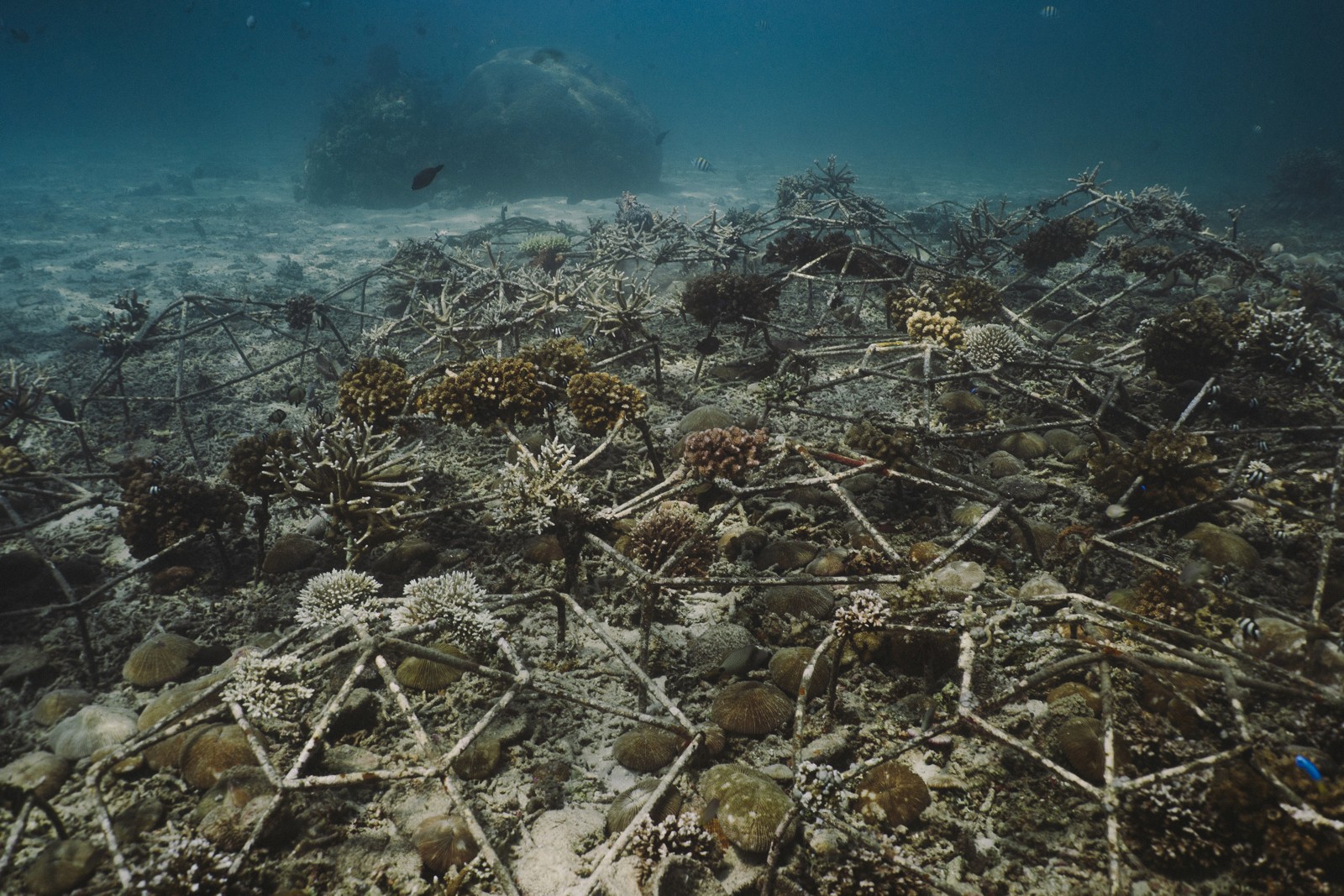
This is the mindset that built what I'm about to see underwater: a thriving coral garden where there was once only rubble.
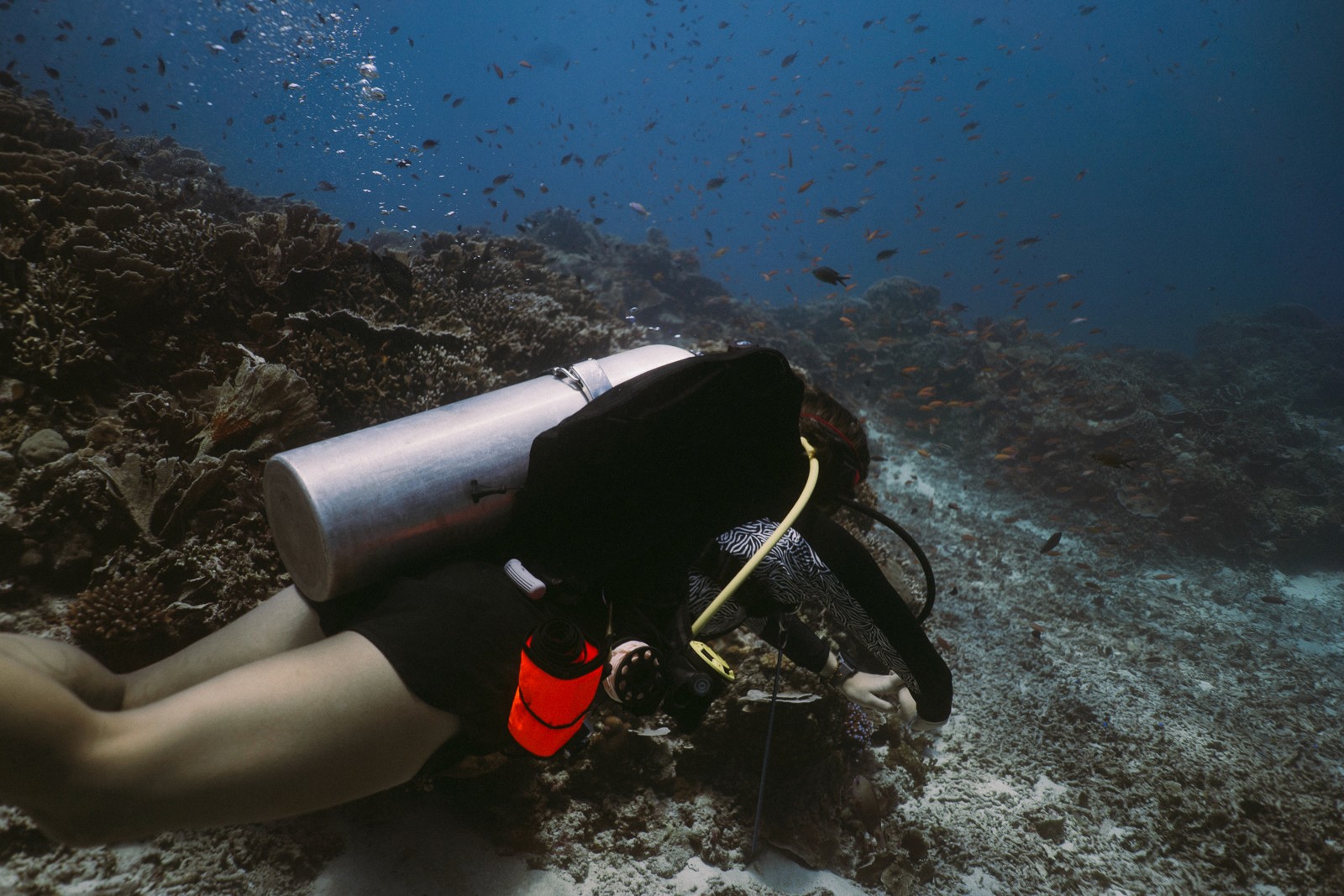
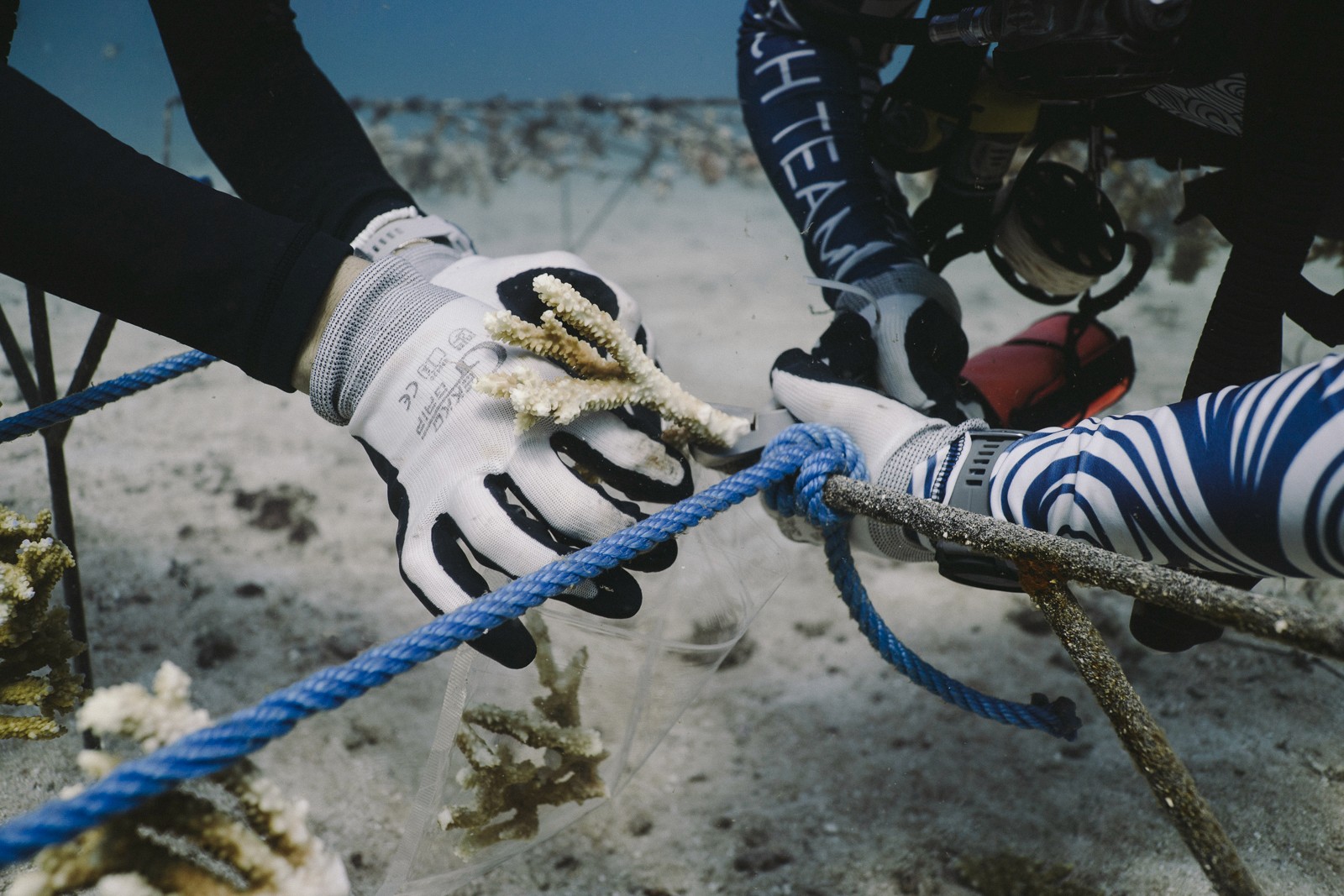
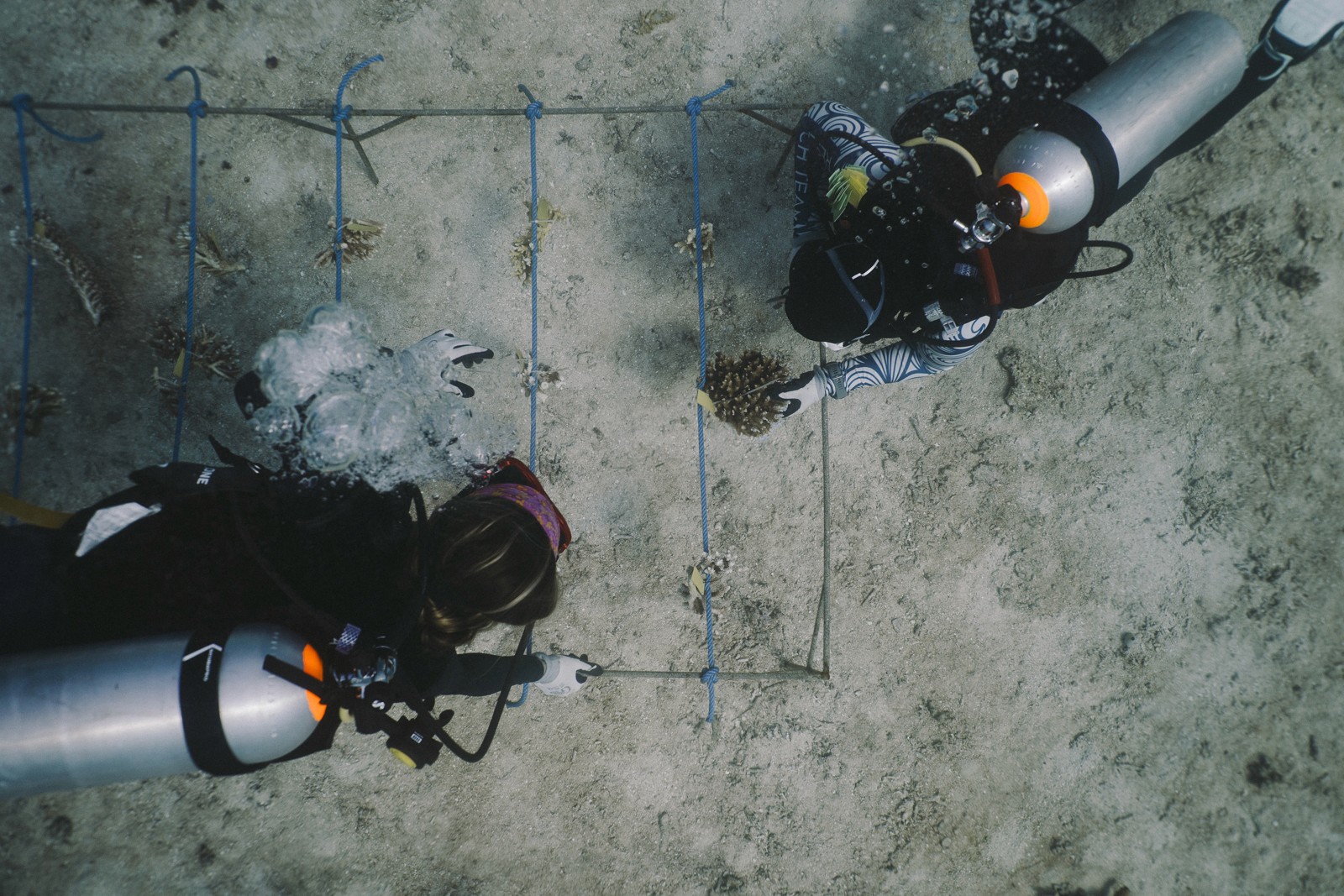
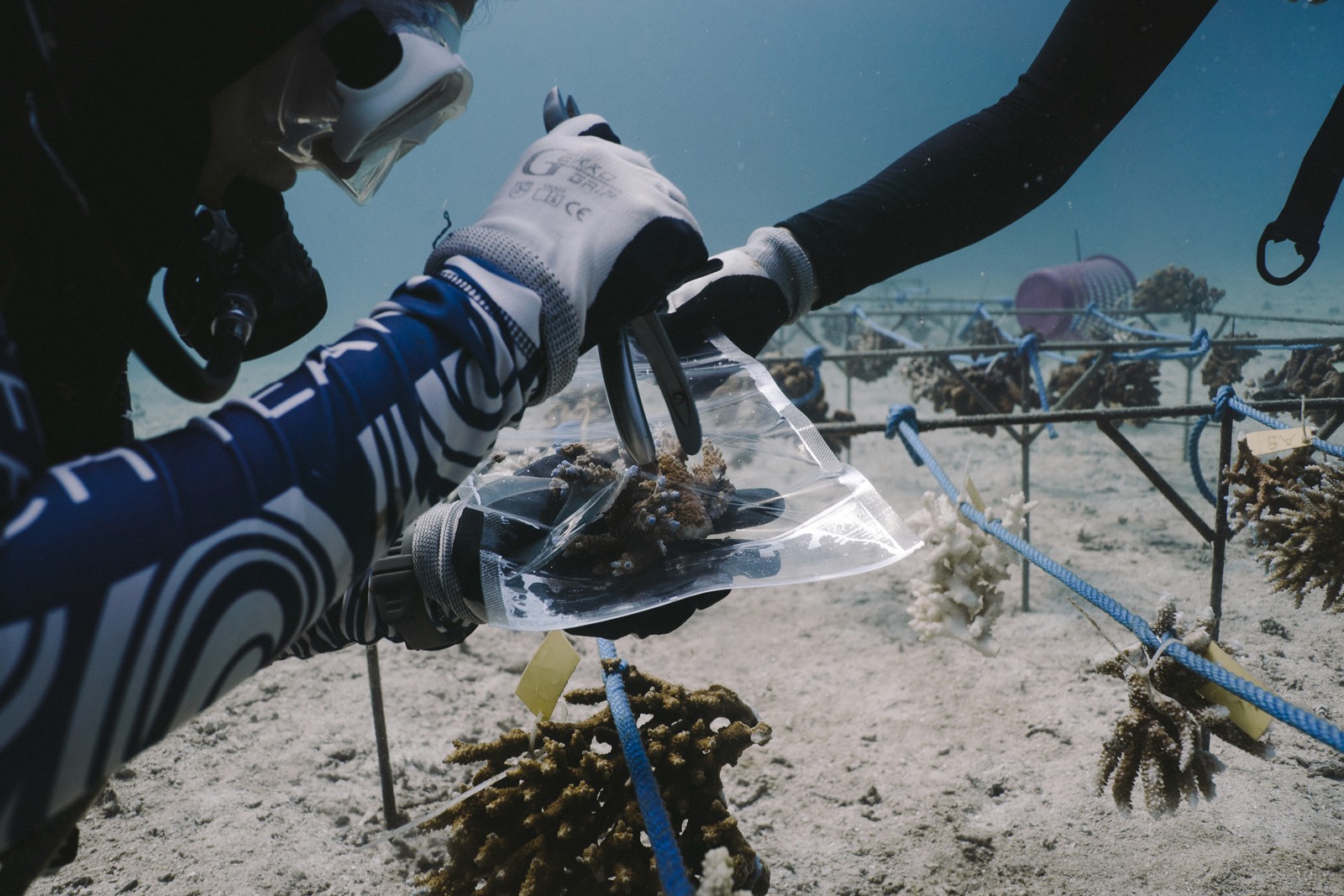
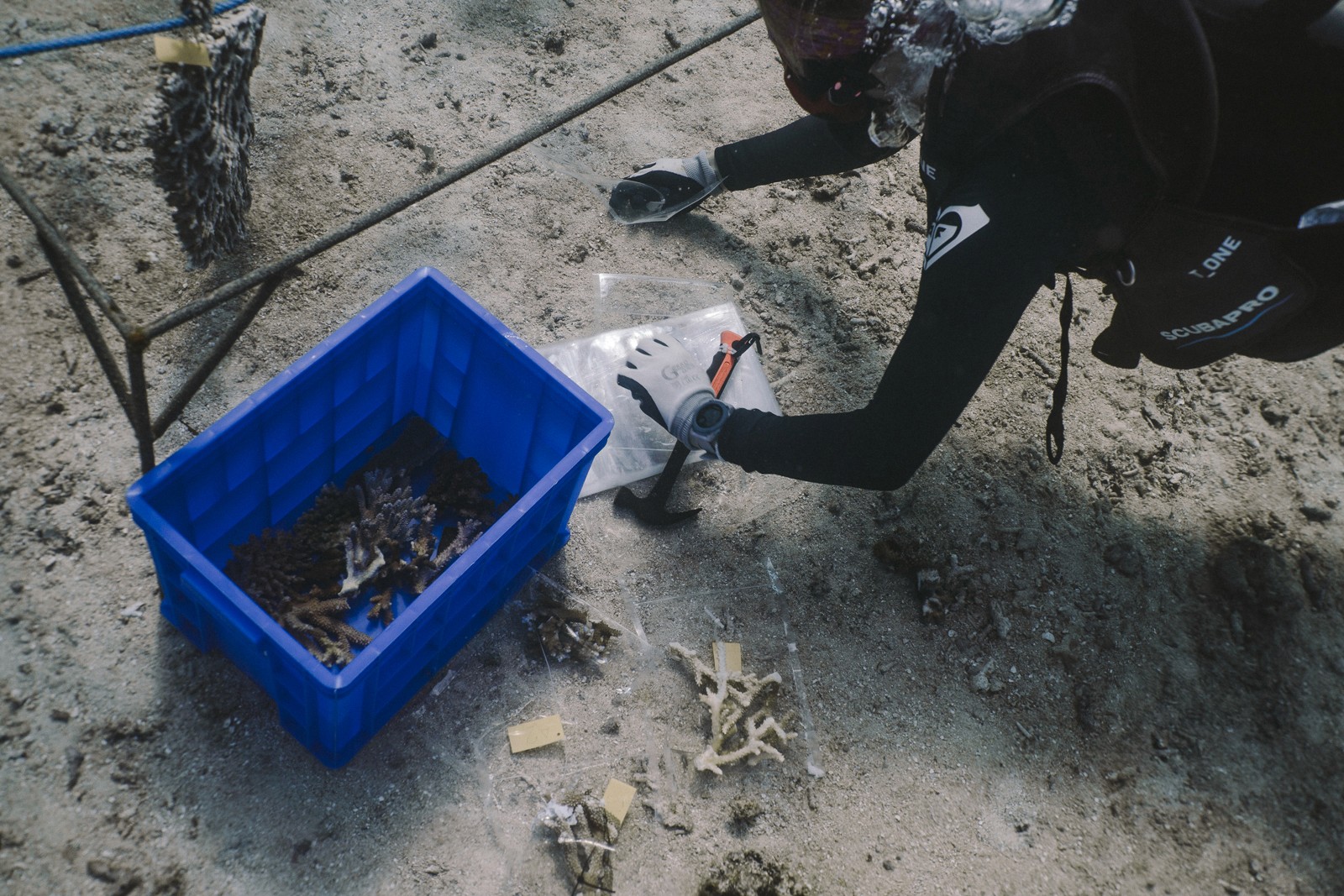
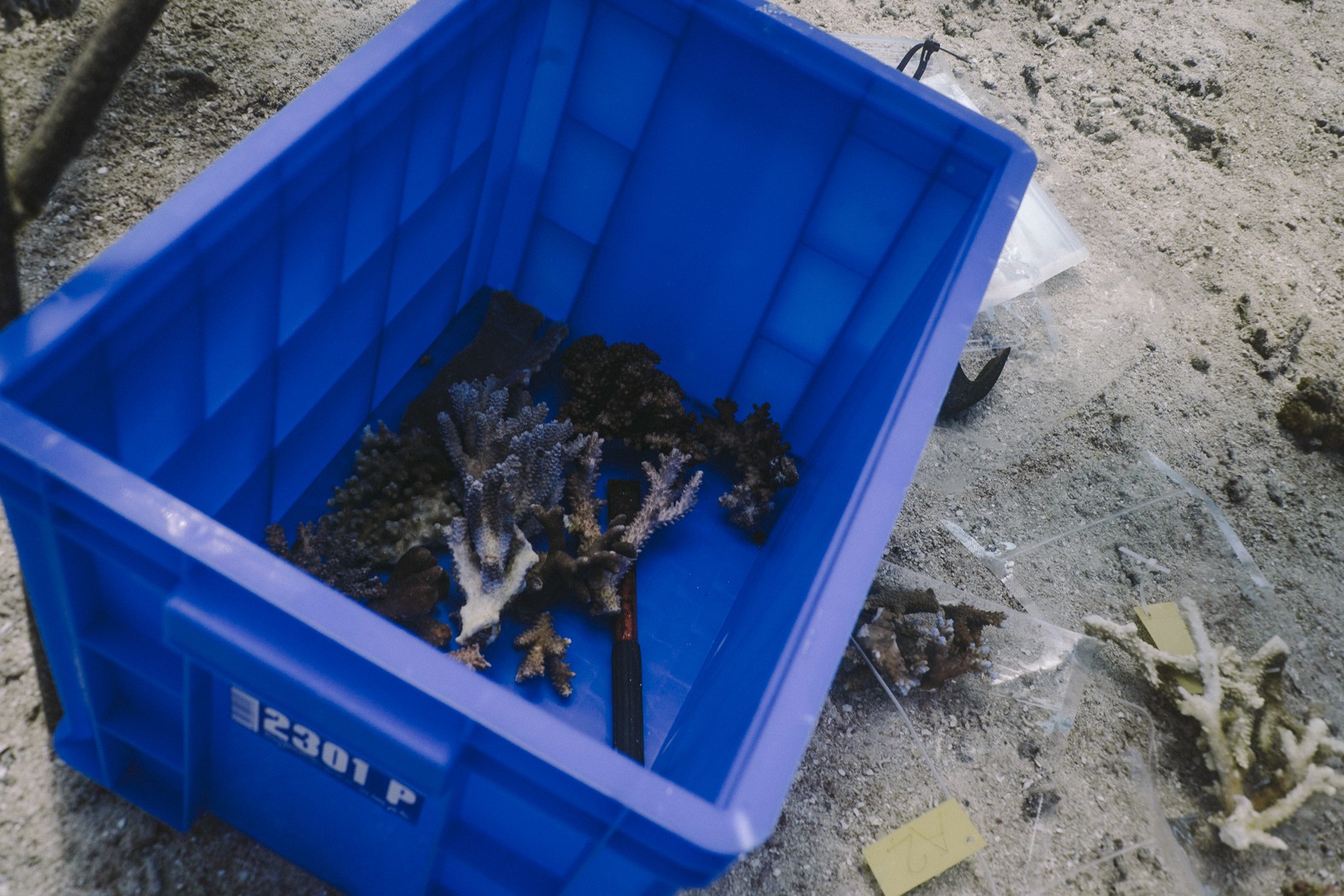
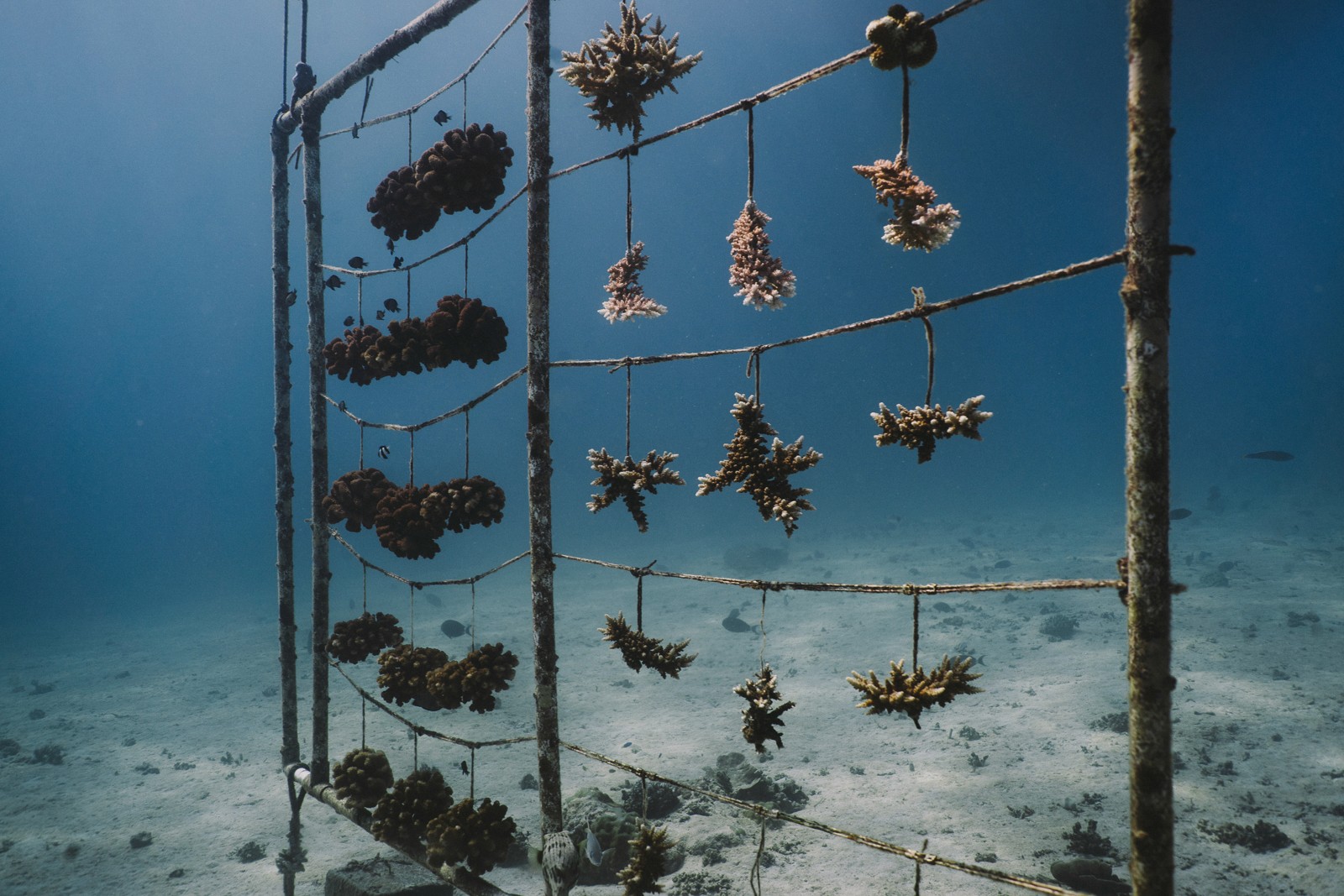
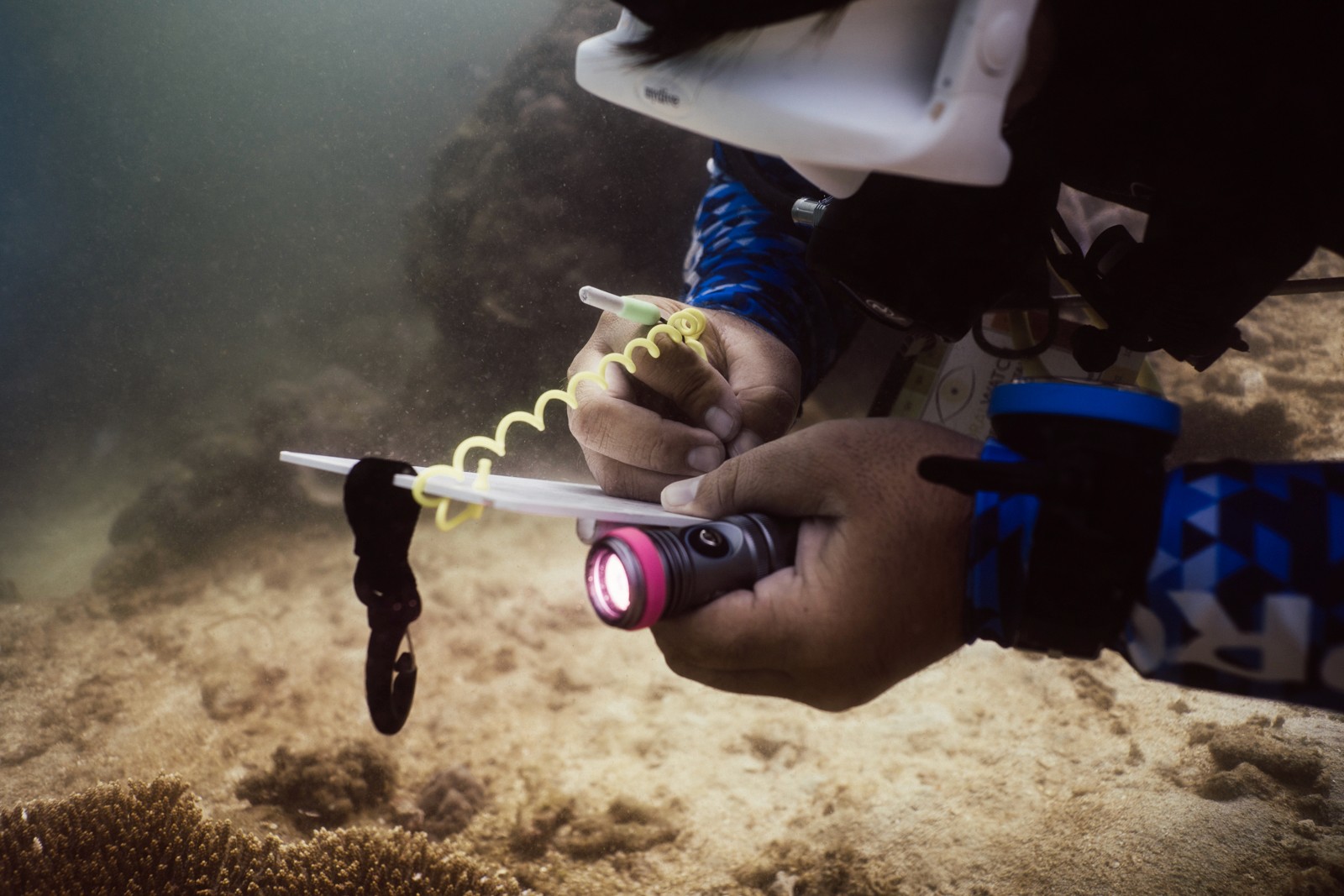
We descend around seven meters, then ten, then fifteen. The water is so clear every ripple on the sand below is visible. Clara guides me, patient as I stop every few seconds to photograph. Cenna and Elizabeth hover above a large table of corals, deciding which fragments to cut from Coral Catch nursery site for coral resilience research.
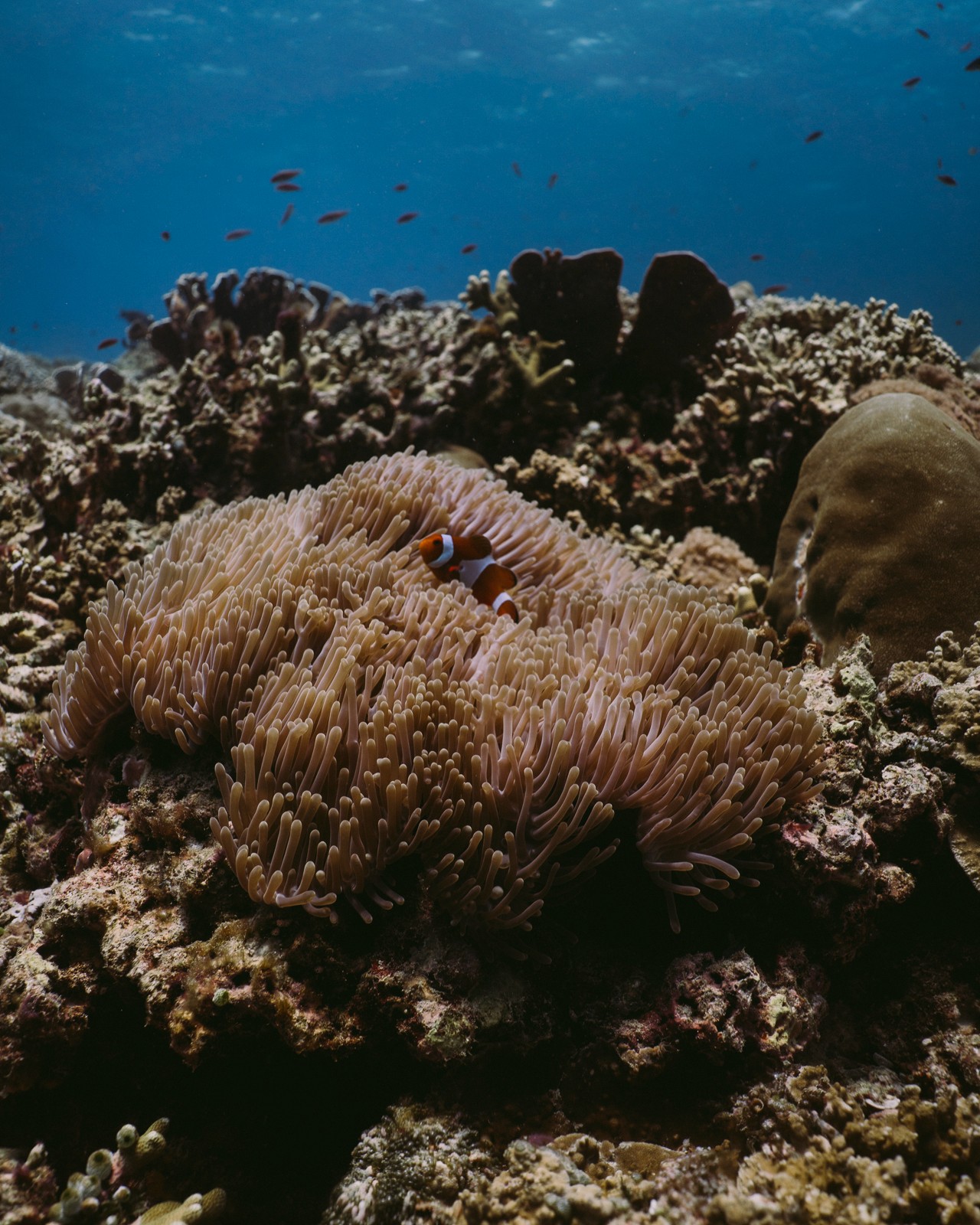
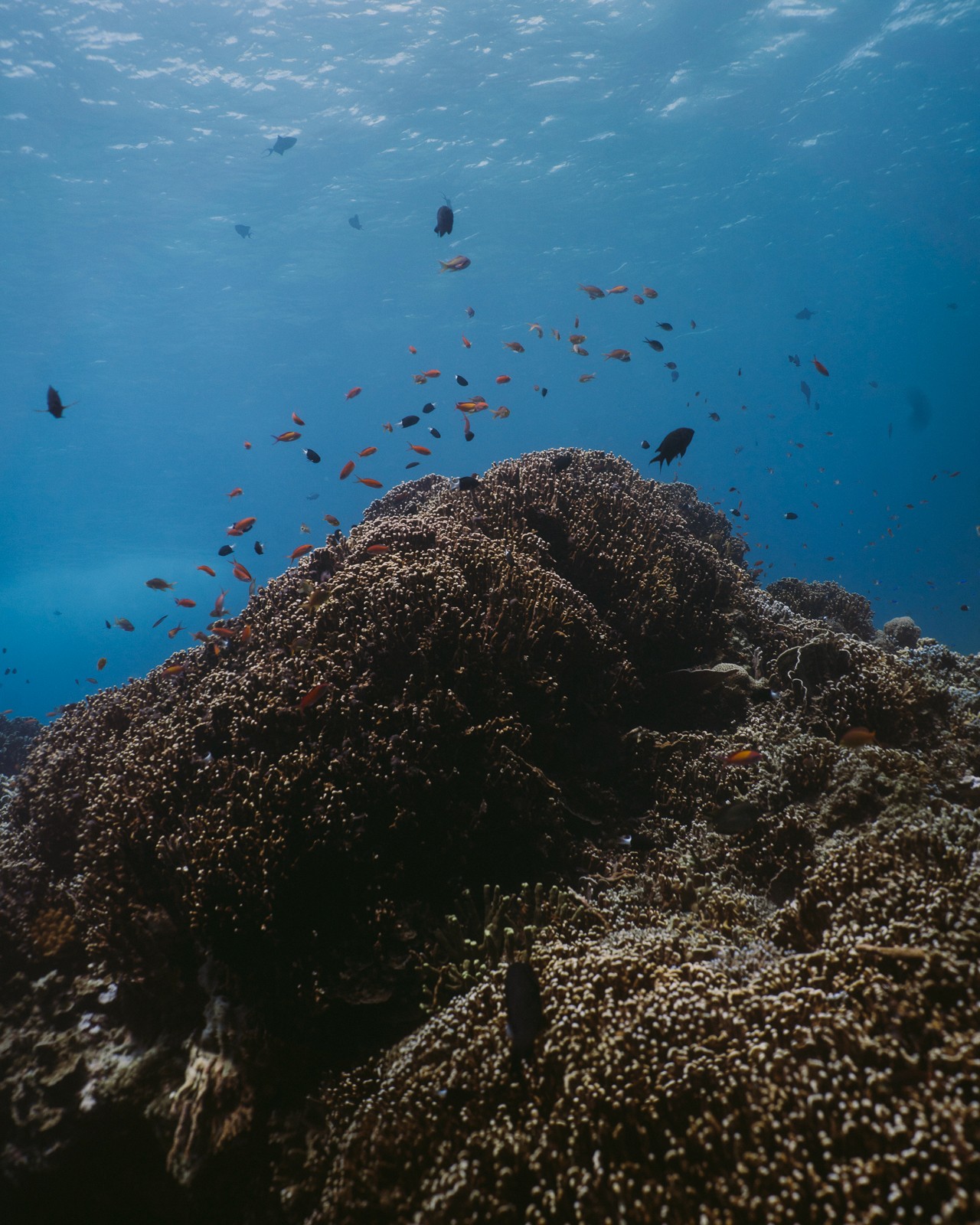
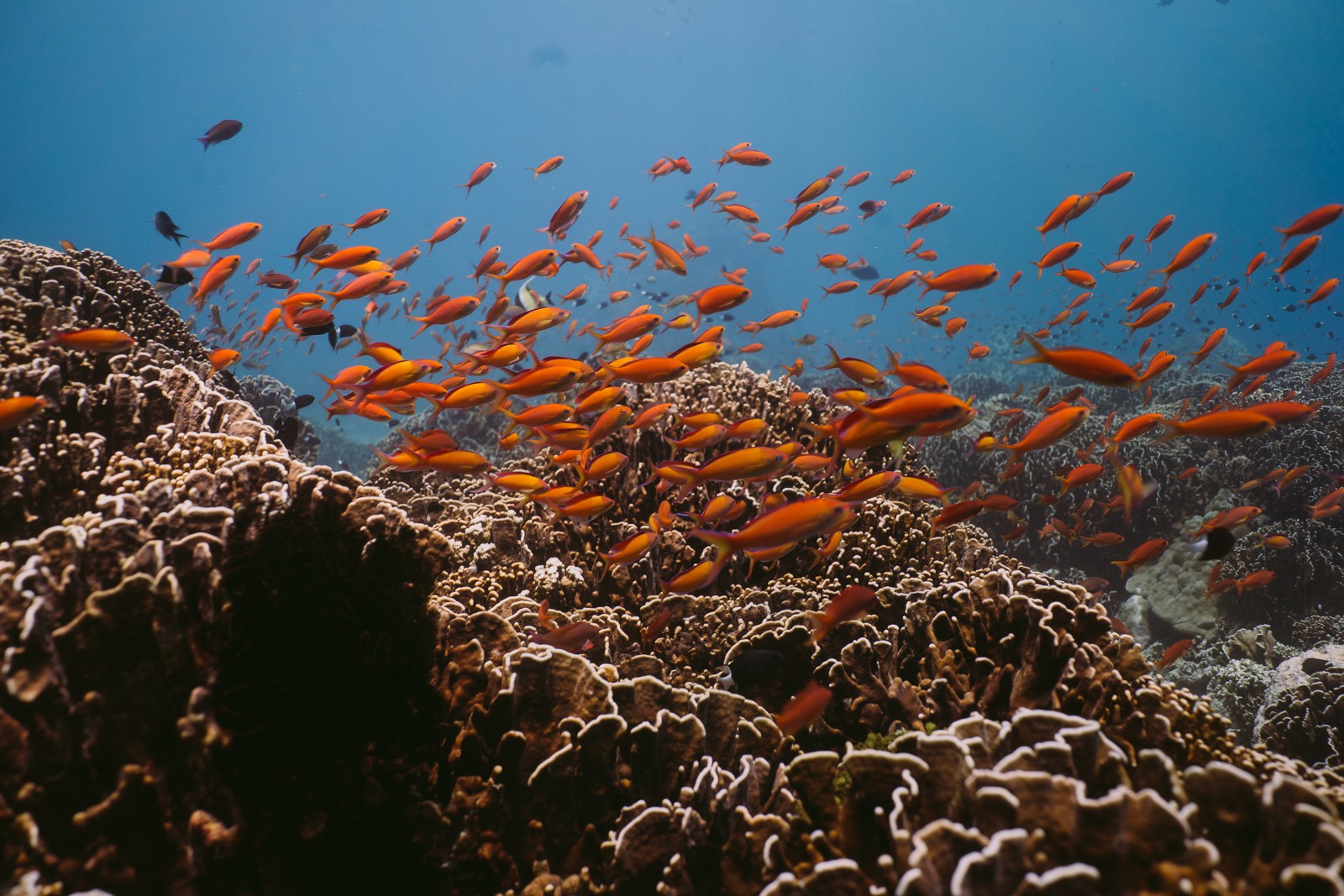
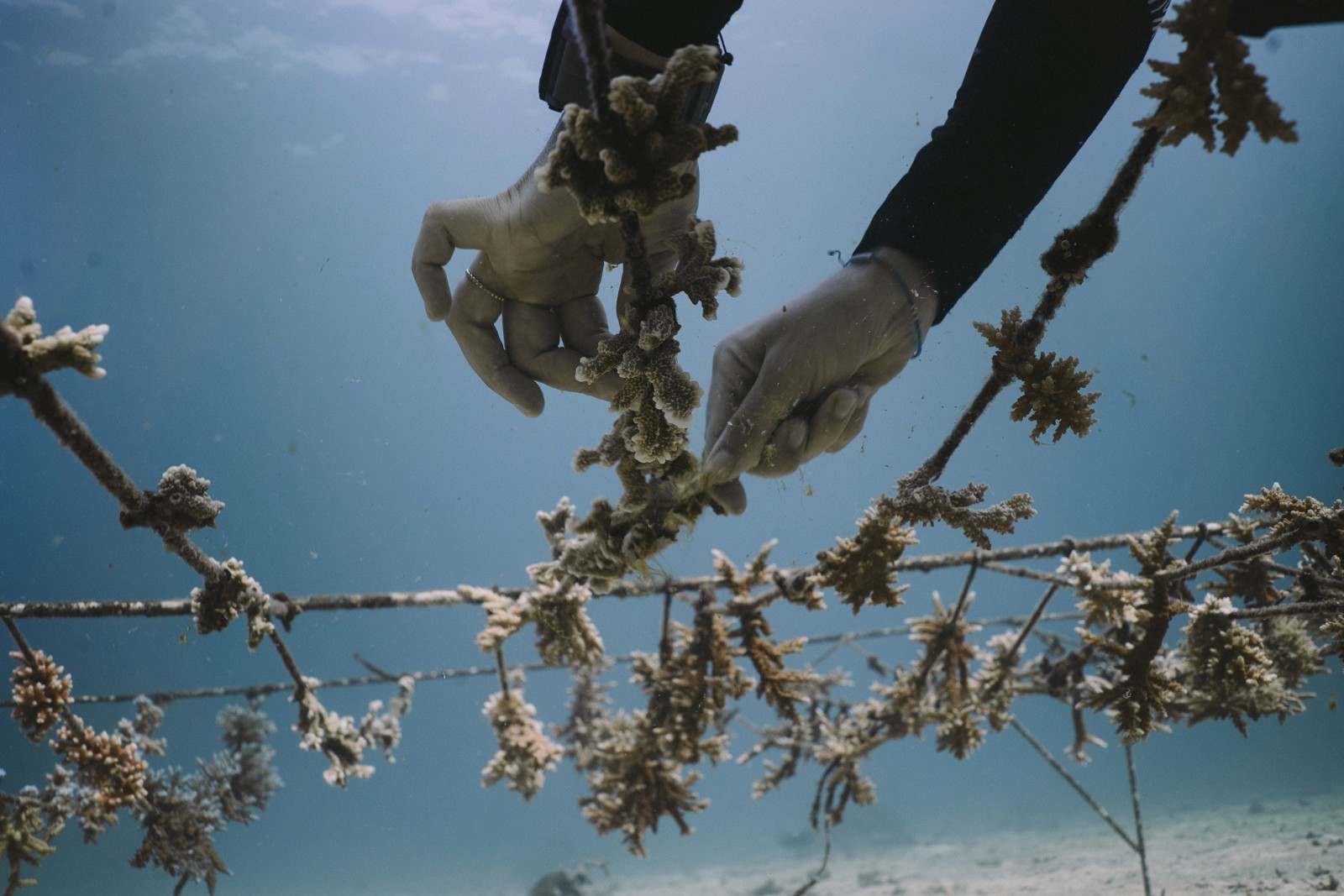
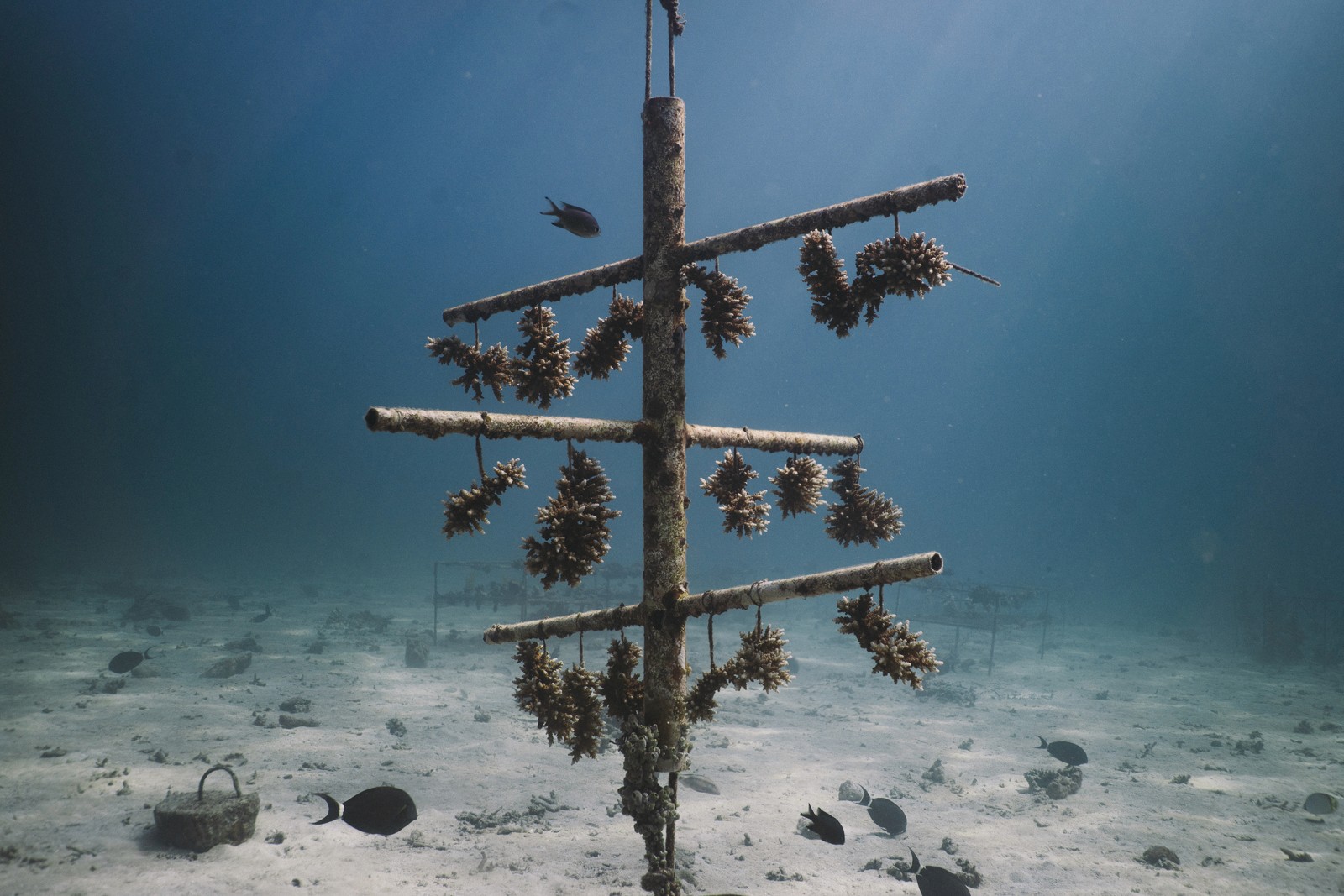
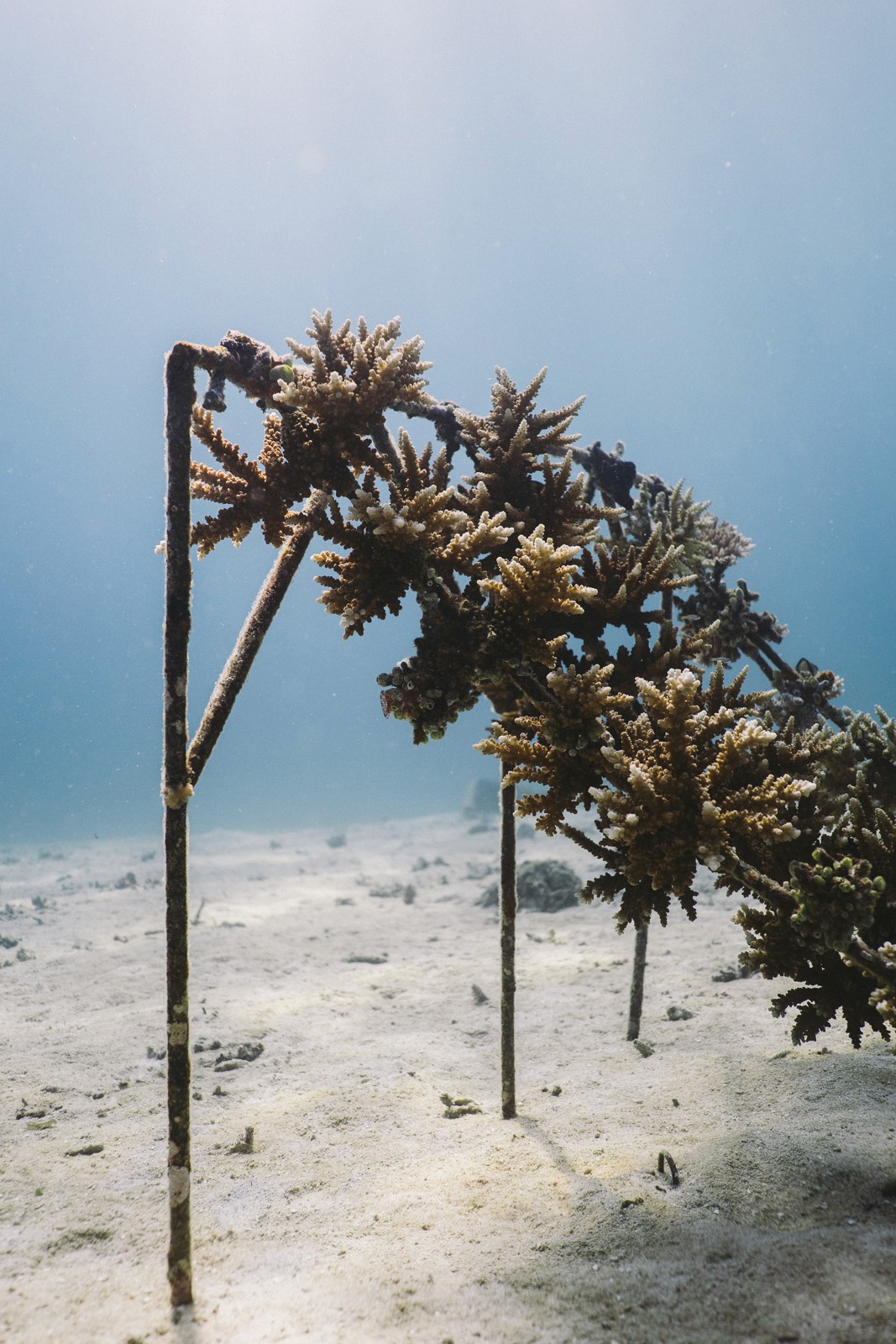
We leave them to their work and drift deeper into what can only be described as a playground. Past that first research table, the coral nursery explodes with life in every direction. Different shapes, different structures: a wave, a tree branching upward, a wall of fragments. Each one a different texture, a different color, a different pattern. Fish everywhere.
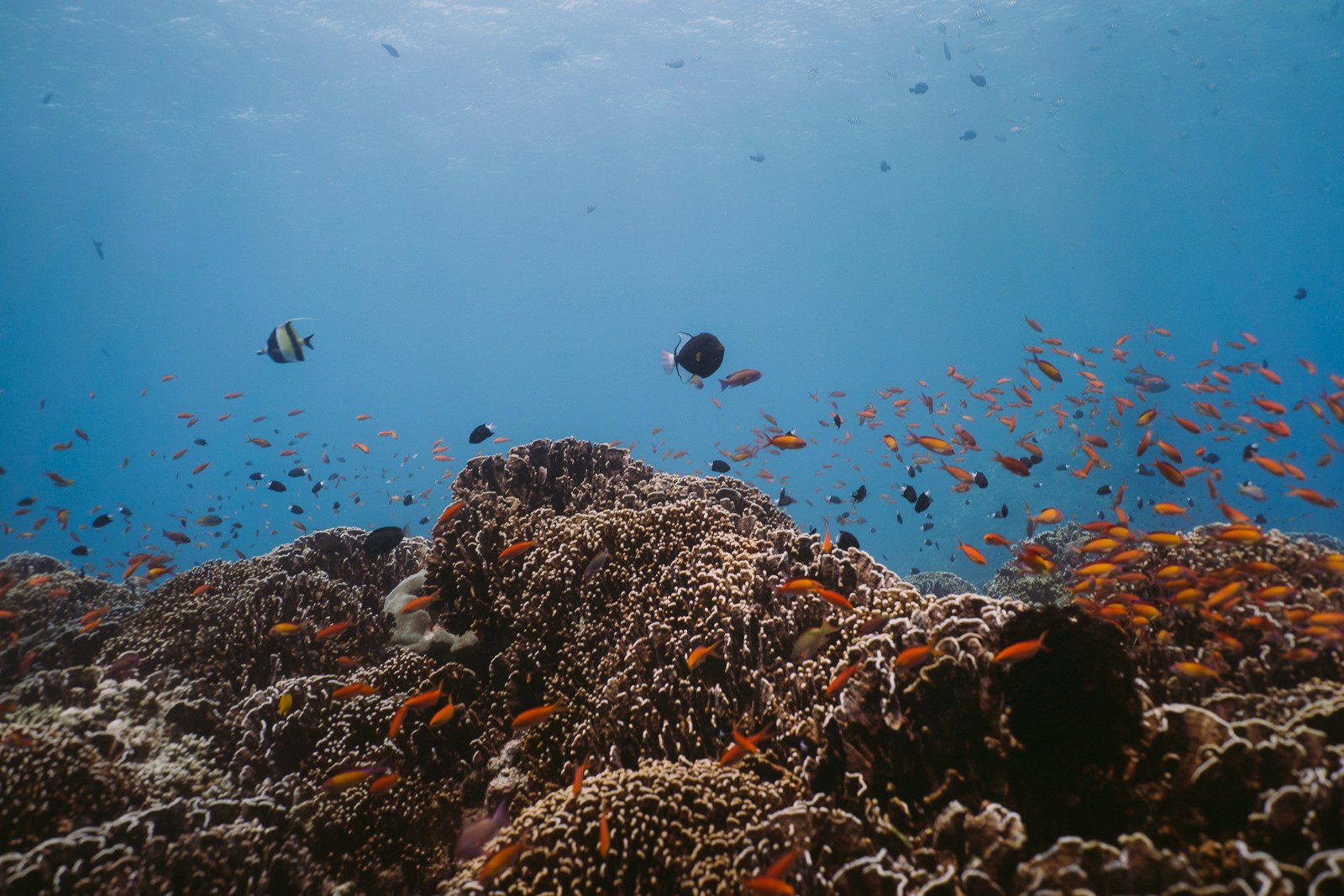
We reach another nursery section, older, more crowded. The corals here have matured into dense colonies. Fish swarm the structures, not hundreds, but what feels like thousands. I get distracted, taking photo after photo, the kind of shooting where you stop thinking and just react to movement and light.
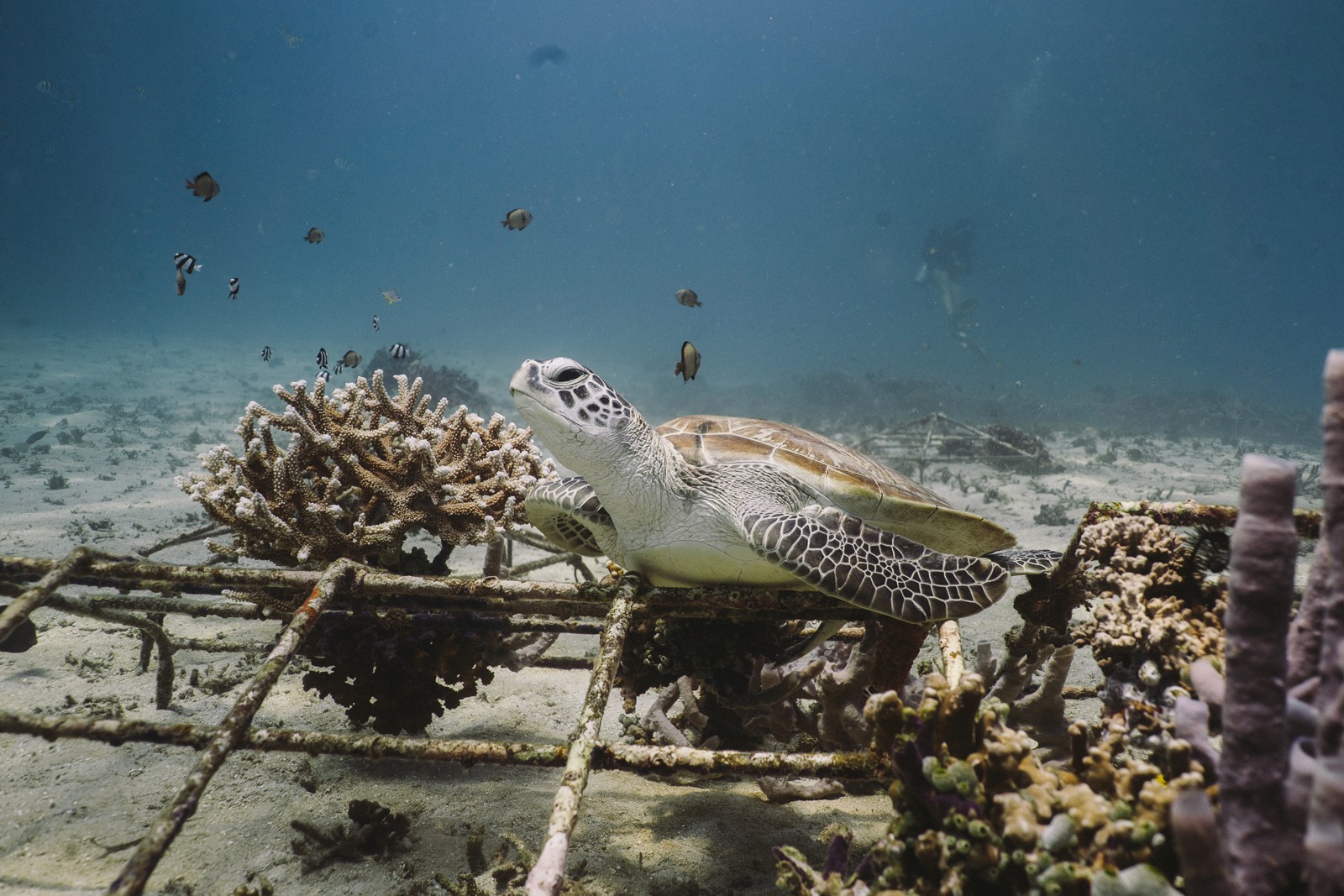
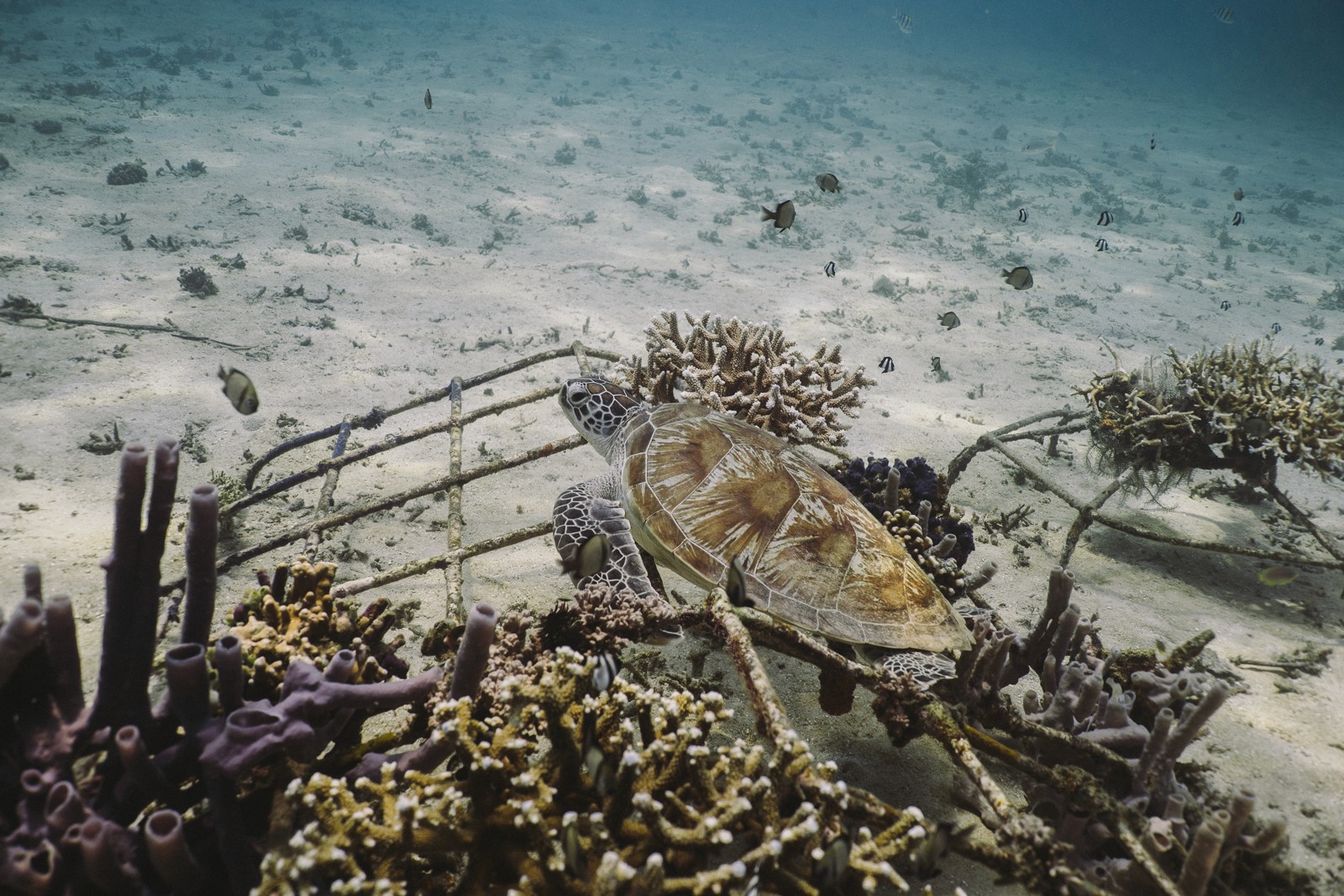
Then I see the turtle. Just resting on one of the coral tables, as if the nursery was a bed. It's such an absurd image: this ancient creature choosing a human-built structure as a resting place, that I stop swimming entirely and just watch. So much life here. Not despite the restoration, but because of it. We continue, and suddenly we're not alone. The entire Gili Shark Conservation and Coral Catch teams are here, all of them armed with toothbrushes, methodically cleaning algae off the coral fragments. It's meticulous, almost meditative work. Every fragment attended to. Every structure maintained.
Back on the boat, Clara explains what I've just seen. "As we restore the reef, we are building natural barriers for the shore. We're preventing erosion, limiting sea level rise, bringing back ecosystems. You have sand, rubble, sand, rubble, then the structures and suddenly many, many fishes around. It contributes to resilience of coastal communities and health of the marine ecosystem. We're strengthening resilience of both."
It's both. Not reef health or people. Reef health and people. The coral structures protect the shoreline. The shoreline supports the fishing community. The fishing community's children learn to swim in Coral Catch classes. Some of those children become Superwomen. Some of those Superwomen plant more coral. The system feeds itself.
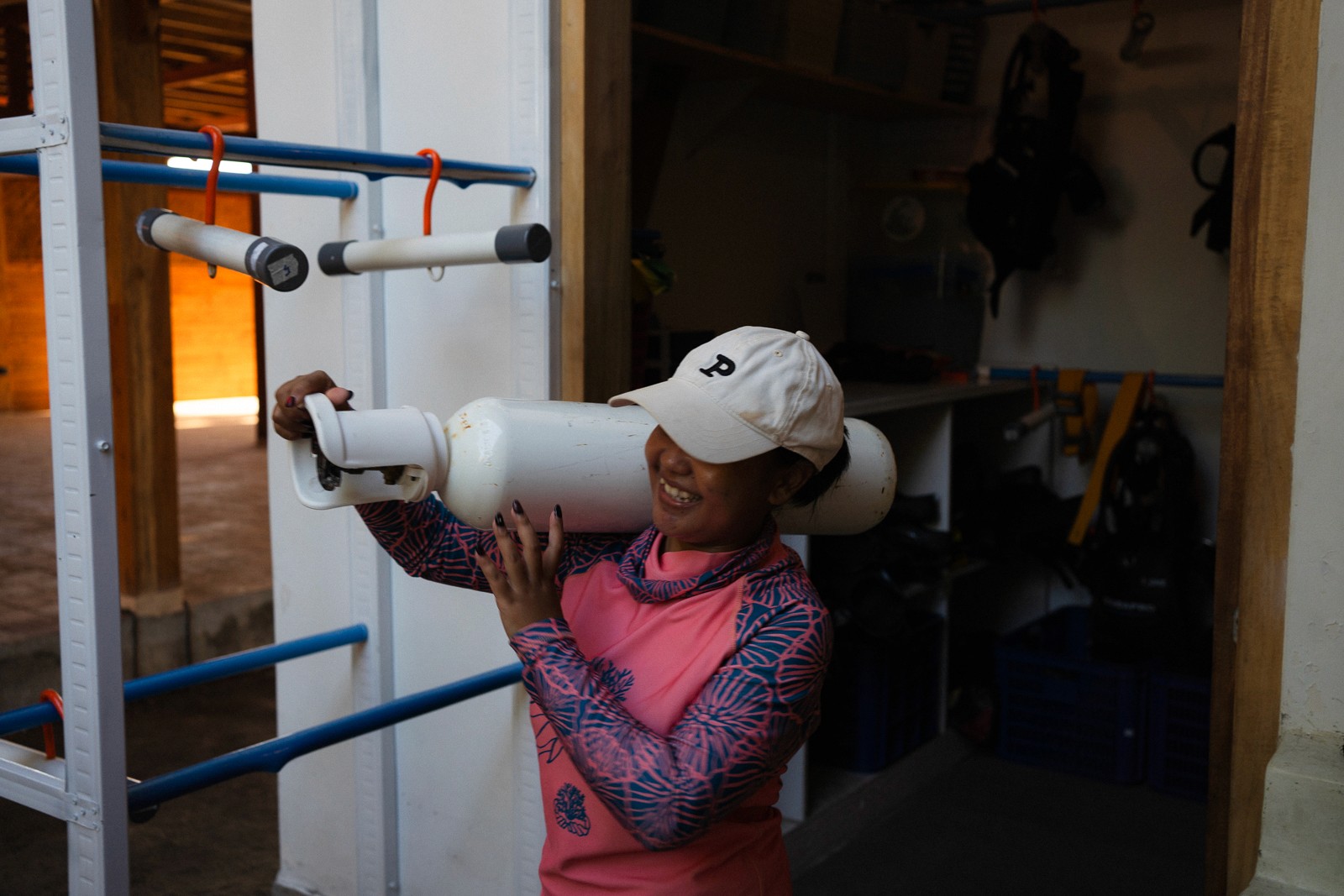
"People who live closest to the shore are sometimes the most disconnected," Clara says. It's a paradox she's lived on Gili Air. The island is surrounded by ocean, but many locals, especially women, have never been in it. Don't know how to swim. Don't know what's beneath the surface. Every week during a scholarship batch, Coral Catch runs swimming classes. Any woman, any age, can come. The Superwomen teach them. It's not a formal requirement, it's just what you do when you understand that ocean stewardship starts with access.
The new Coral Catch Academy dive center has taken this further. The Gili Dive Club offers discover scuba diving sessions for local people from Gili Air and Lombok. "If you don't engage local people," Clara explains, "if you don't strengthen their sense of ownership, their stewardship toward the natural resources around them, it's not going to go anywhere long-term. You can plant corals for a year, but if the snorkeling boats don't change behavior, if people stay away from the ocean, it's not going to change anything."
The 44 women who've come through Coral Catch are spread across Indonesia now. Raja Ampat, Sulawesi, Flores, Sumatra. This is intentional. Rose doesn't want all the Superwomen coming from one region only. She wants them to go back to their regions and ripple outward. One woman returns to Sumatra and creates her own community of women divers. Another applies to graduate school.
The alumni network is active. A WhatsApp group where professional opportunities get shared. Quarterly online sessions where the women reconnect, share updates, attend mini masterclasses. CV support. References. The sisterhood doesn't end at week nine.
Fifty percent of the Superwomen have become professional divers. At least dive master certified, many progressing toward instructor. This isn't just conservation work. It's economic transformation. Marine conservation jobs that didn't exist for Indonesian women five years ago now have Indonesian women in them.
But scaling this takes resources. And here's where the model strains. "We've managed to secure funding for the next batches," Clara says carefully. "But what we need now isn't just more activity grants. We need to be enabled with more capacities for our core operations. We need staff, two more program managers. We need a boat. We need facilities. We need a local storyteller to keep this visible.”
She pauses. Chooses her words deliberately. "Because they're small doesn't mean they're doing small work. So many local, grassroots organizations are doing big work on the ground but don't have the same financial or human resources. And donors sometimes think: due diligence, transparency, how do I report on capacity building, how do I report on investing in women?" She looks out at the water. "We need partners who are not afraid of investing in humans and social change. It has both social and environmental outcomes.”
The problem isn't getting grants, they've proven the concept. The problem is that every grant ends. "Year after year grants," Clara says quietly. " It is challenging to make a five year plan when we only receive funding for one year. The dependency on grants is extremely hard.”
What Coral Catch needs is trust. Long-term partnership. Unrestricted funding that says: we believe in your team, your vision, your ability to adapt and grow.
"Once the funding stream is over, we can still carry on activities in terms of staff and operations," Clara says. "That's all we're asking for."
Coral Catch likes to reach for the stars. Eight women per batch instead of four. Coral Catch Malaysia launching this year. The alumni network growing, quarterly sessions filling with faces from across the archipelago.
"Sometimes we underestimate the power of just someone teaching others," she says. One woman becomes two becomes four becomes a community. A girl in Sumatra sees a woman diving and thinks: maybe I can do that too.
When I ask what they wish for this reef in ten years, the answers come quickly.
"That the research continues. That monitoring becomes routine, not exceptional. That when tourists come, they understand what they're looking at and why it matters. That local women are leading the science and that they're involved as policymakers too. Research without enforcement doesn't protect anything." - Tania
"Climate-smart restoration that actually works. And that more women see that science isn't just in universities, it's in the water, in the data, in their hands. The women we empower inspires others. women can see herself in higher degree, marine field work, and even diving industries.” - Cenna
Clara looks out at the ocean. "In ten years, I wish women across Indonesia can own their coasts. Not managing them for someone else. Owning them. Leading conservation projects, training the next generation, making the decisions." She pauses. "When a girl in Raja Ampat or Sumatra sees a woman working there, she thinks: She's my age, my background, maybe I can do that too."
The scholarship applications keep coming. Women from islands Rose has never visited, cities with no ocean nearby, families who think diving is for tourists and men. They see Cenna's work on corals, or Tania's shark research or Dania's academic opportunities, and they apply anyway. The reef doesn't care who plants the coral. It doesn't care about gender or geography or whether you grew up by the water. It just grows. If the barriers are removed, if someone creates the space, it grows.
The women keep diving. The coral keeps growing. The system feeds itself.