Too many fish to count
Location
Sumberkima Bay, Indonesia
Year
2026
How a destroyed bay in Northwest Bali became a model for community-led reef restoration and what it means for the people who depend on it
The drive from Amed takes longer than expected. The road through North Bali winds through villages and past rice fields, and by the time we turn into Mangroovebay the light is already going golden. After hours in a car, the place stops you. Mangroves press close on either side of the path. Palm trees. Grass so green it looks deliberate.
We are here because of Metamorfosa, a reef restoration project working in Sumberkima Bay, one of the most degraded stretches of coast in Northwest Bali. We have been exchanging emails with Jane for weeks. Tomorrow morning, we will meet Totok.
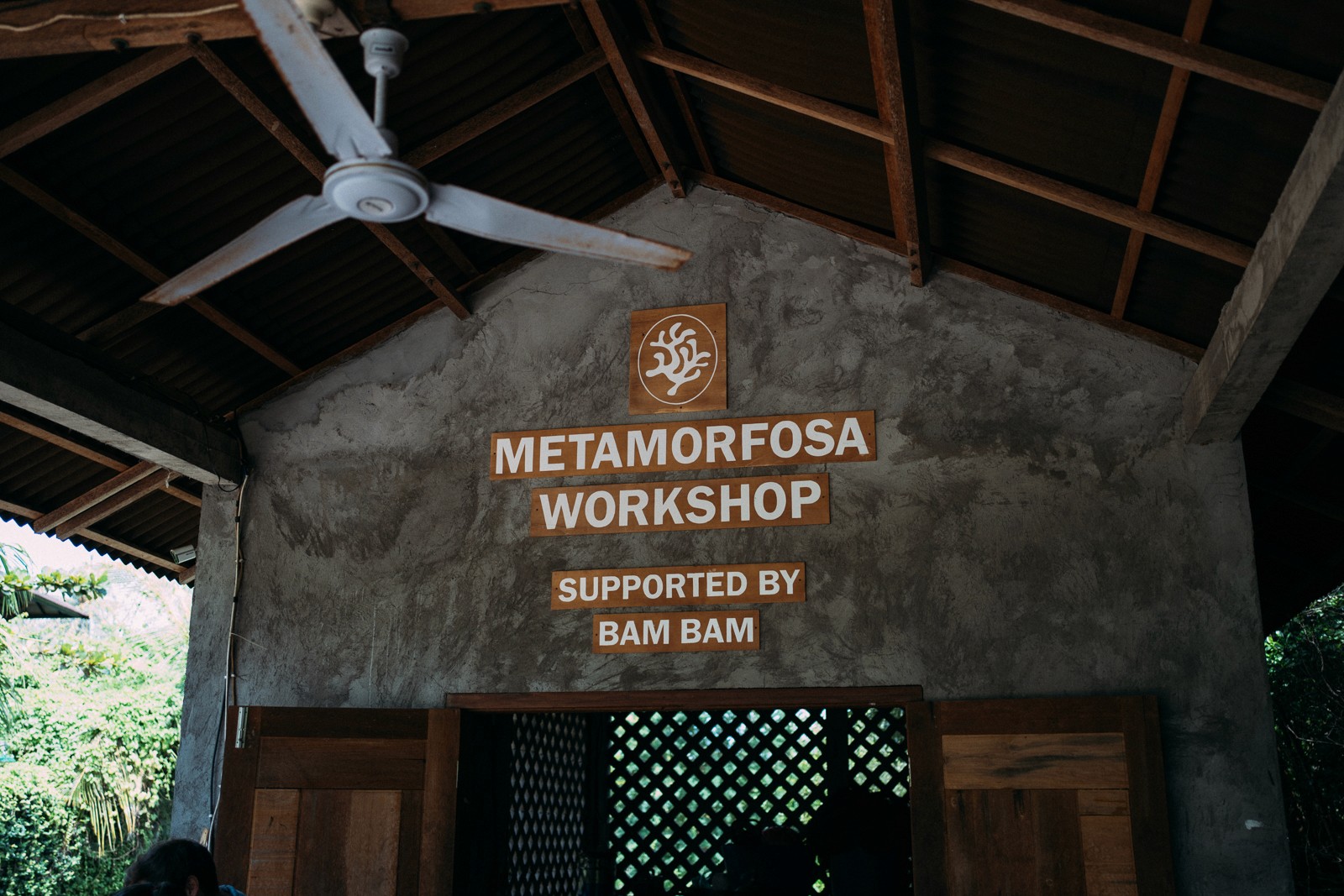
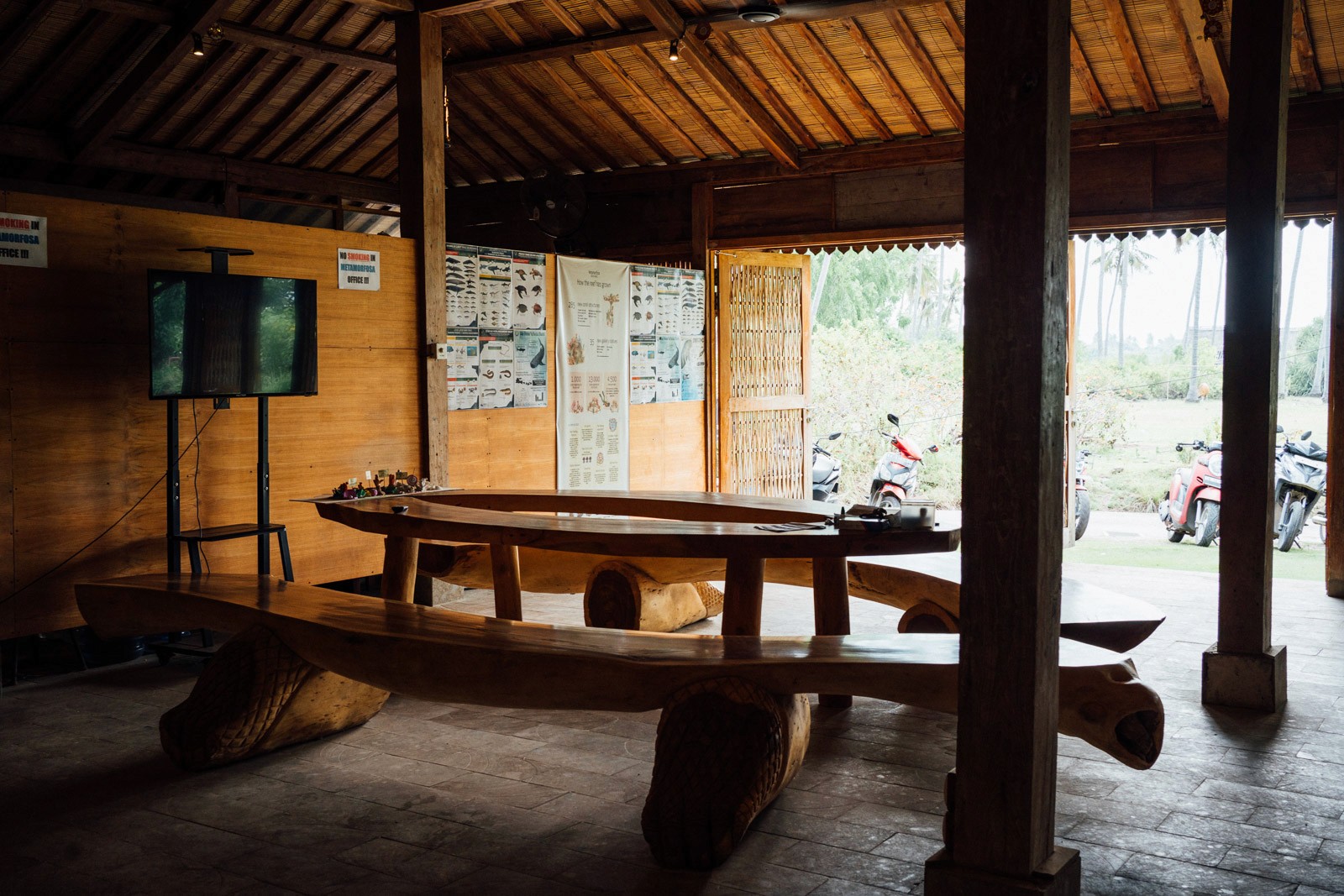
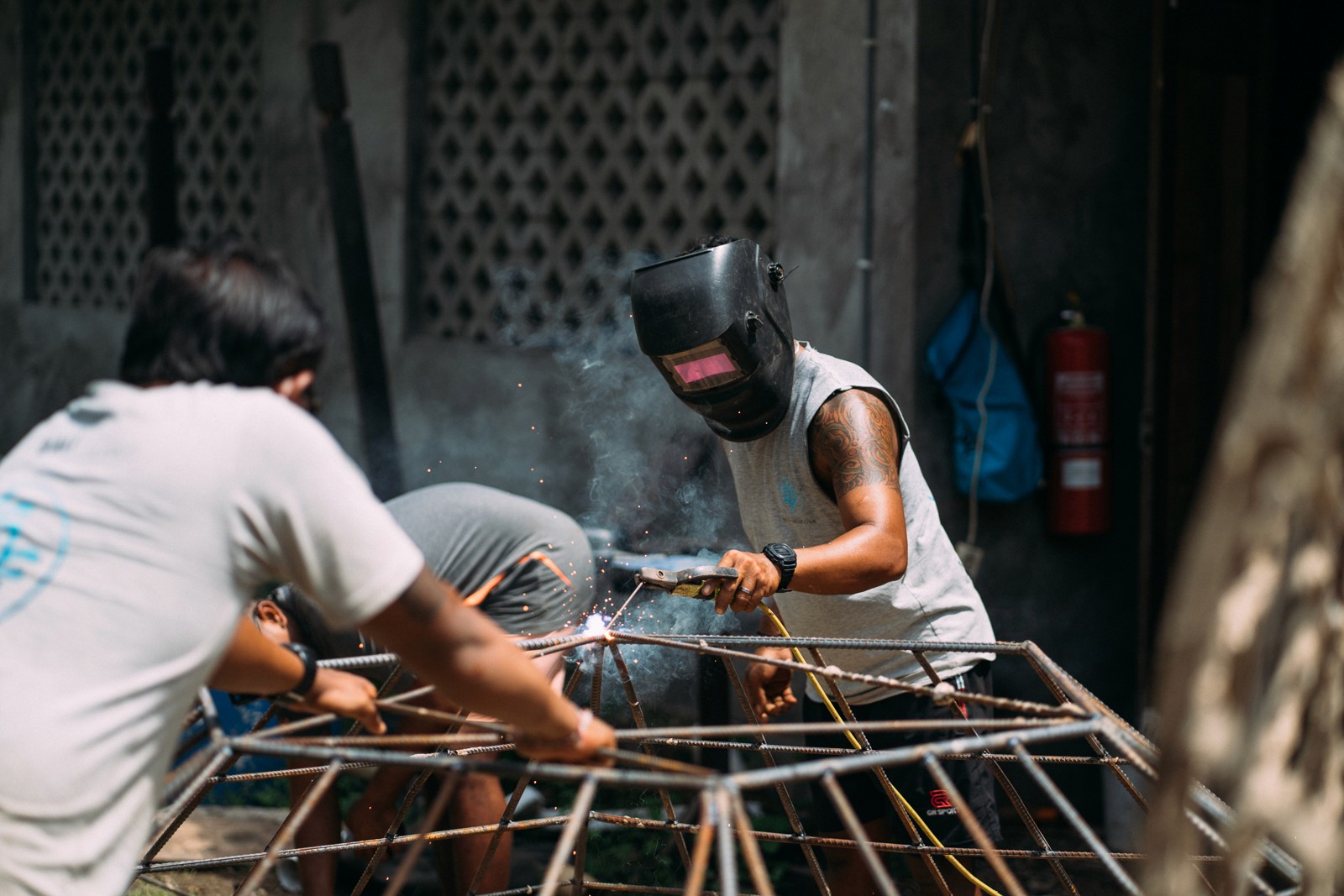
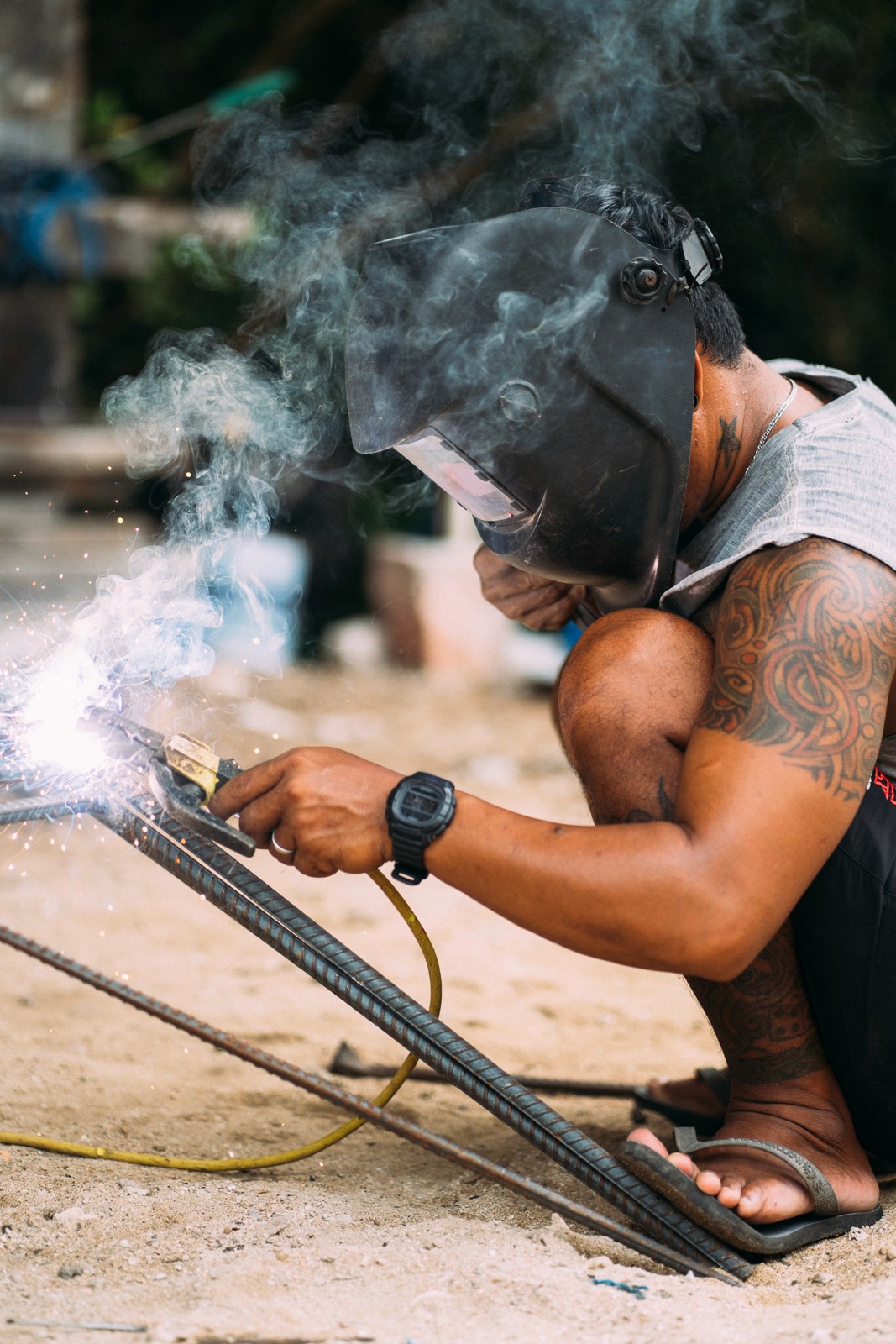
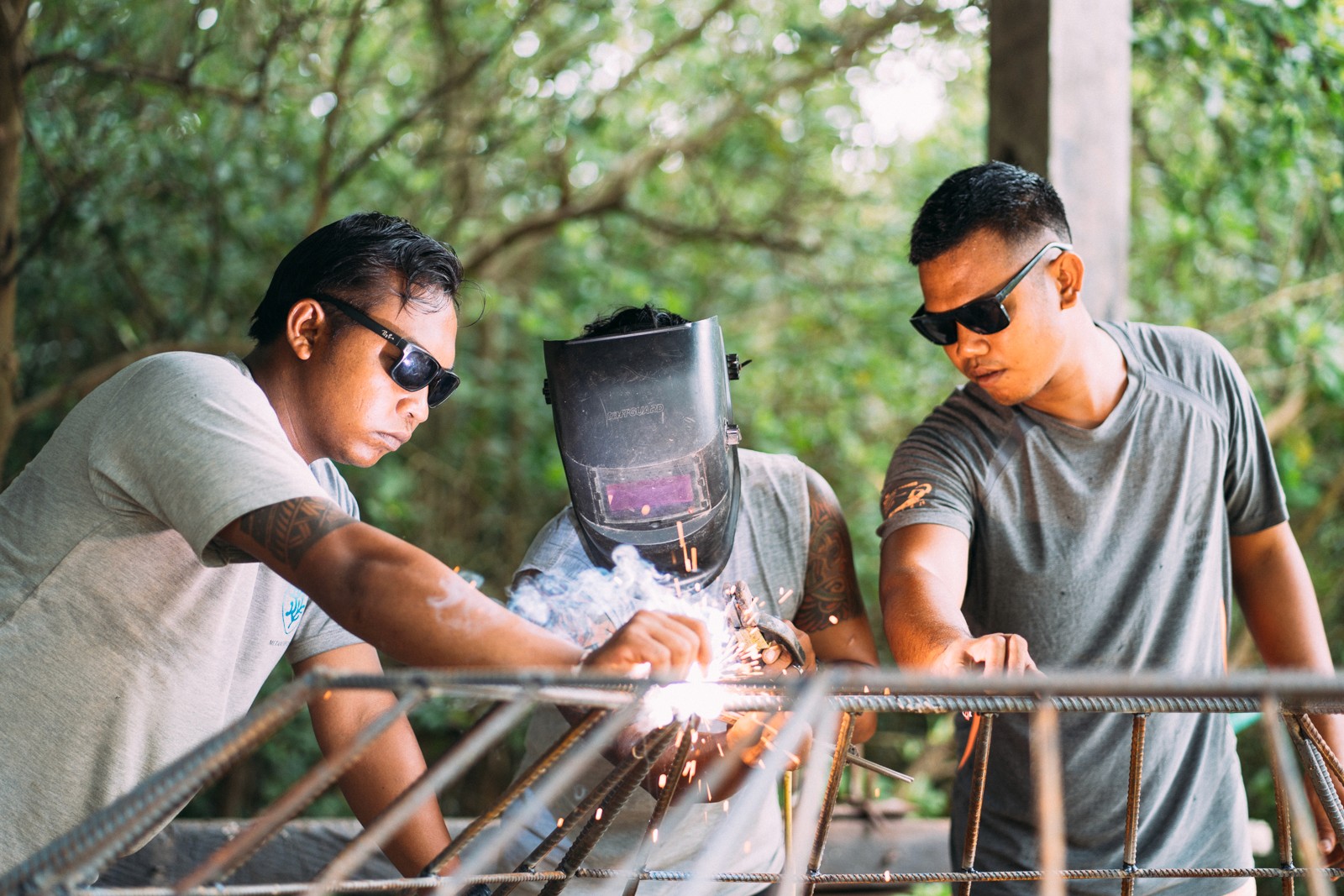
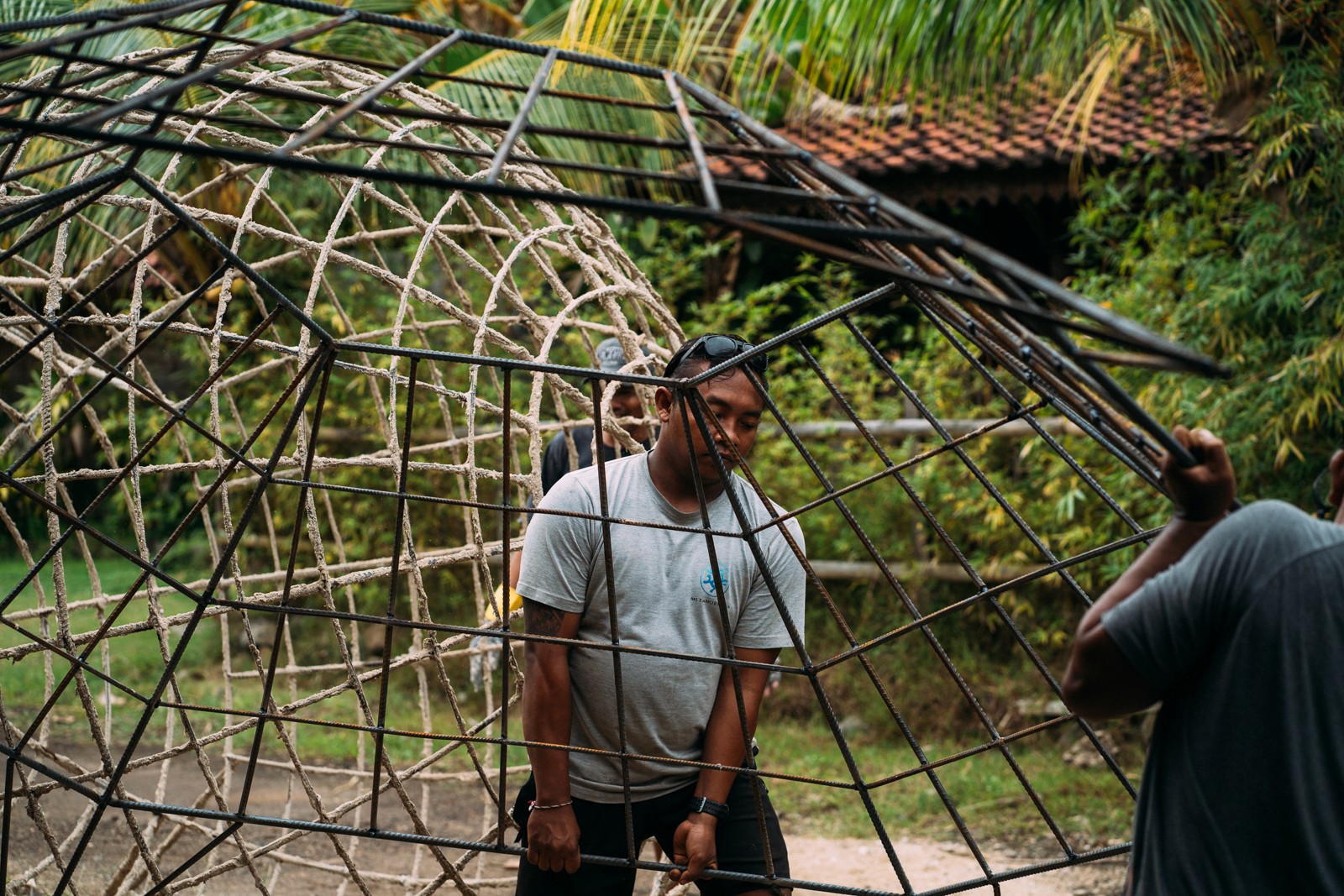
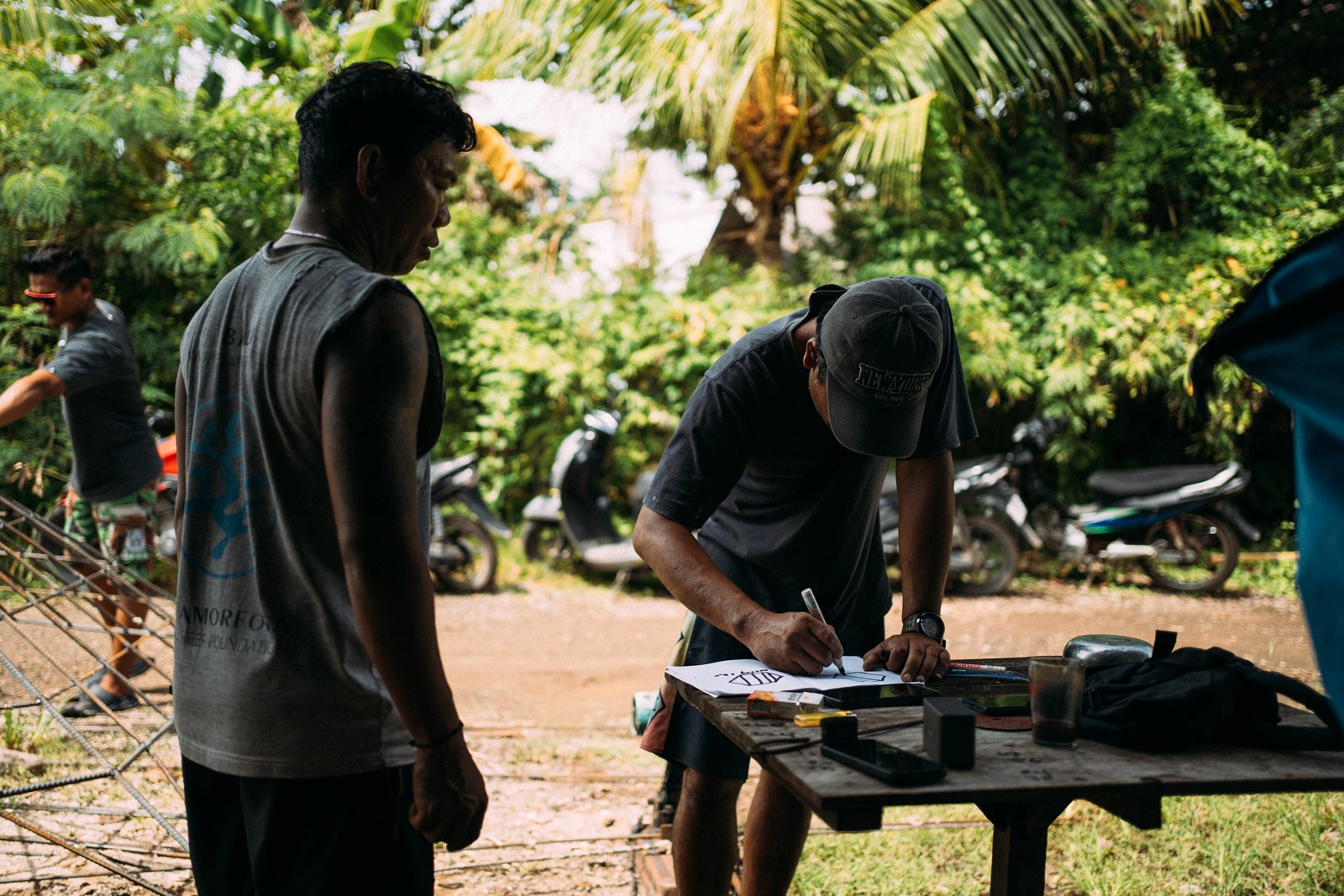
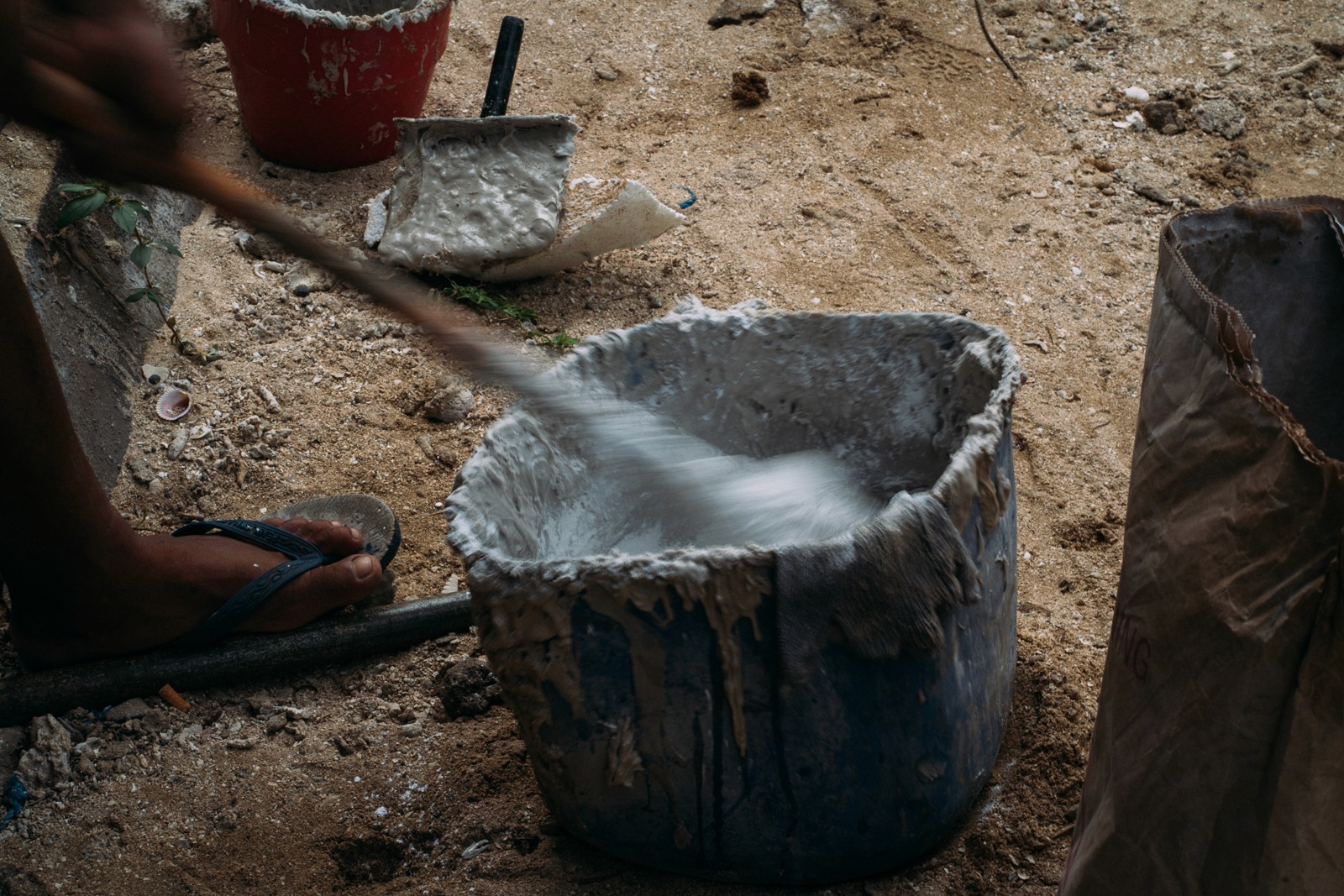
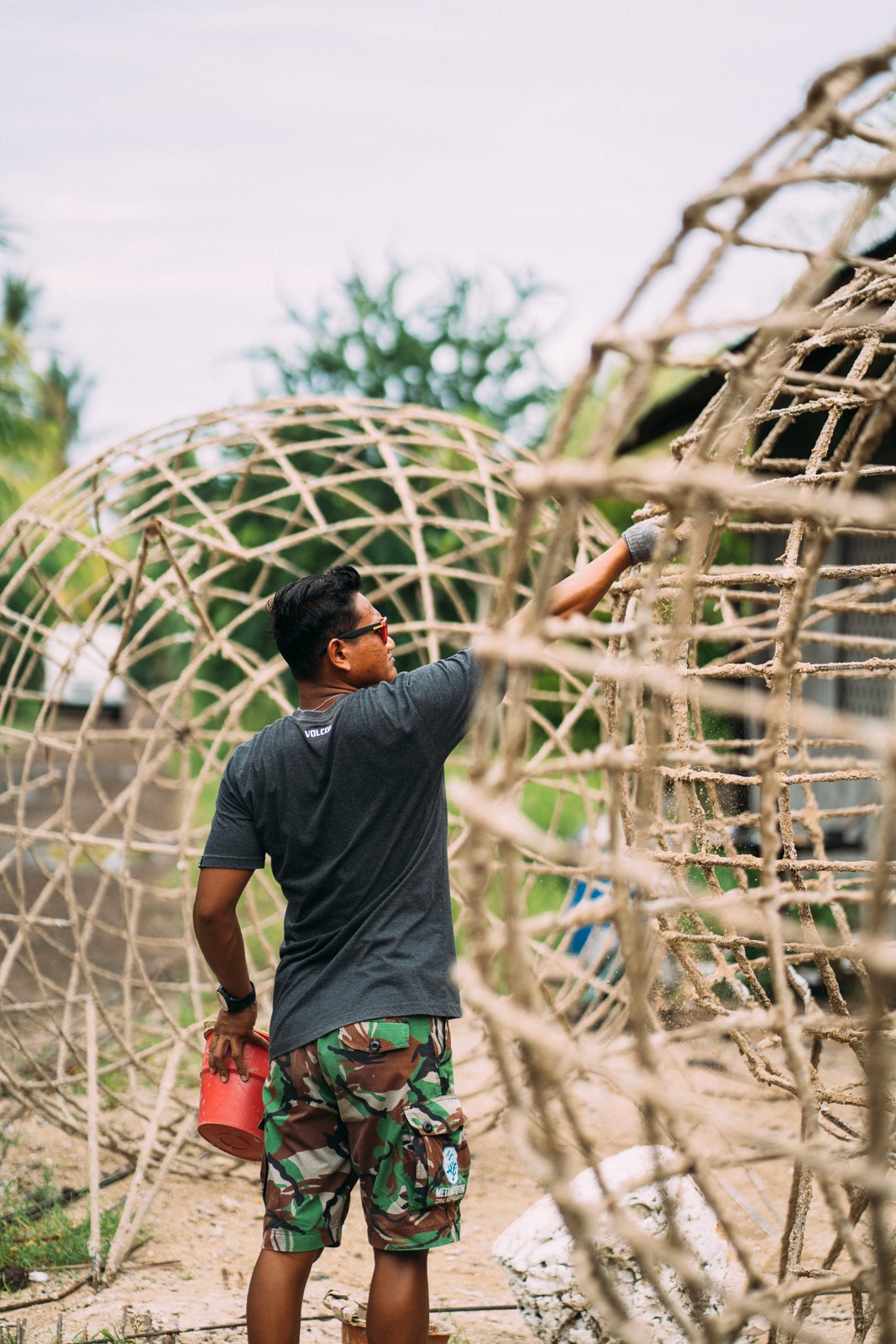
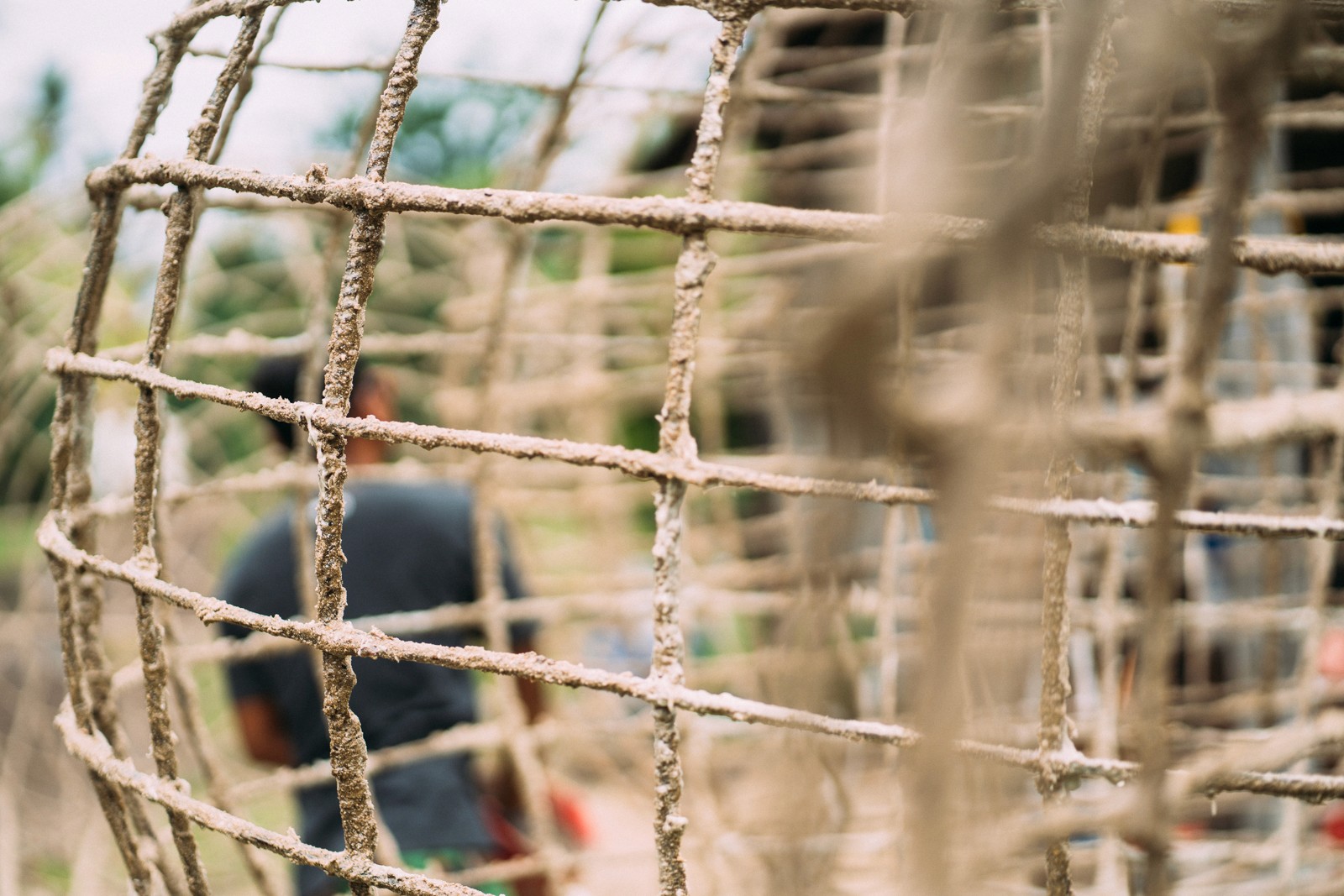
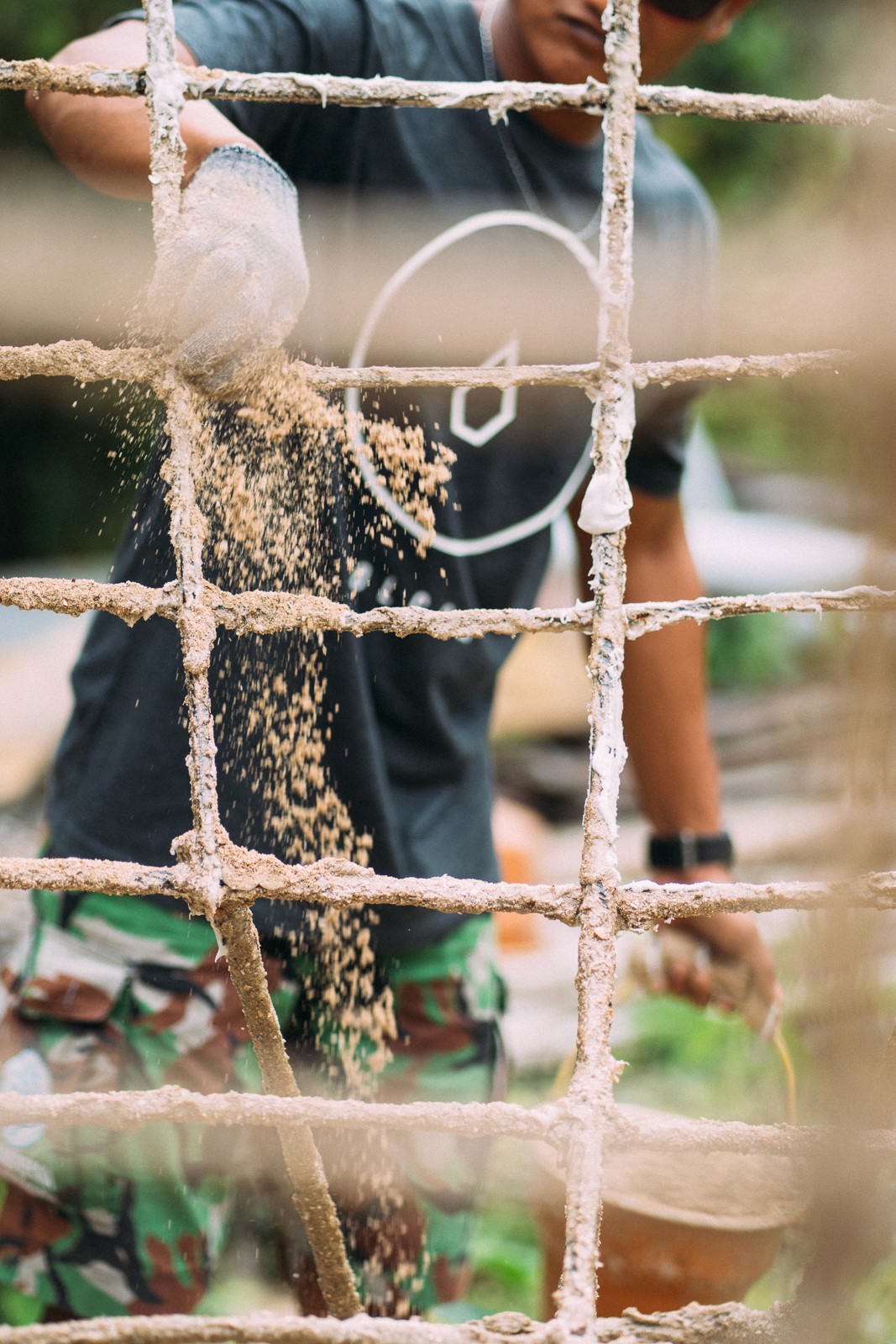
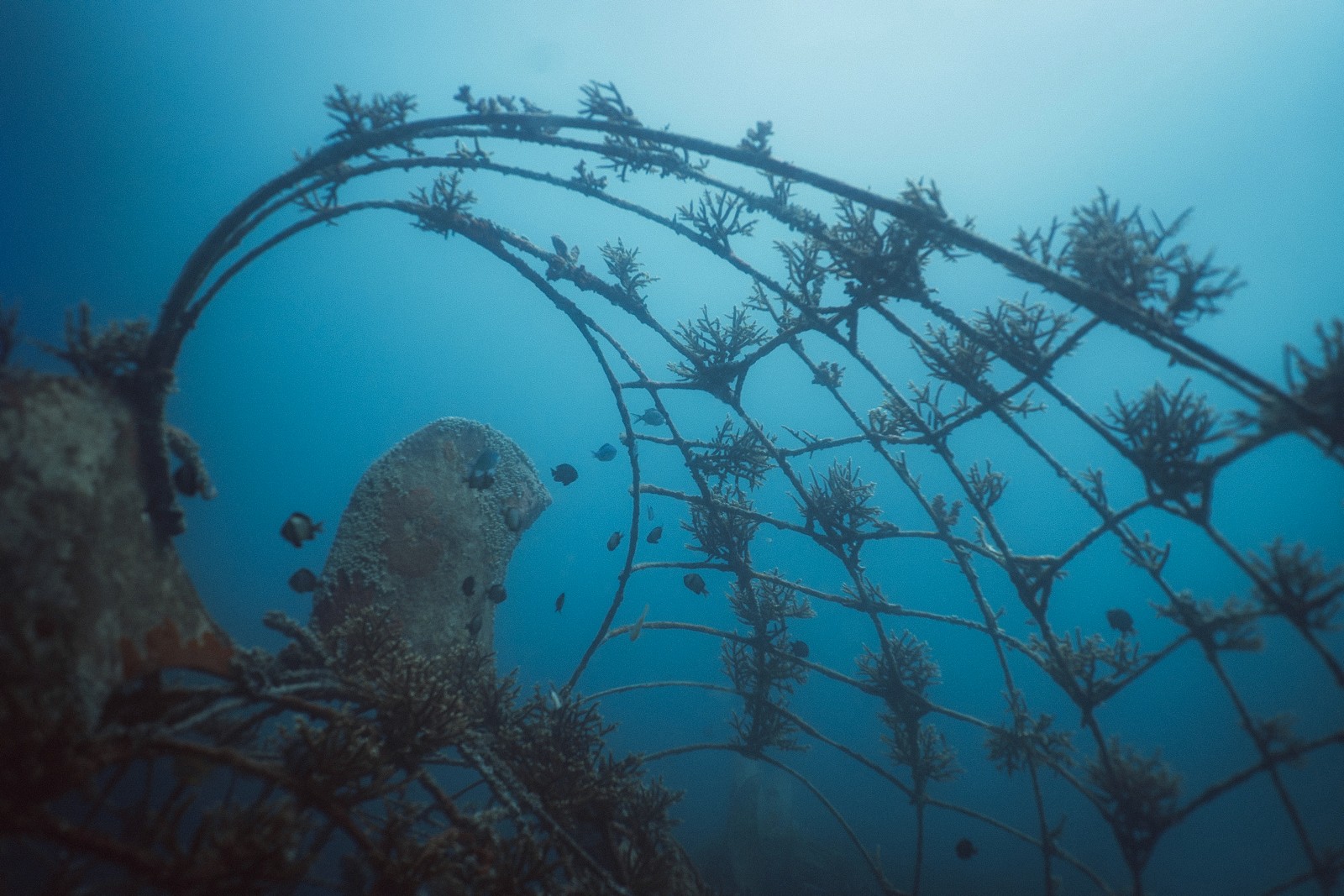
Sunday, 10am. The Metamorfosa workshop sits in the heat with the particular energy of a place where real work happens. Half-open to the sky, half-sheltered from the worst of the sun, it is loud: welding guns, the scrape of metal, voices. Six people are bent over structures in various states of becoming: iron frameworks being sanded, coated in a mixture of epoxy and sand, shaped into forms that will eventually carry coral on the seafloor. Around the workshop, already finished, five of the larger structures stand waiting, great circular frames, taller than a person, that look almost architectural out of context. It takes a moment to understand what you are looking at.
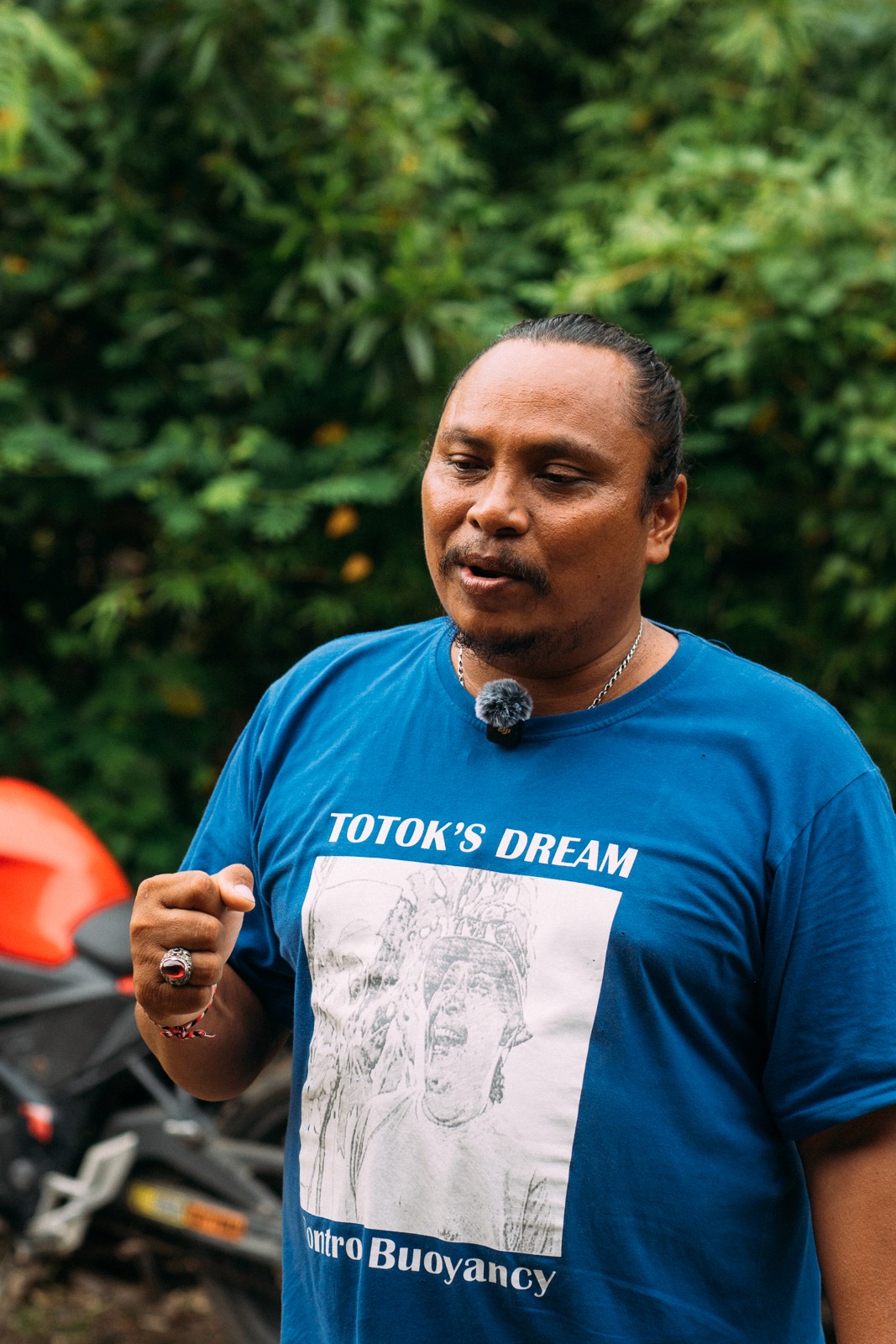
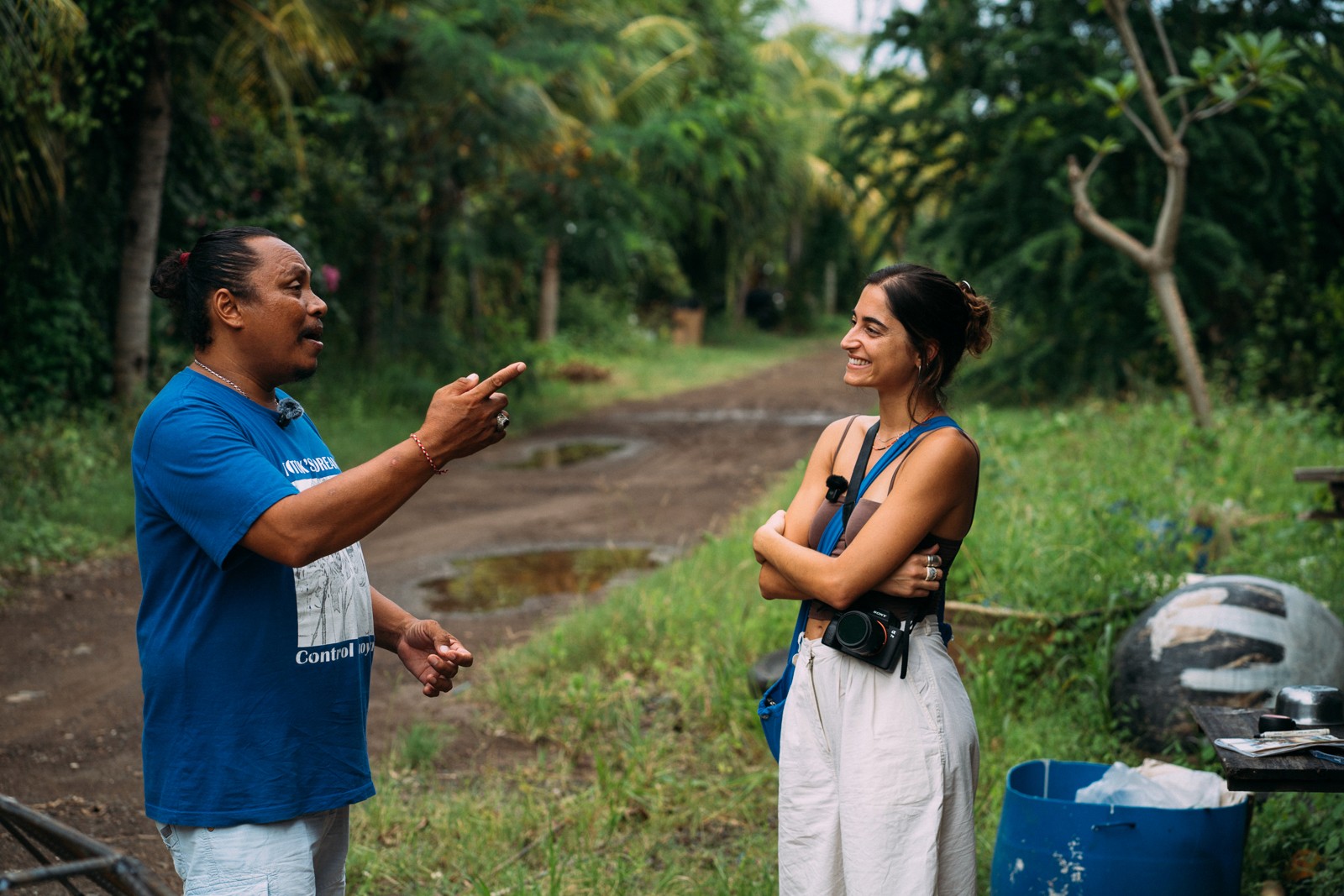
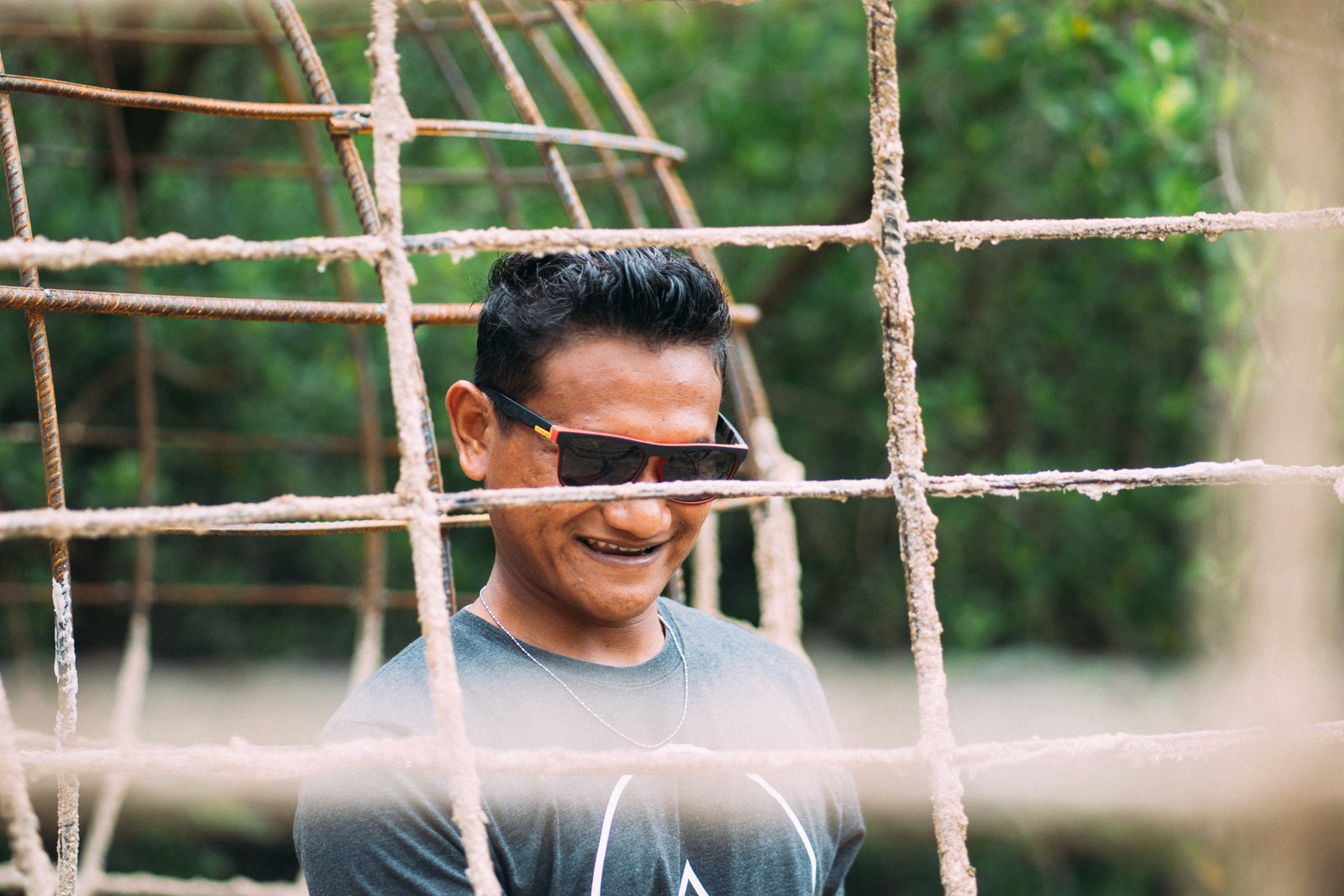
Ketut Totok comes over to greet us wearing a t-shirt that reads: Totok's Dream — Control Buoyancy. If you know anything about diving and corals, you already understand the idea behind it. A diver who cannot control their buoyancy will destroy in seconds what takes years to grow. The shirt is a manifesto in four words.
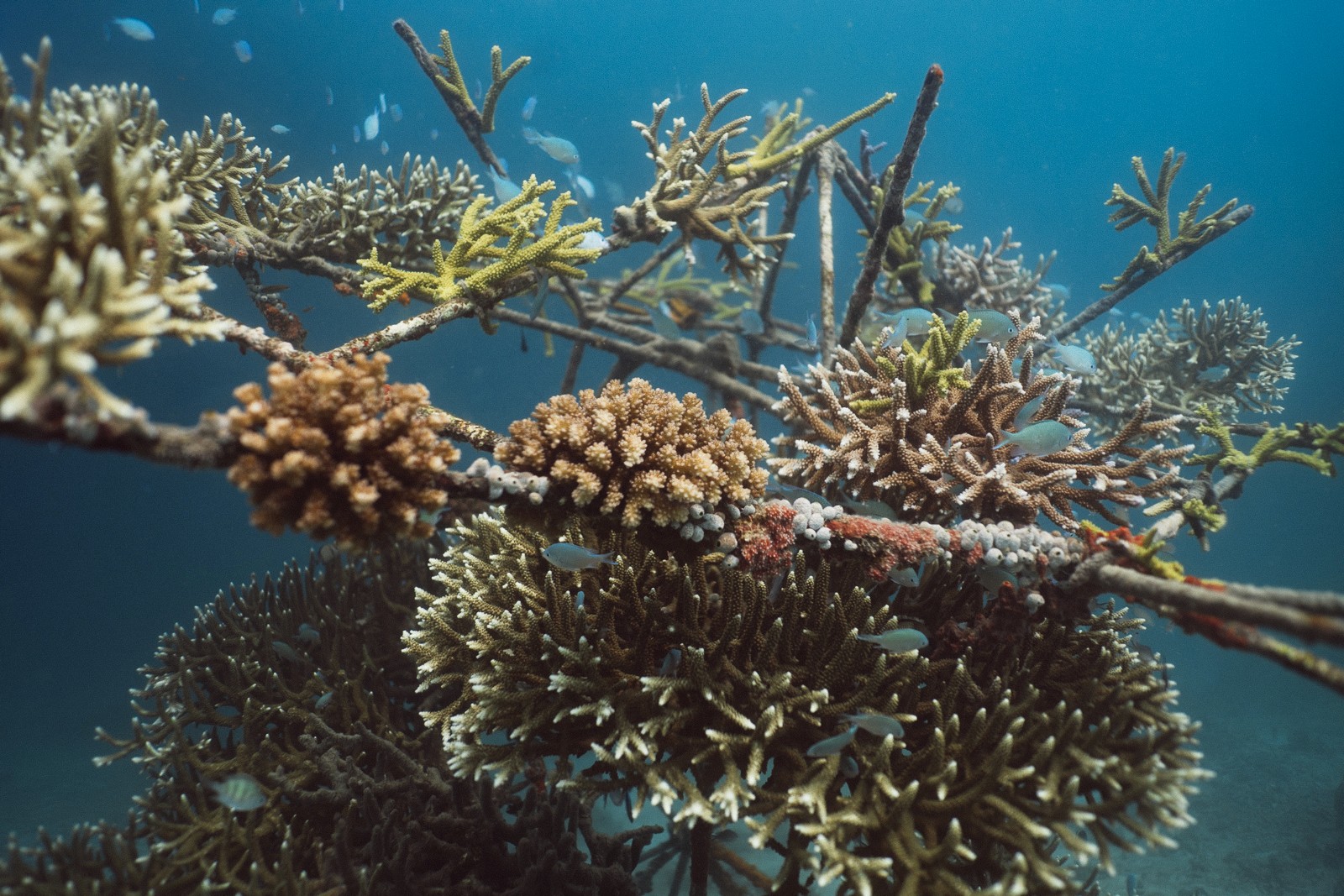
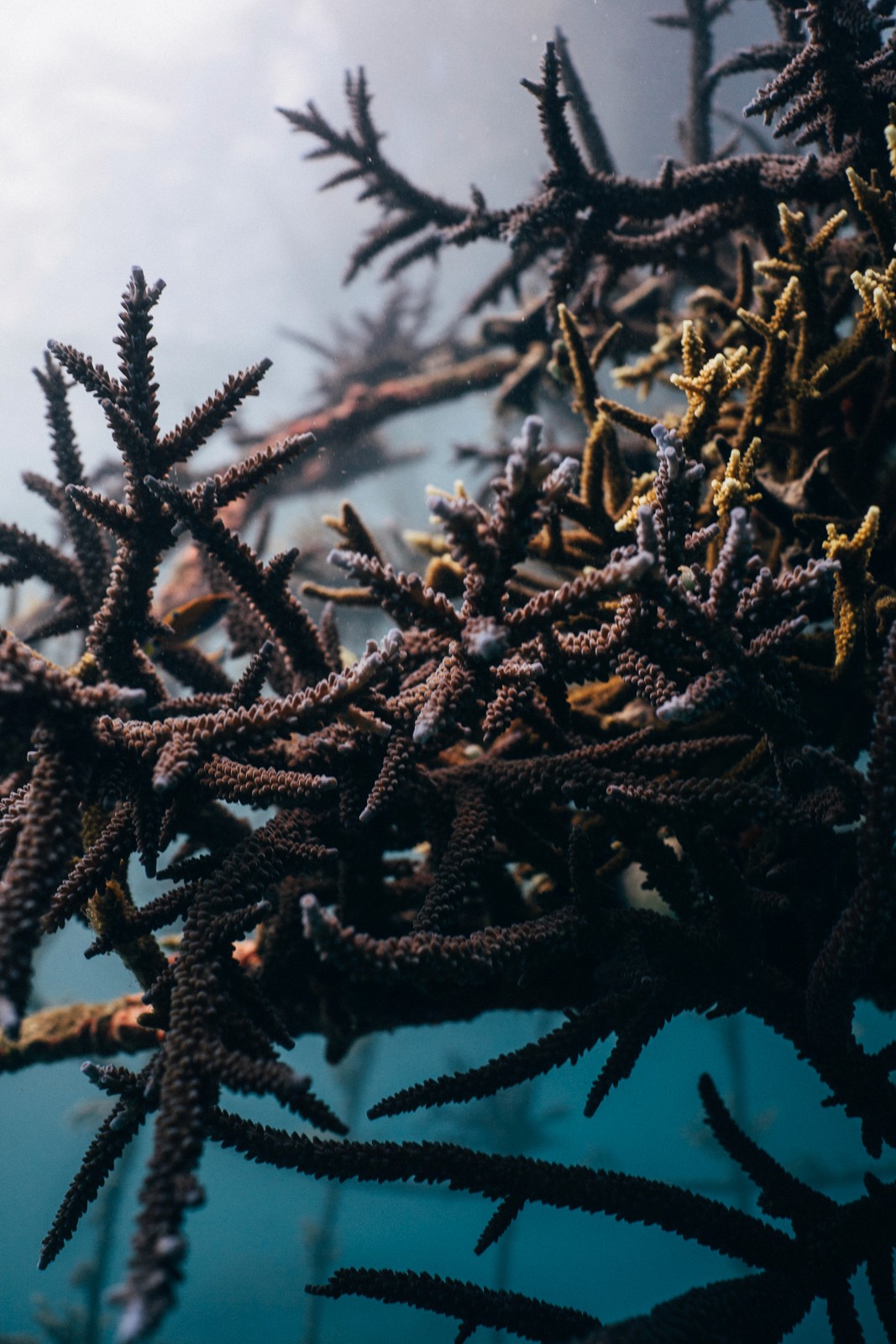
He is immediately, obviously, someone who loves talking about this. Within minutes he is explaining the coral growth rates — eighteen, twenty, sometimes twenty-two centimetres per year for Acropora — and smiling as he says it, the way you smile at something that still surprises you even if have seen it a hundred times. He talks fast. He gestures. He has the quality of a person who has found the thing they were supposed to be doing.
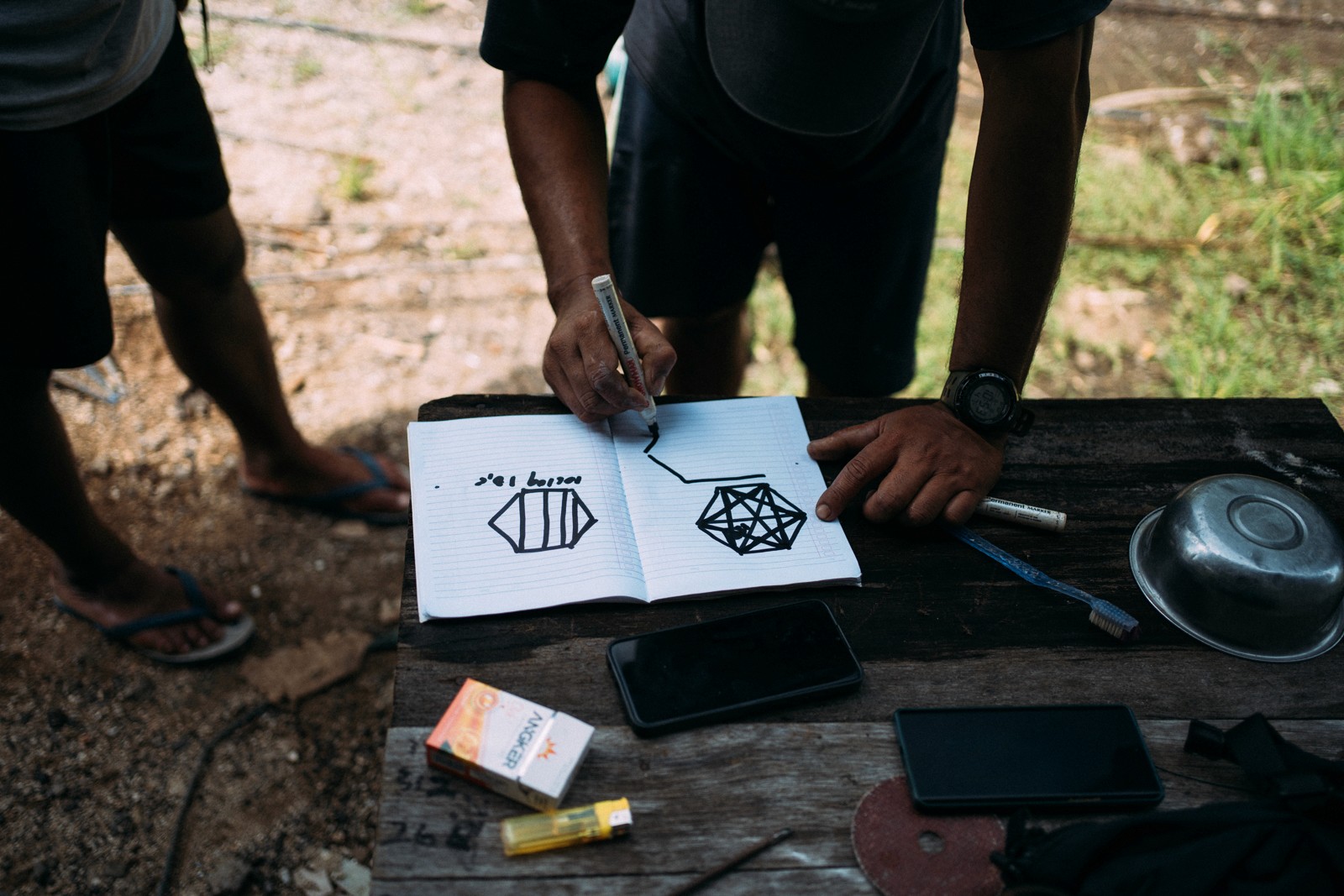
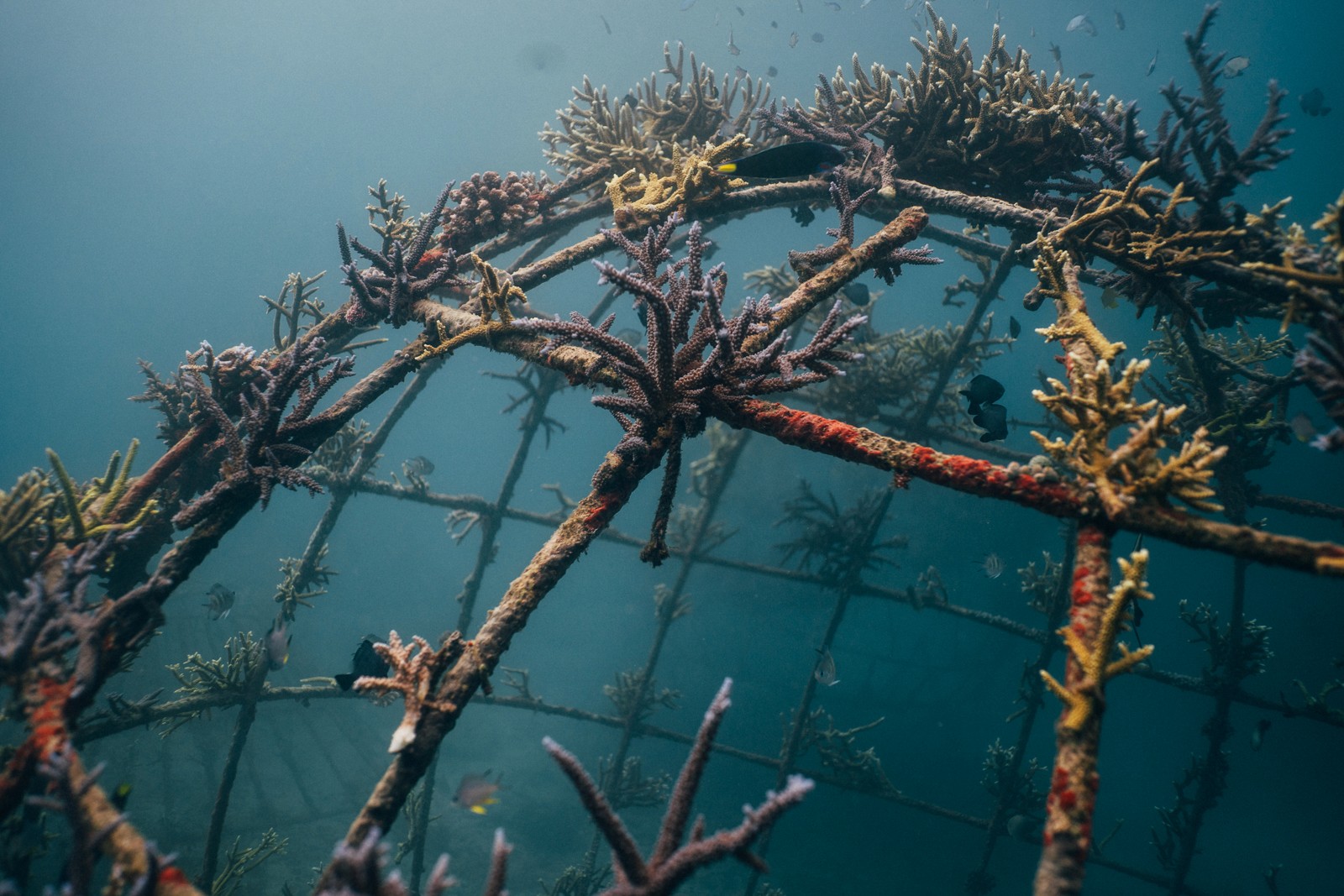
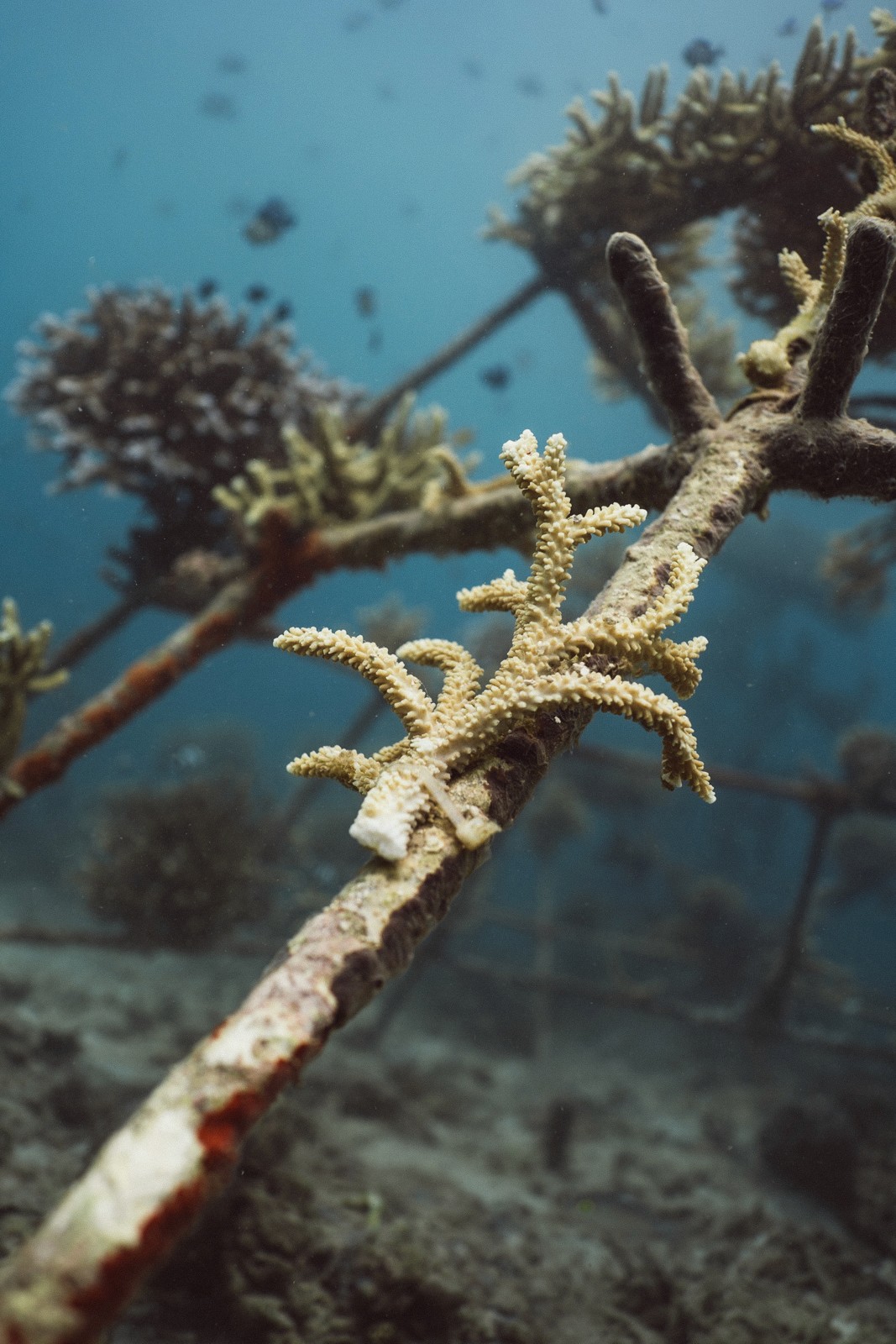
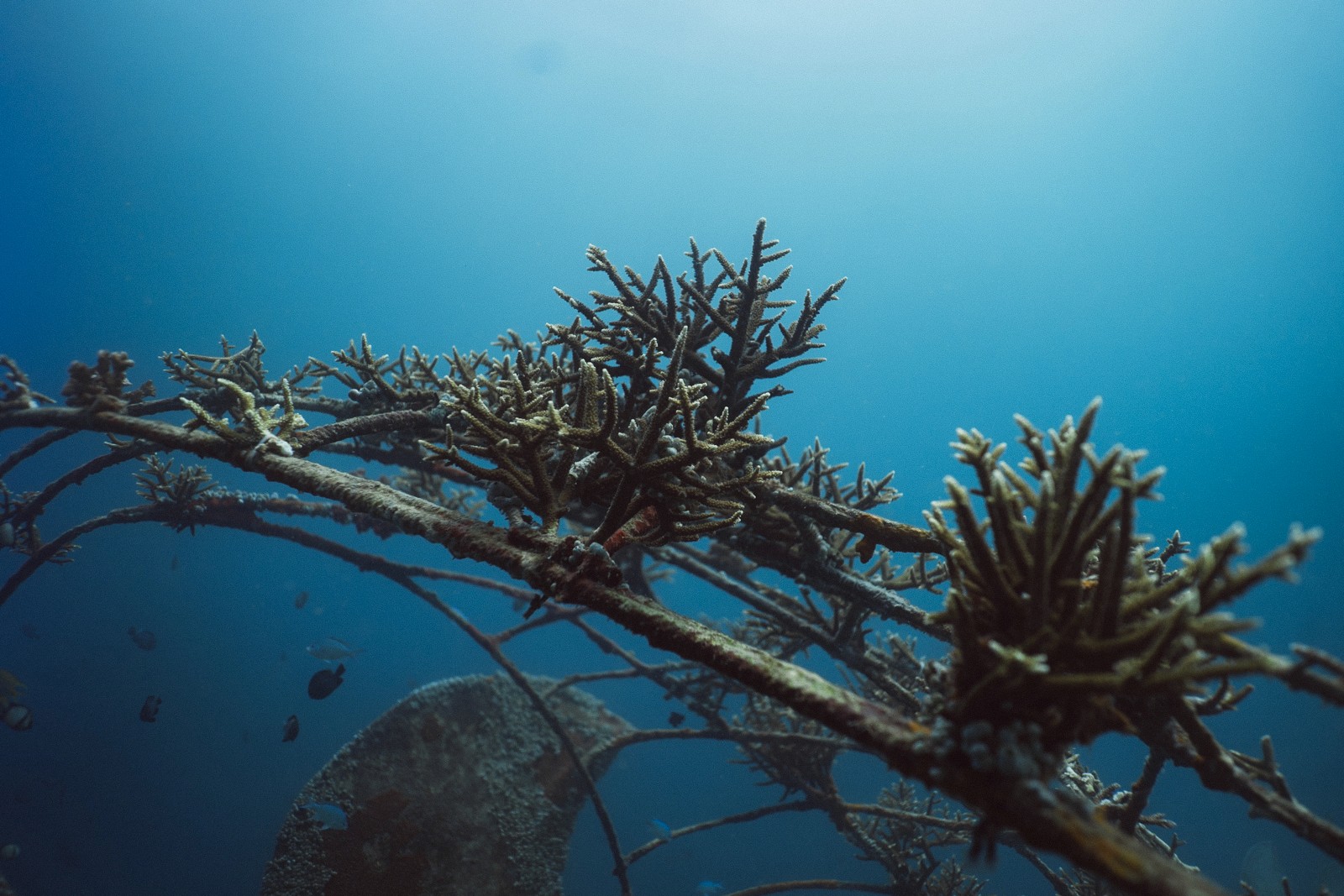
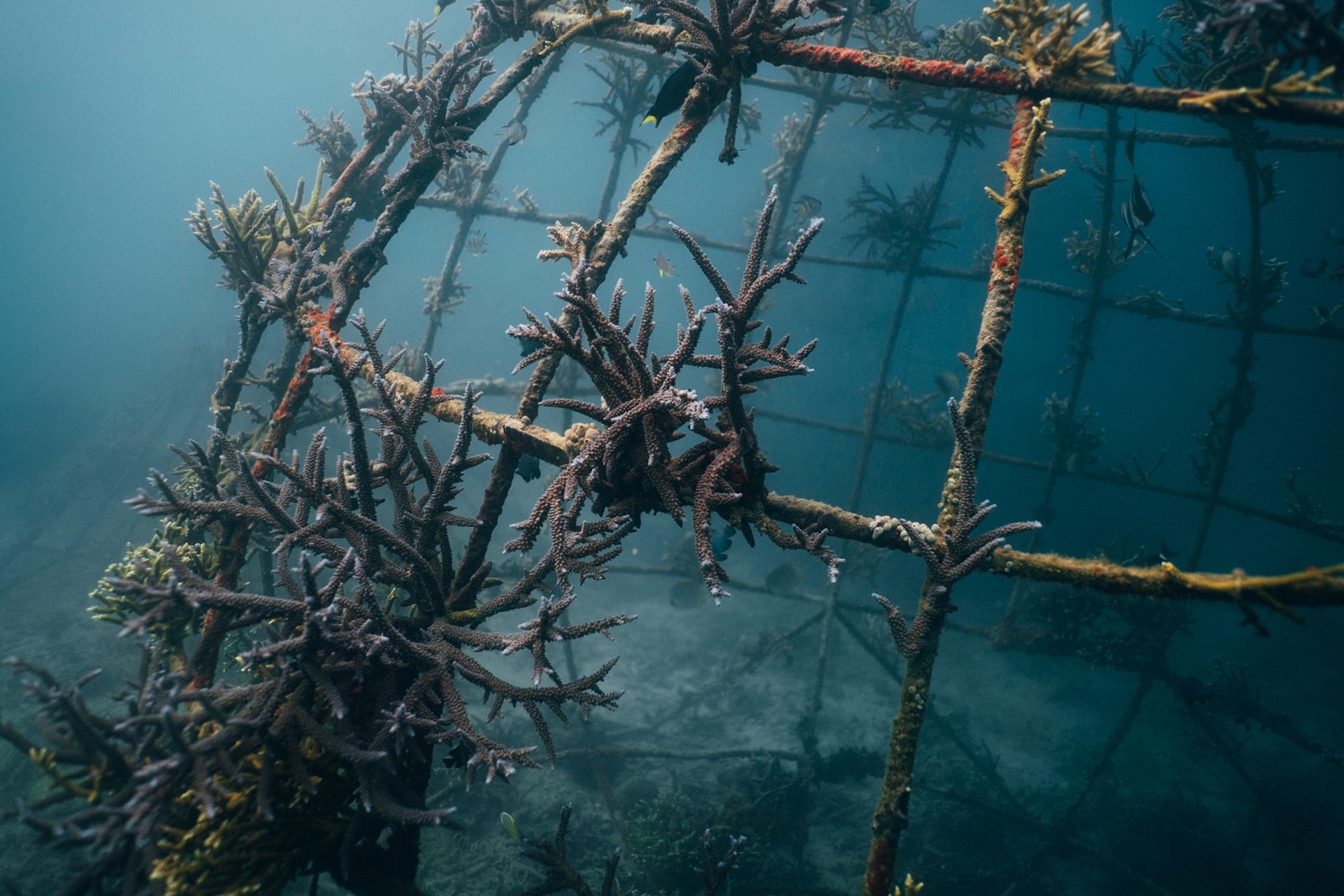
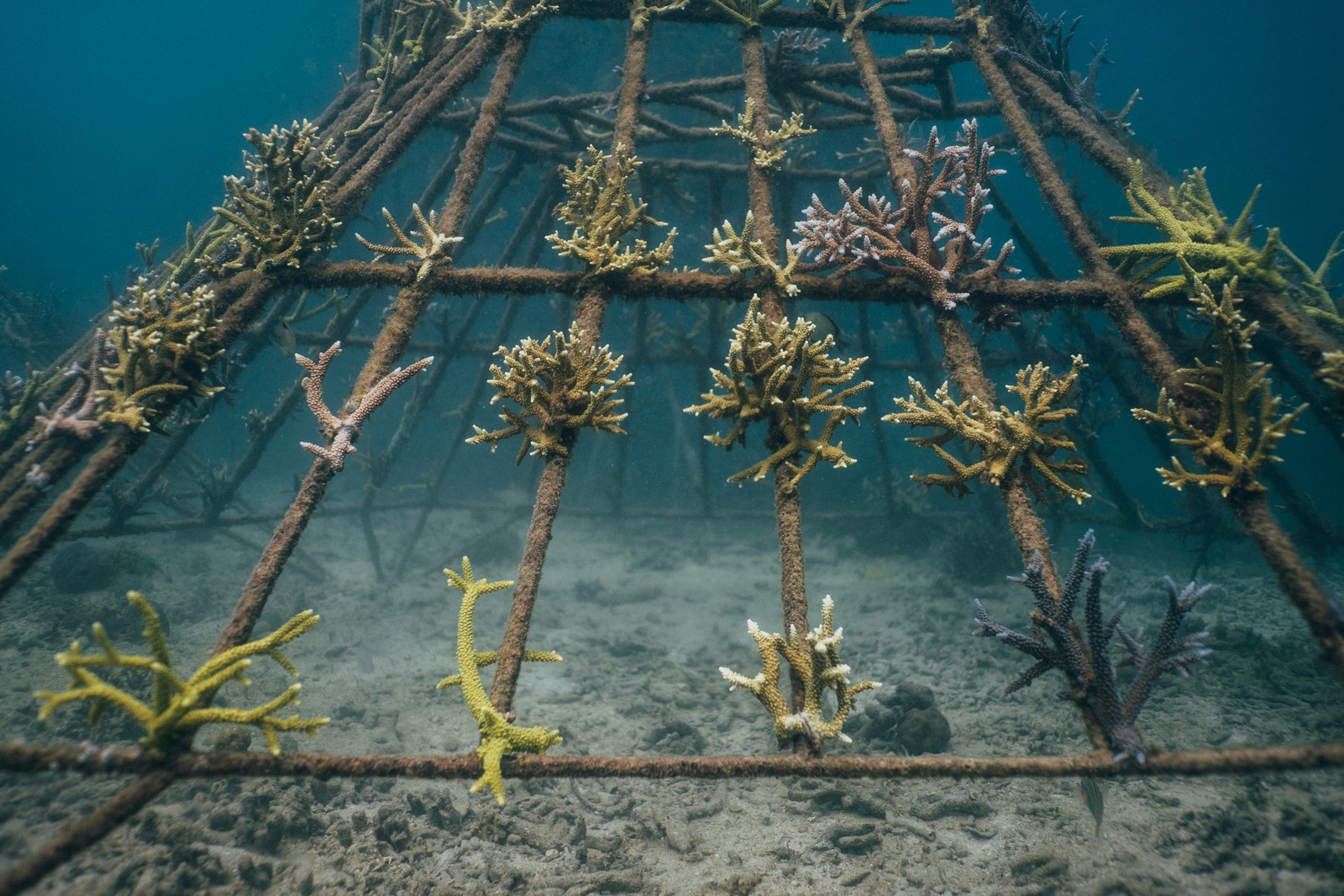
The structures take a moment to read. Up close, the iron has been bent into shapes. These are not the usual tables and frames you see in most reef restoration projects, but figures. Circles large enough to walk through. Each one is coated before it goes into the water, a mixture of epoxy and sand worked into the surface so that coral has something to grip. The result is rough and pale and oddly beautiful, like something halfway between a building material and a living thing, which is exactly what it will become.
What makes Metamorfosa unusual and what separates it from the many reef restoration projects scattered across Indonesia's coastline, is not just what they restore, but where. Sumberkima Bay was not a protected area waiting to be kept pristine. It was a bay that had been fished with chemicals, constantly poisoned, the coral already dead. Restoring it here was a different kind of challenge entirely.
"We're not proud to do this in a marine protected area," Totok tells us. "There is no challenge there."
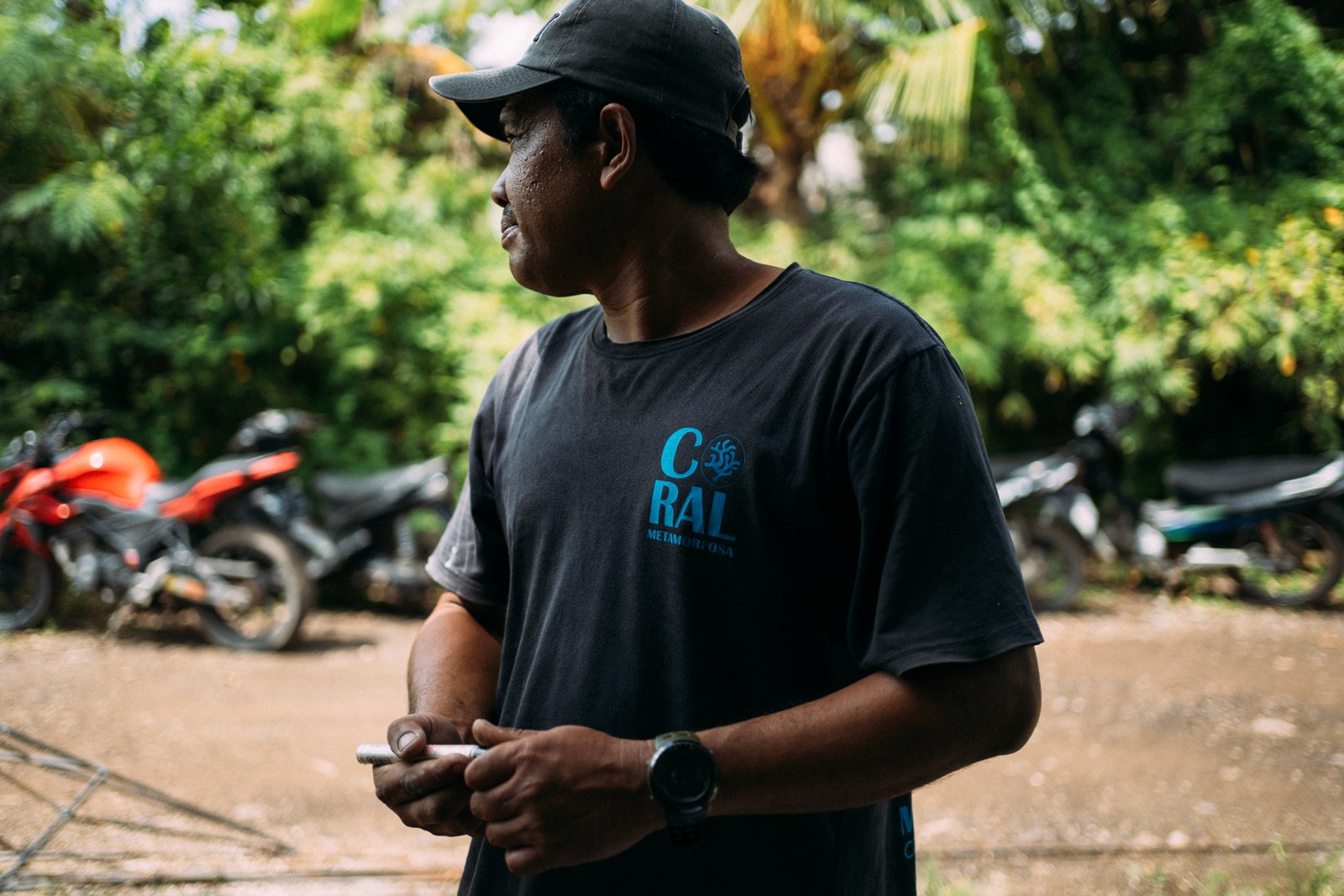
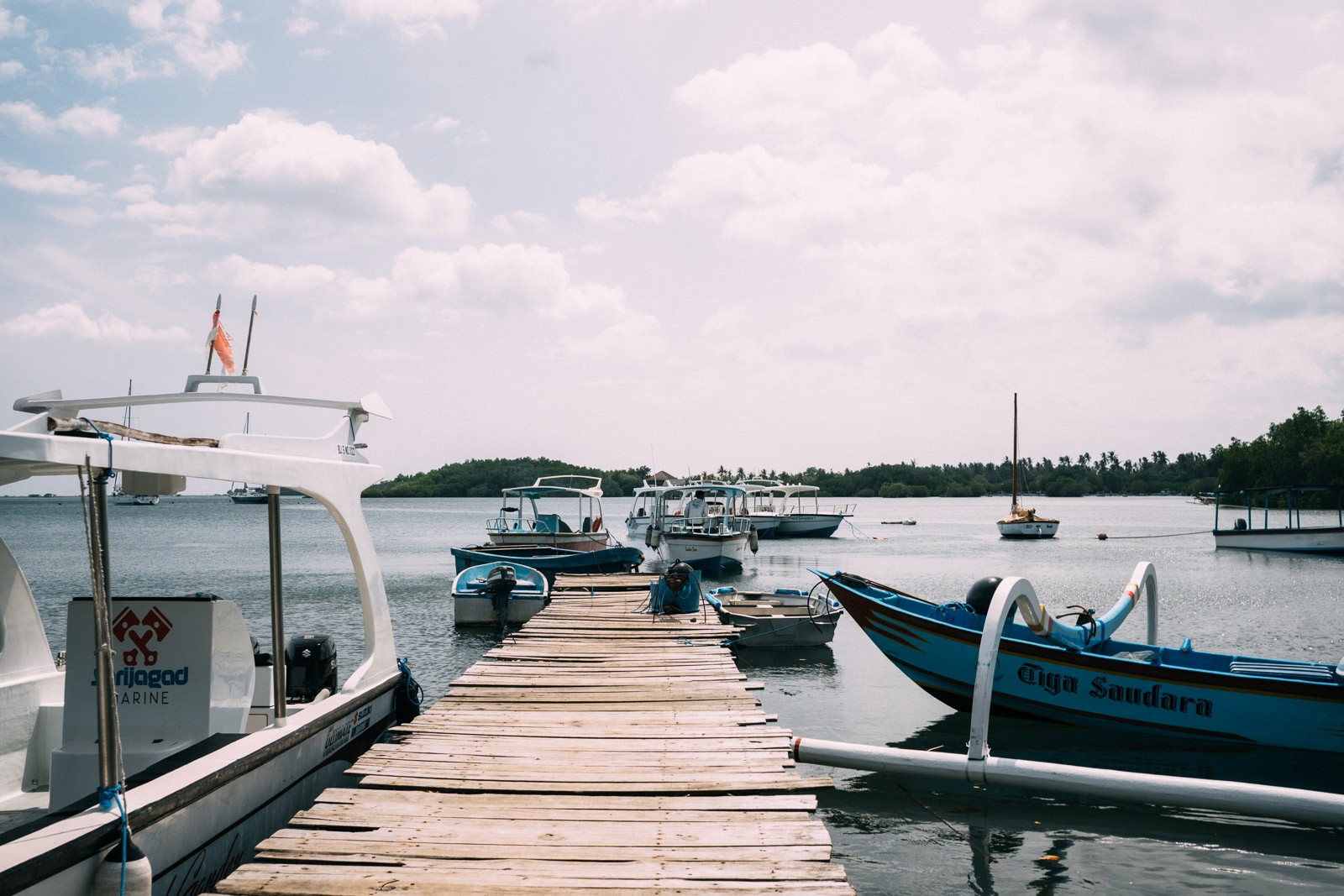
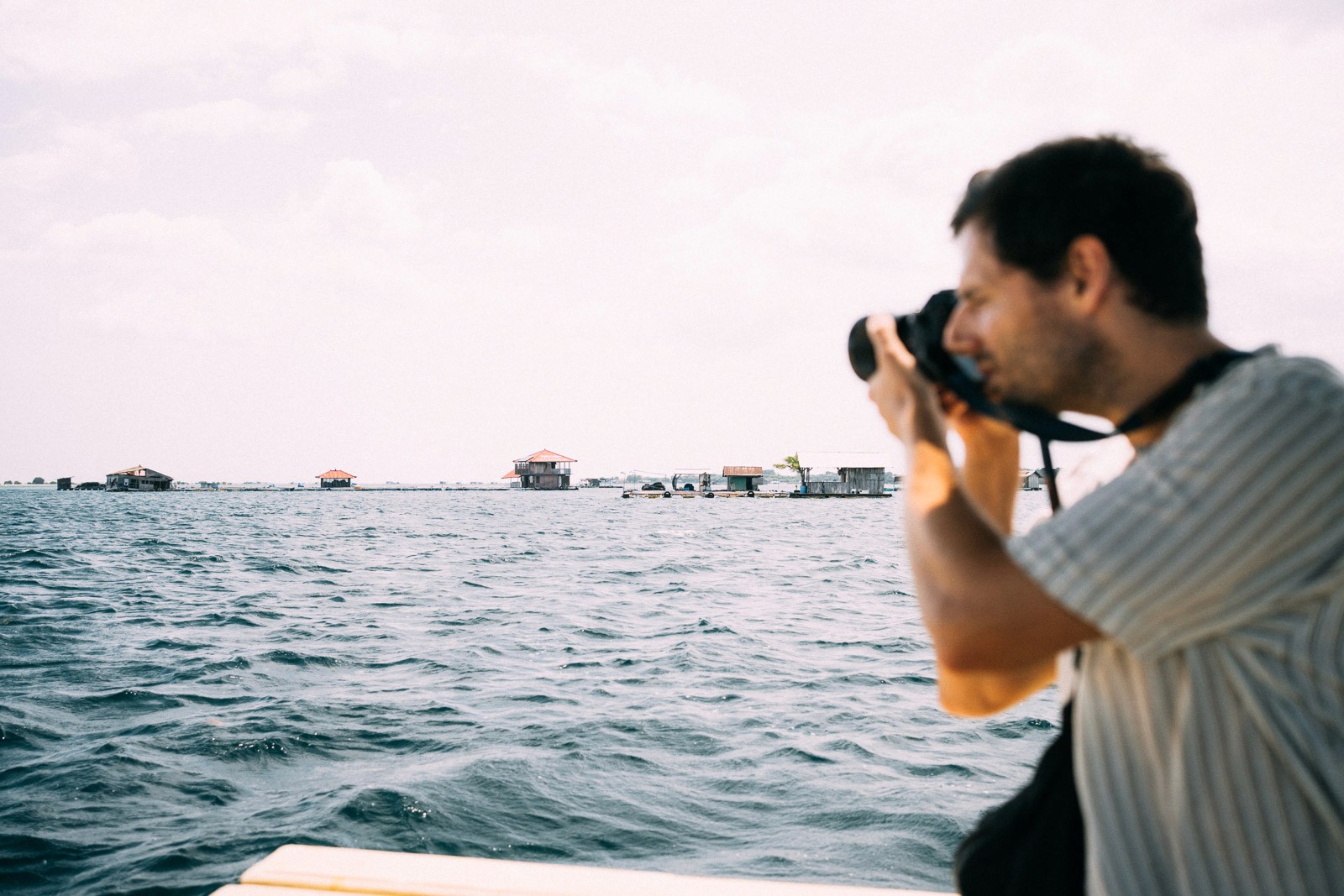
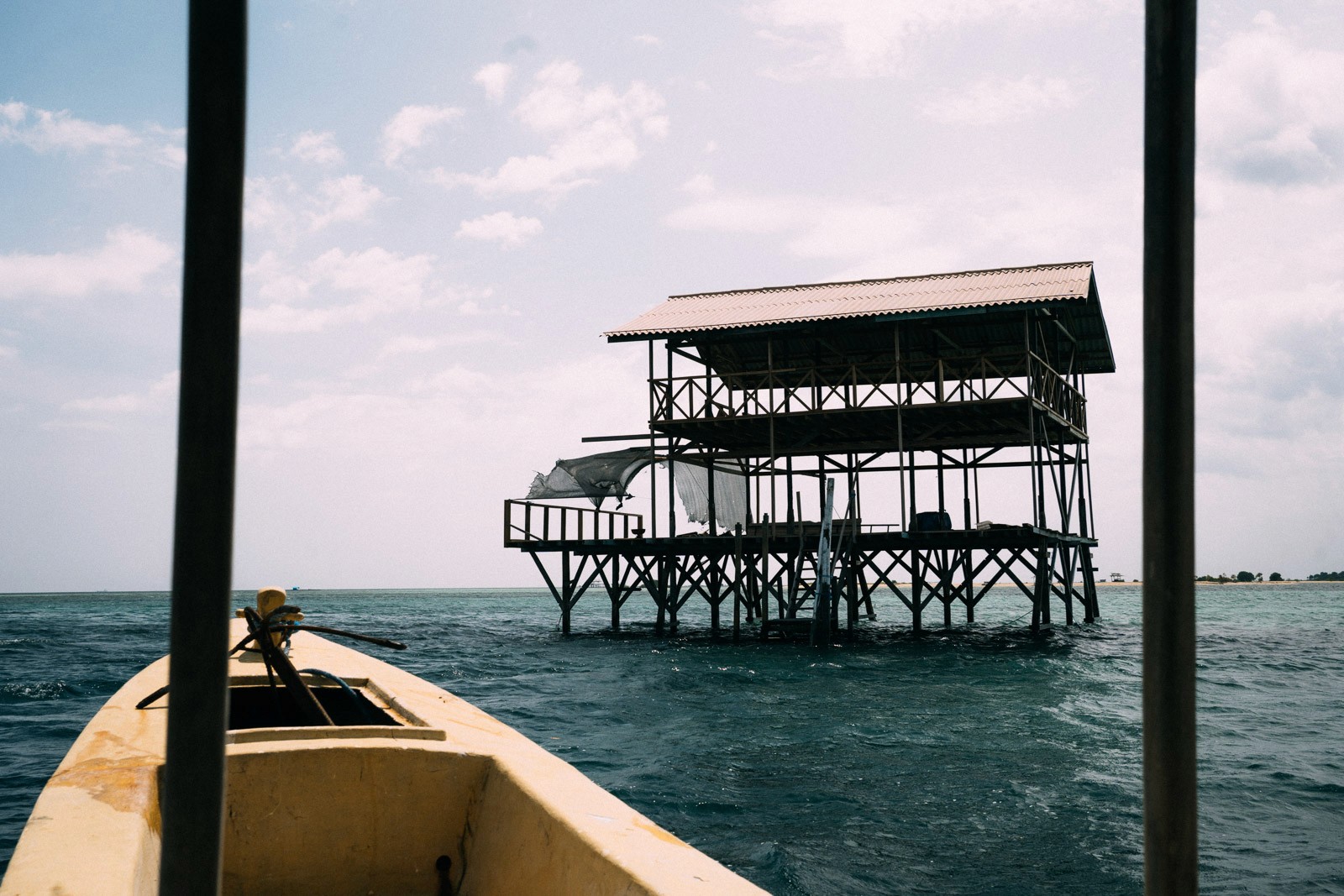
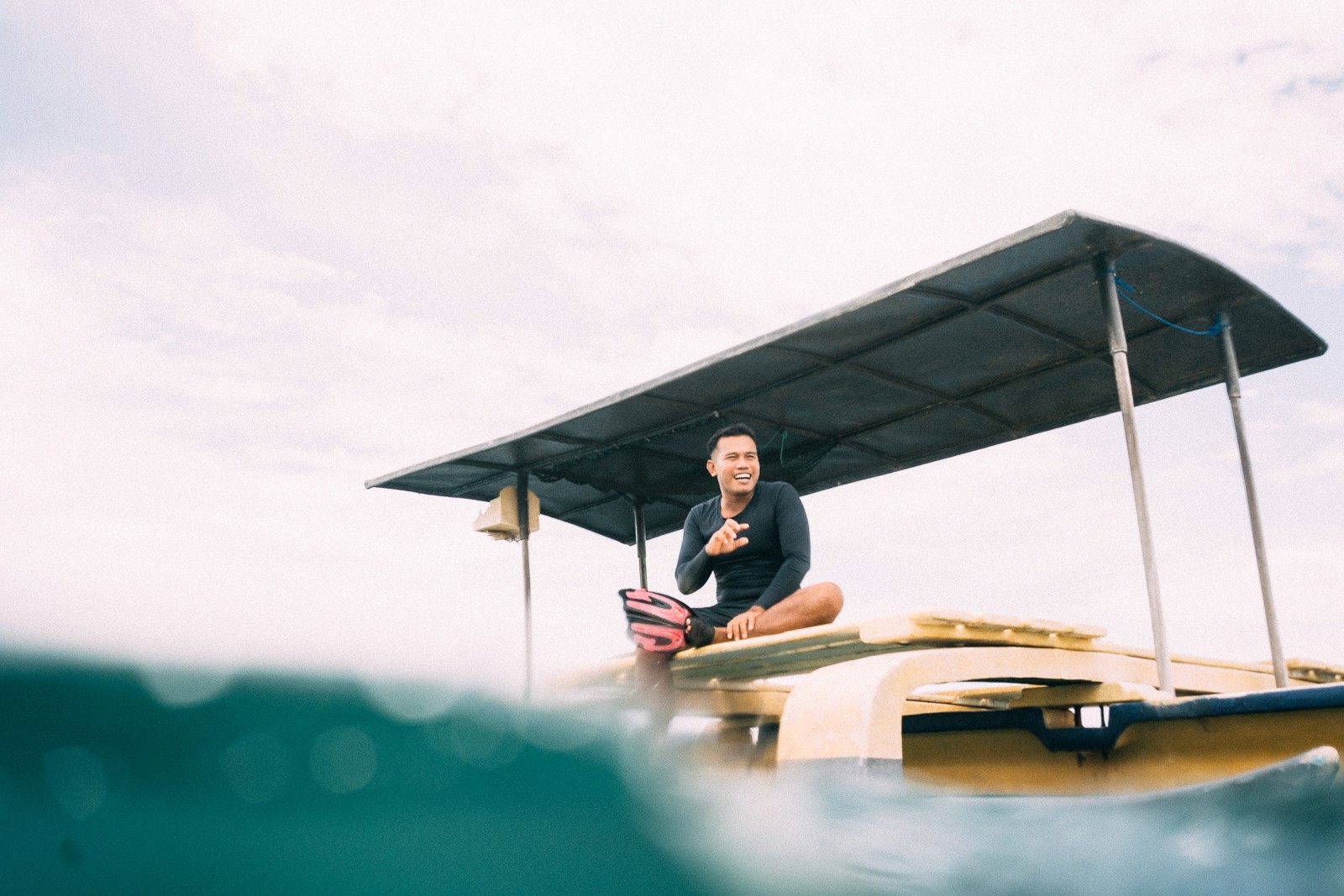
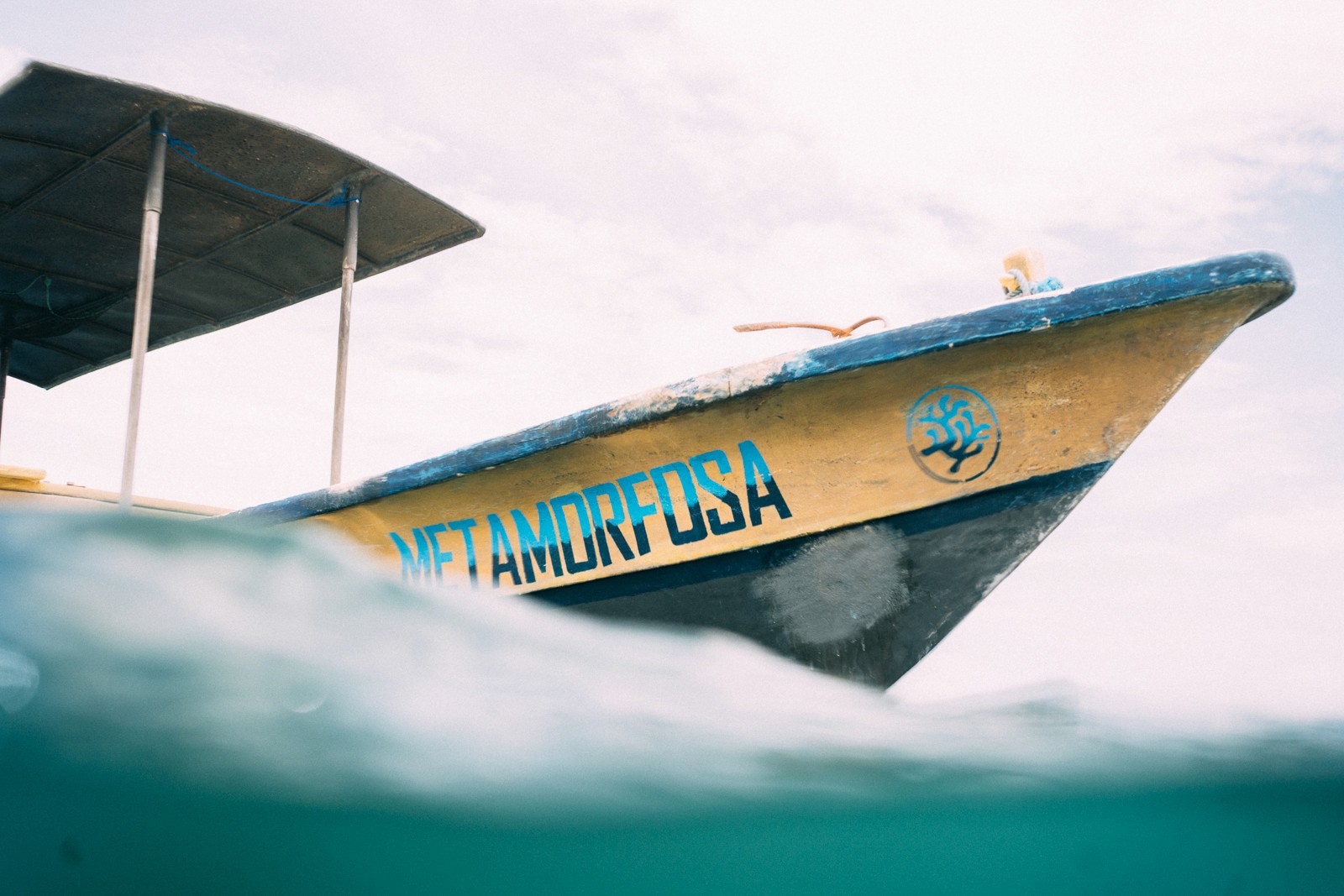
Kadek, other member of Metamorfosa, steers us out the next morning, the wooden boat cutting through a bit wavy water, Metamorfosa painted along its hull. He is quiet in the way of someone who knows exactly where he is going. Between the shore and the Metamorfosa reef, the bay is full of what seems floating houses but are oyster farms. For someone from the Mediterranean, it is an unfamiliar scene, the water farmed as deliberately as any field on land.
It was here, watching how oysters are farmed, that Totok had the idea he is proudest of. Oysters grow suspended from ropes below the surface, cleaned by current, fed by the sea. He had spent years fixing coral fragments to static structures on the seafloor. One day he looked at the oyster lines and thought: why not coral? Hung just below the surface, fed by the same current, coral grows faster than it does on the bottom. When it reaches the right size, it is harvested and transplanted to the reef below. He calls it the coral cathedral. No one else in Indonesia is doing it.
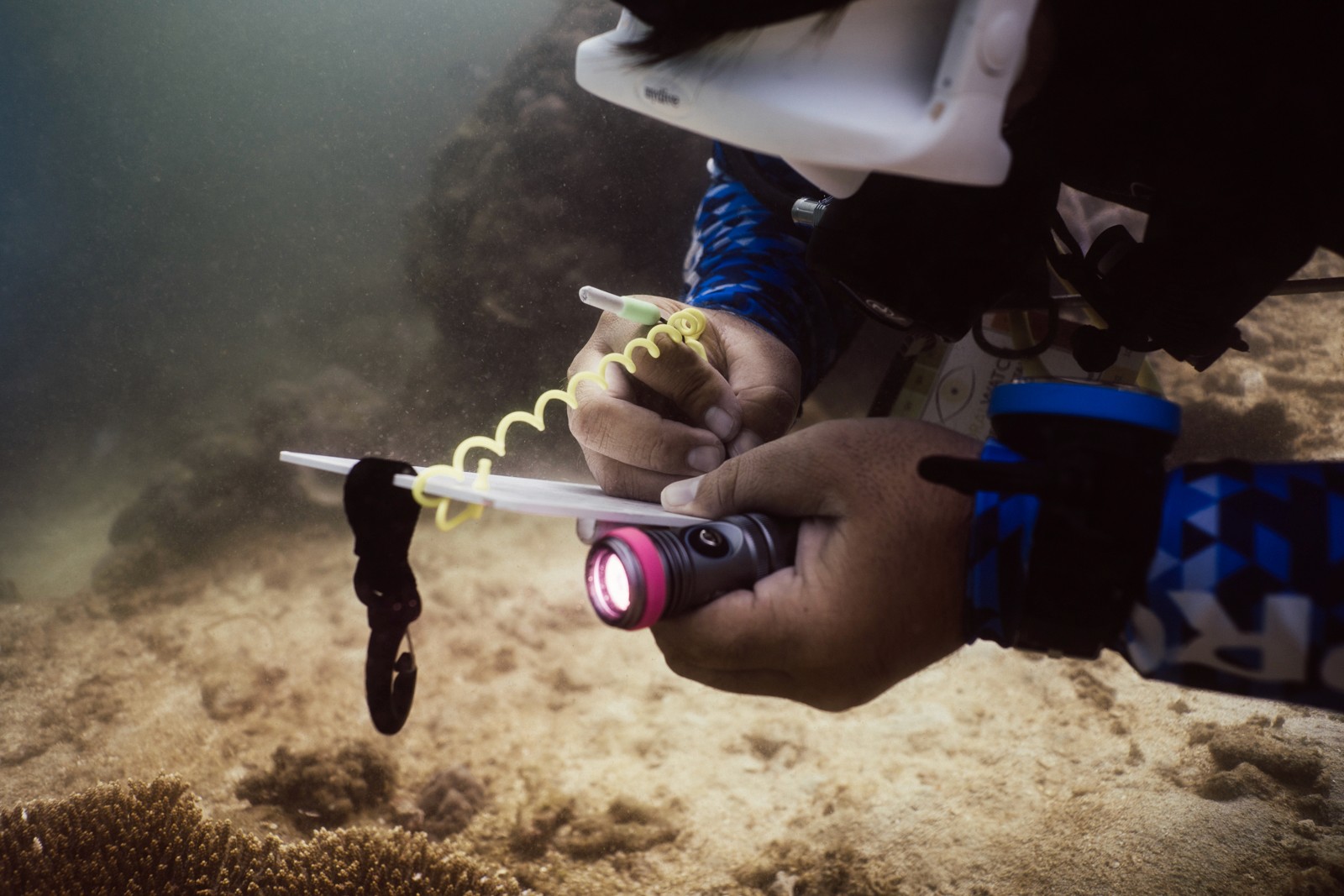
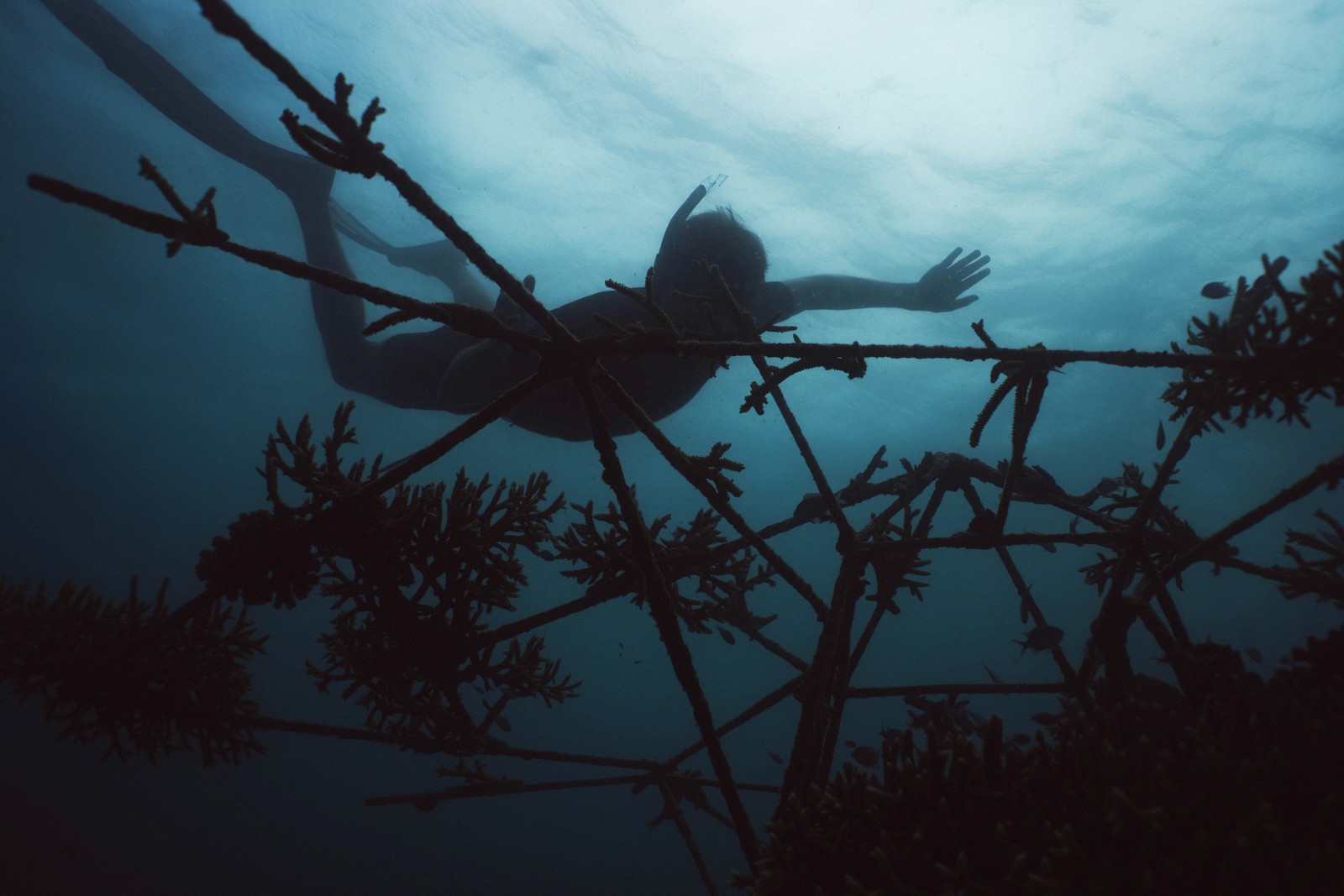
Tim and I start getting ready: fins, weights, camera housing. The first time you go underwater at Sumberkima Bay, it takes a moment to understand what you are looking at.
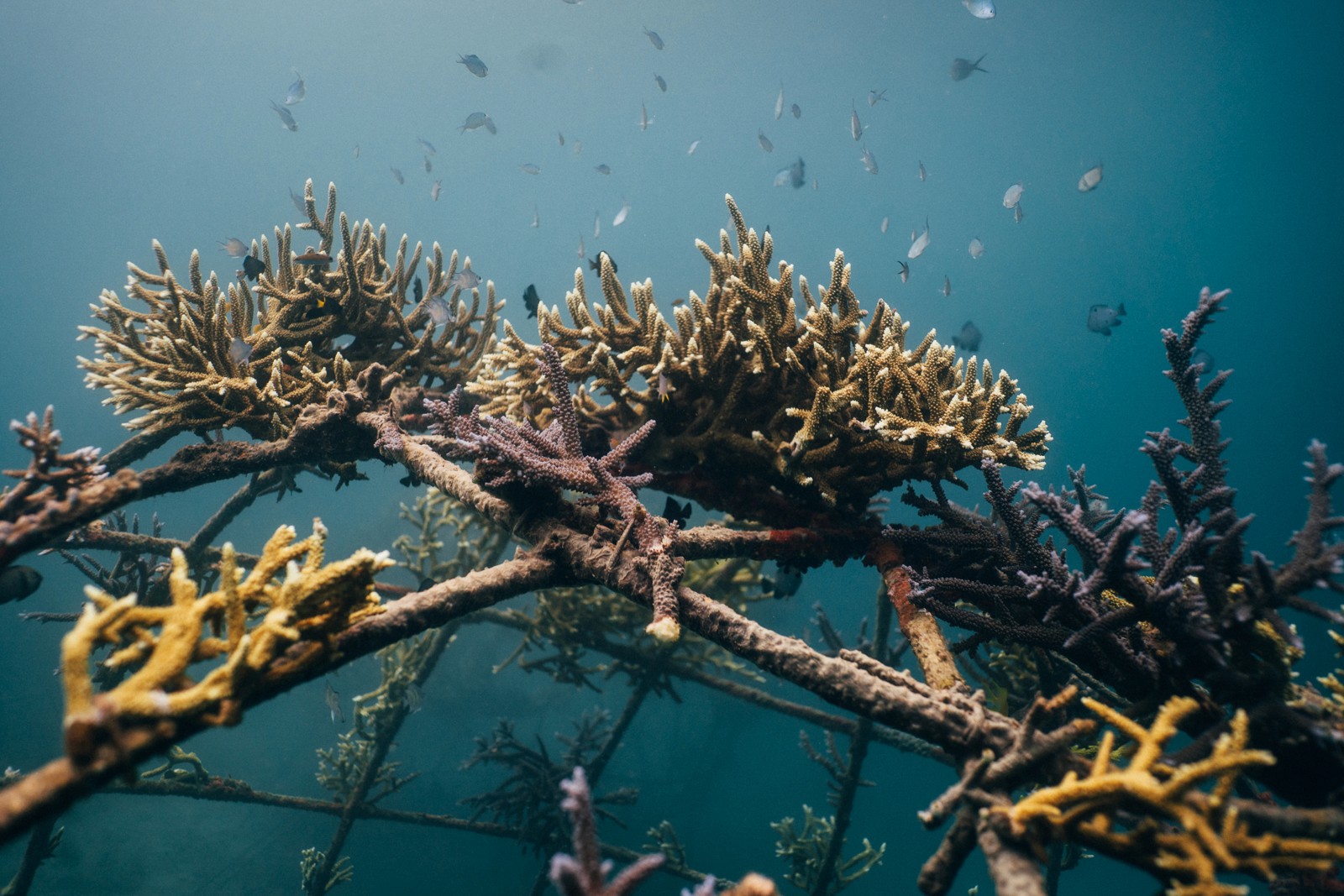
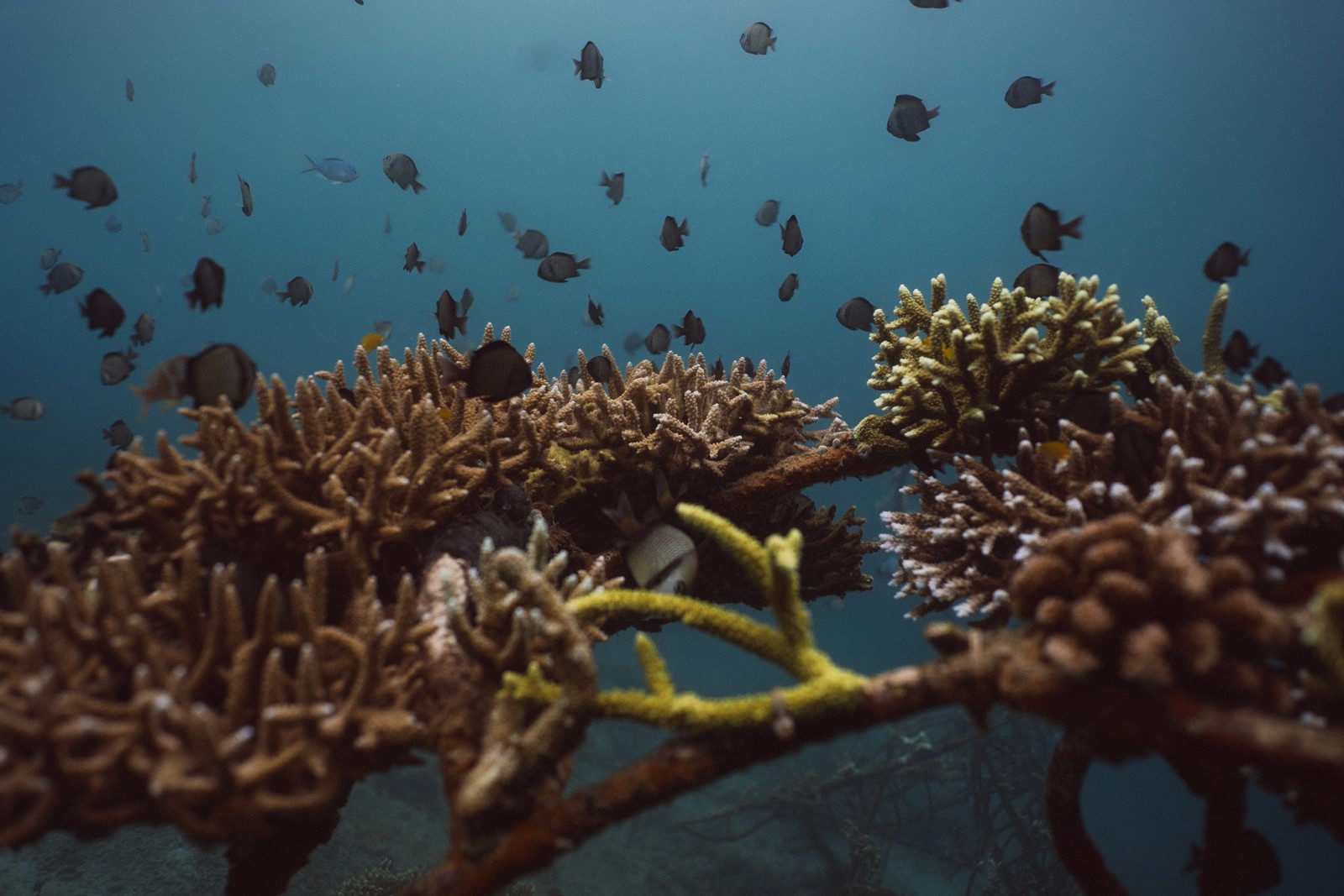
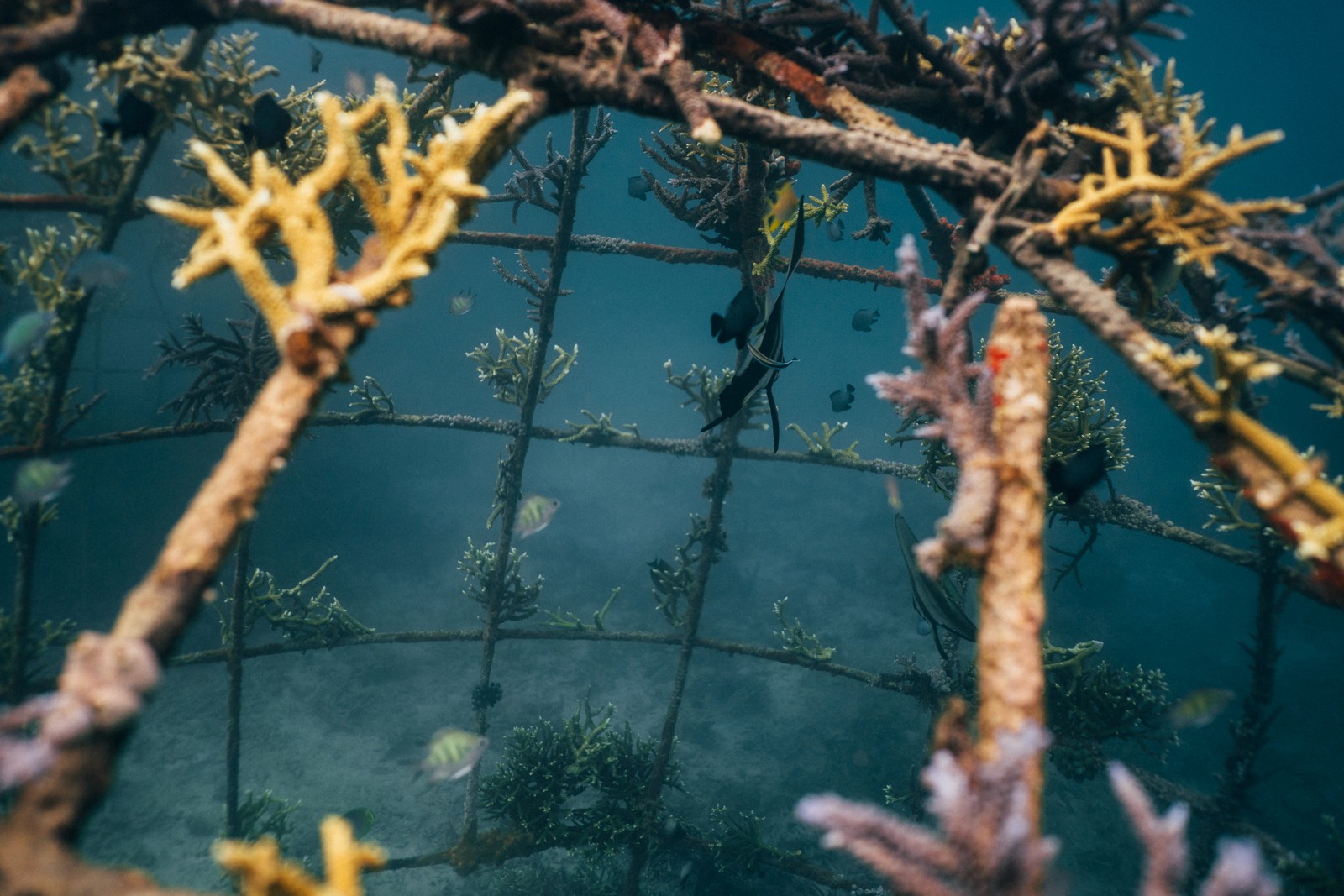
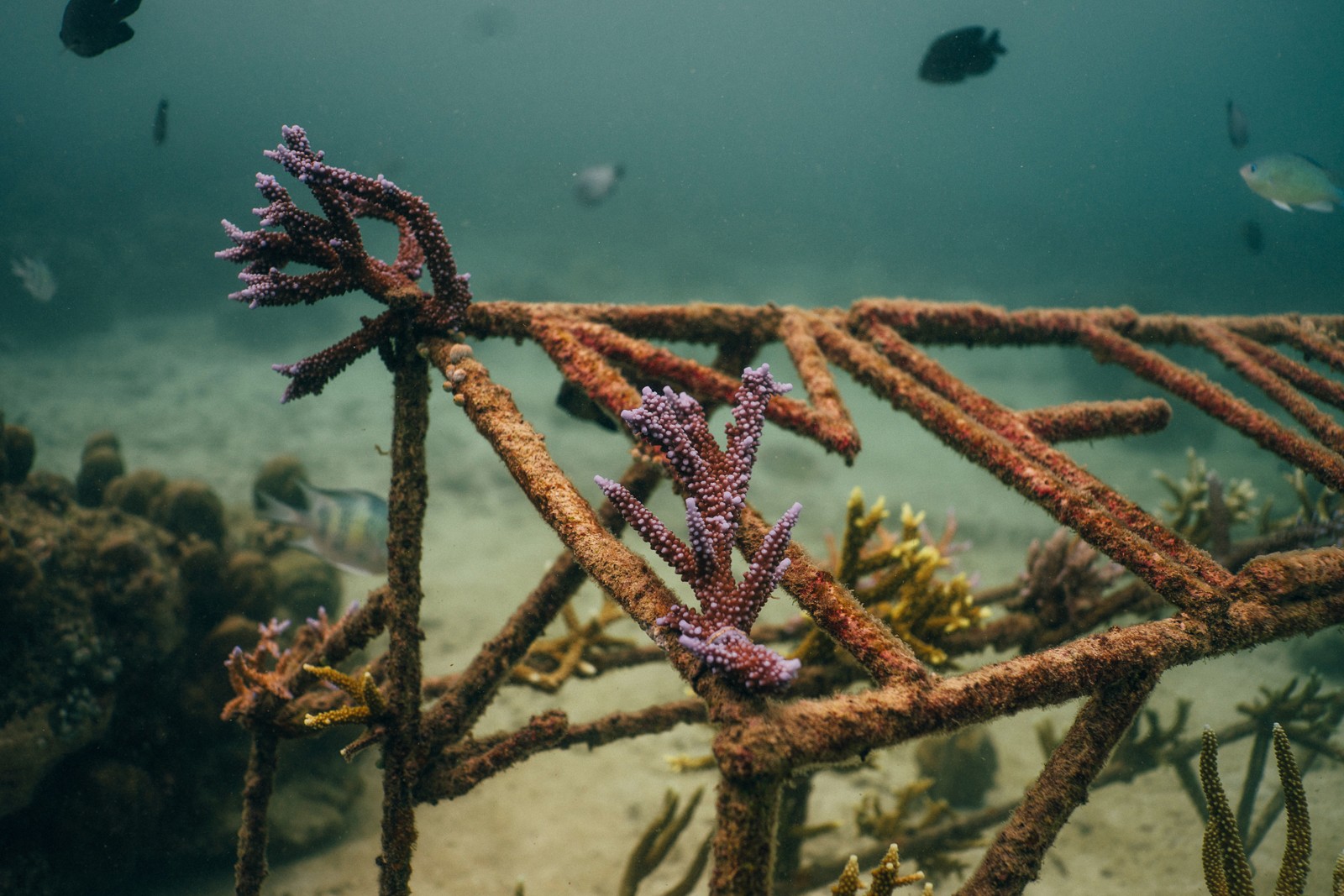
The structures are everywhere, rising from the seafloor in shapes you do not expect: a dragon, a bear, great circular frames taller than a person, smaller forms bent into figures and animals. And on every surface, in every crevice, coral is growing. Orange, purple, green. The textures are extraordinary up close, branching and dense and intricate in ways that feel impossible at this scale. Hundreds of fish move through the structures, unhurried, purposeful, as if the place has always been there.
It has not. Six years ago, this bay was dead.
Swimming through it with Kadek leading the way, it feels less like a restoration project and more like a playground someone built underwater and forgot to tell anyone about. The art is part of it in ways that go beyond aesthetics. A dragon on the seafloor is an event. It makes you slow down, look closer, stay longer. And staying longer means seeing more coral, more fish, more of what has been rebuilt here. The structures do not just hold coral. They change how people pay attention.
If you float on the surface and put your ear to the water, you can hear the reef. A healthy reef makes a particular sound: a constant hum of biological activity, of fish and invertebrates and the living architecture of coral at work. Scientists have found that reefs producing this sound attract more fish, that the noise is itself a signal of health. In Sumberkima Bay, you can hear it.
We meet Bernard and Jane for coffee at the Sumberkima Hill restaurant at the end of the rainy season, the first week of March. After a few days here, it is the first time we have seen Sumberkima Village from above, and the view stops you. The bay spreads out below, clear and vivid green, the trees still lush from months of rain. After days spent looking at the reef from underneath, seeing it from here feels like a different kind of understanding.
Jane is warm and practical, the kind of person who built something carefully over a long time and knows every corner of it. She mentions, almost in passing, that Bernard is the one behind Metamorfosa, and then she leaves us to talk.
The story of how they came to be here at all is not a business story. Thirty-five years ago, Bernard and Jane were travelling the world when they came across Sumberkima Village. They went back to the Netherlands. But something stayed with them about this bay, this water, this particular stretch of coast in Northwest Bali. Years later, when their children were teenagers, they came back. They built a home. Friends came to visit and never quite left. Friends of friends followed. Slowly, almost accidentally, Sumberkima Hill became what it is today.
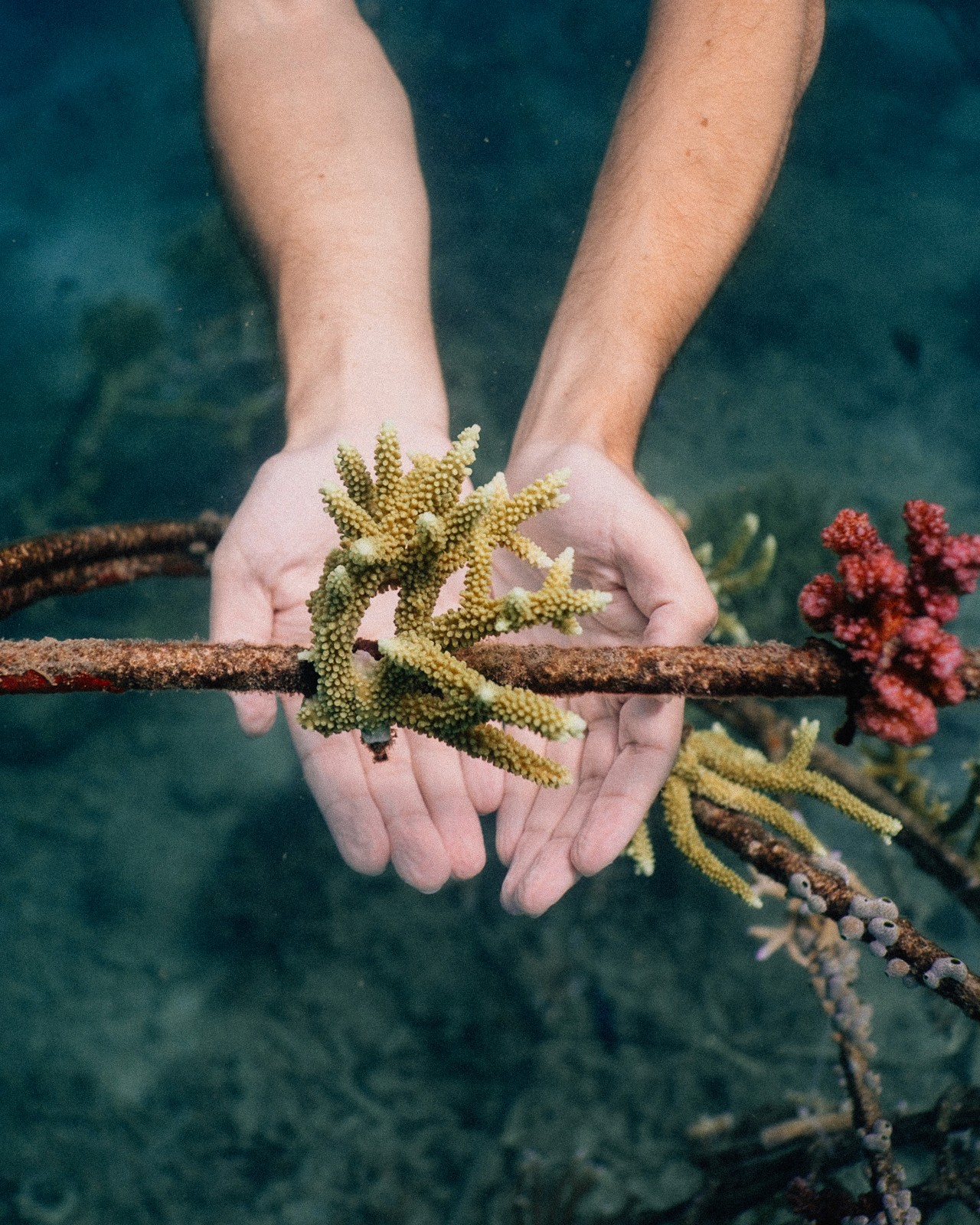
When Totok asked if he could be their dive instructor, Bernard saw a damaged bay and thought it had potential. The two of them began experimenting. Connecting coral fragments to threads, hanging them in the water. Watching to see if they would grow.
They grew.
He is not romantic about what came next. That is what makes him interesting.
"Money is part of sustainability," he says at one point, almost flatly. "If things don't create value that people are prepared to contribute to, they're not sustainable." He has been funding Metamorfosa from the beginning. He does not want to fund it forever. The goal was always for the project to generate its own momentum through the people who come to snorkel, the donors who sponsor a structure, the guests who plant a baby coral and leave feeling they have left something of themselves in the bay.
The art structures are part of this logic too. A dragon on the seafloor is not just a substrate for coral. It is a reason to come back. It is a photograph someone takes and shares. It is something a kid will remember for twenty years. Alexander Milov, the artist behind the dragon and the bear, came to Sumberkima Bay and is now developing what Bernard describes as a universe of connected figures, each one part of a story that will unfold across the seafloor over years.
What Bernard understood, and what Metamorfosa demonstrates, is that conservation does not have to ask people to sacrifice. It can ask them to invest in something beautiful. The result is the same reef. The emotional logic is entirely different.
"We had a blank canvas," he says. "We realised maybe we can develop something that works as an example of how you develop a destination in a sustainable way."
Pemuteran is known across Bali and beyond precisely because of what lives underwater here. The reef is the reason people come. It is the reason there are dive operators, guides, boat captains, homestays. The entire economic logic of this stretch of coast runs through the water, and what lives in it.
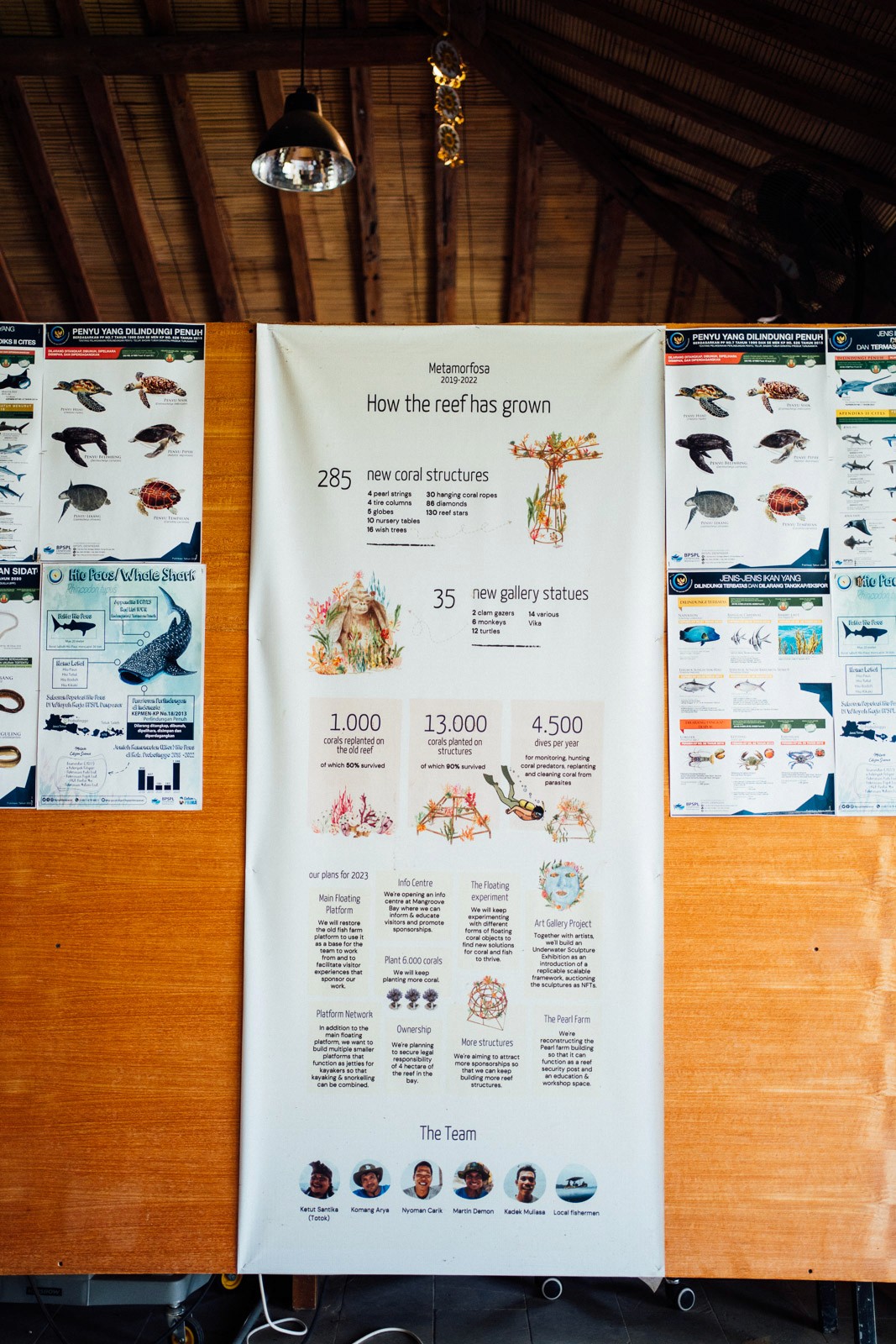
Biorock has operated here for decades. Metamorfosa has been working in Sumberkima Bay since 2019. The wider Pemuteran area has become, almost in spite of itself, one of the most concentrated reef restoration zones in Indonesia. This is not coincidence. It is what happens when communities decide the reef is worth more alive.
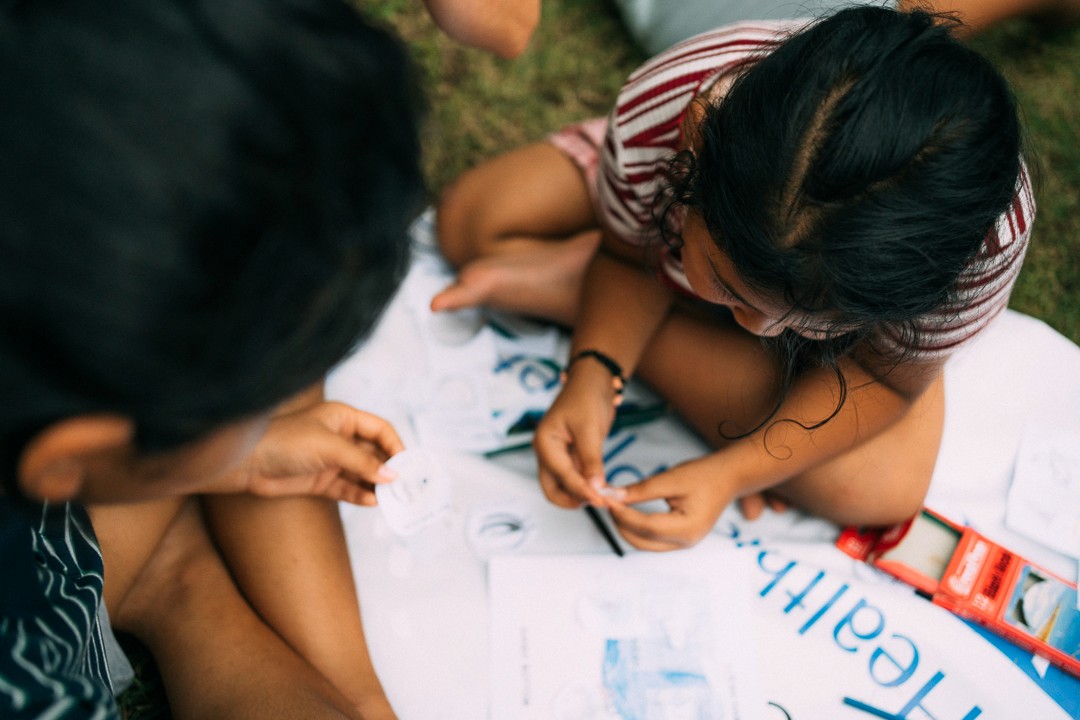
The fishermen who once used chemicals to take everything they could from a dying reef now attend weekly meetings about protecting it. Not because they were told to. Because they understood what was at stake for their own lives. Three communities have been meeting with the Metamorfosa team since 2019. The reef, for them, it is a coastline, a livelihood, a source of food, the reason anyone comes to their bay at all.
"Conservation and restoration build jobs," Bernard says. "They build a sense of community. They build love for the ocean."
That love is not incidental. It is the mechanism. A community that loves its reef will protect it. A reef that is protected has a better chance of surviving what is coming.
The IPCC clearly states that reef restoration alone cannot protect coral beyond 2030 without drastic cuts to global emissions. Totok knows this. Bernard knows this. They are not under any illusion about what rising ocean temperatures will eventually ask of a reef built in a degraded bay in Northwest Bali. But they are also not waiting for permission to act, or for certainty about outcomes, or for someone else to go first.
Six years ago, everyone said Sumberkima Bay was gone. The data on Indonesia's reefs is grim: more than 85% are under threat, and of the hundreds of restoration projects attempted over the past three decades, the majority lack long-term monitoring or climate-smart design. Against that backdrop, what Totok and his team have built with daily dives, weekly community meetings, thousands of corals planted by hand in the most damaged part of the bay, is either stubborn or visionary, depending on how you look at it.
On a Sunday morning in the workshop, Totok said what the fish say better than any data point.
"We cannot count them anymore. There are too many. That's a good problem to have."
He was smiling when he said it. The kind of smile that belongs to someone who was told it couldn't be done, and did it anyway.
Metamorfosa is a nonprofit reef and hill restoration organisation based in Sumberkima Bay, Northwest Bali. To support their work or sponsor a coral structure: metamorfosa.org
Photos: Tim Steppich and Inés Mas de la Peña
More projects