Women of the Tide
Location
Zanzibar, Tanzania
Year
2024
This work documents the women of Zanzibar who cultivate seaweed in the intertidal zone, capturing their relationship with the ocean while reflecting on resilience, vulnerability, and the severe climate change impacts on this island.
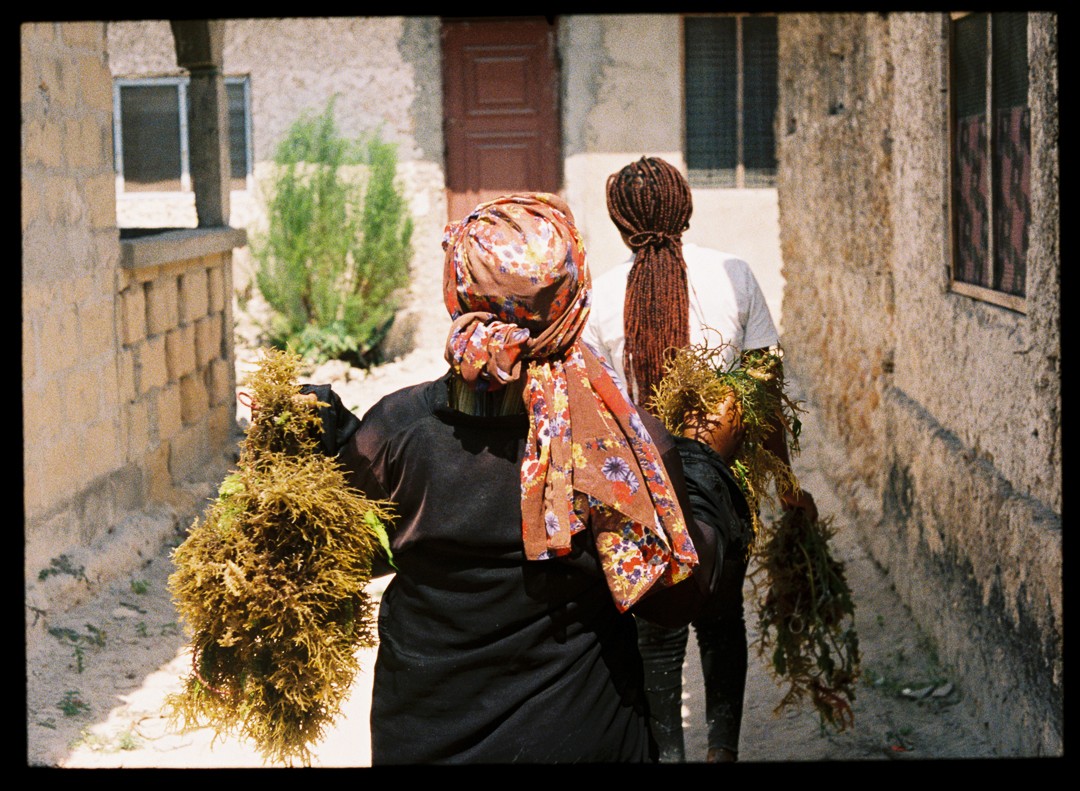
The co-founder of Coastal Biotech picks us up in a van. We hurry toward it, hoping for air conditioning. It is already warm for early morning. As we drive, he explains that in many coastal villages it is the women who farm seaweed while the men go out fishing.
There is a strong connection to the ocean here, yet many women do not swim. It is a relationship shaped by tradition, stories, and inherited roles.
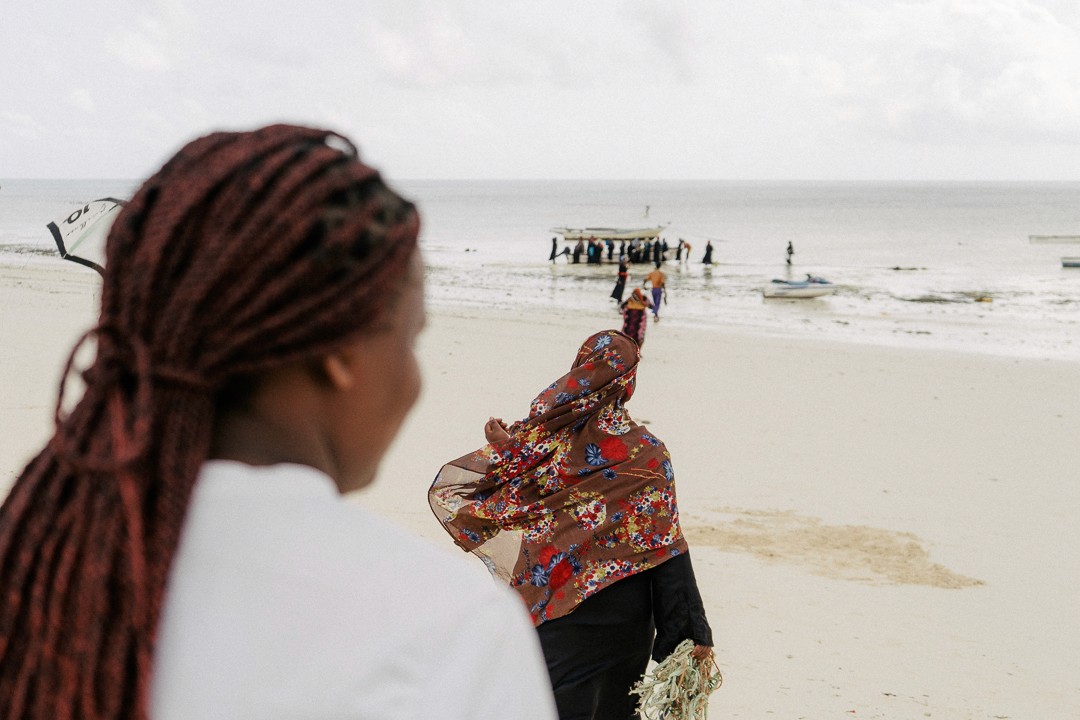
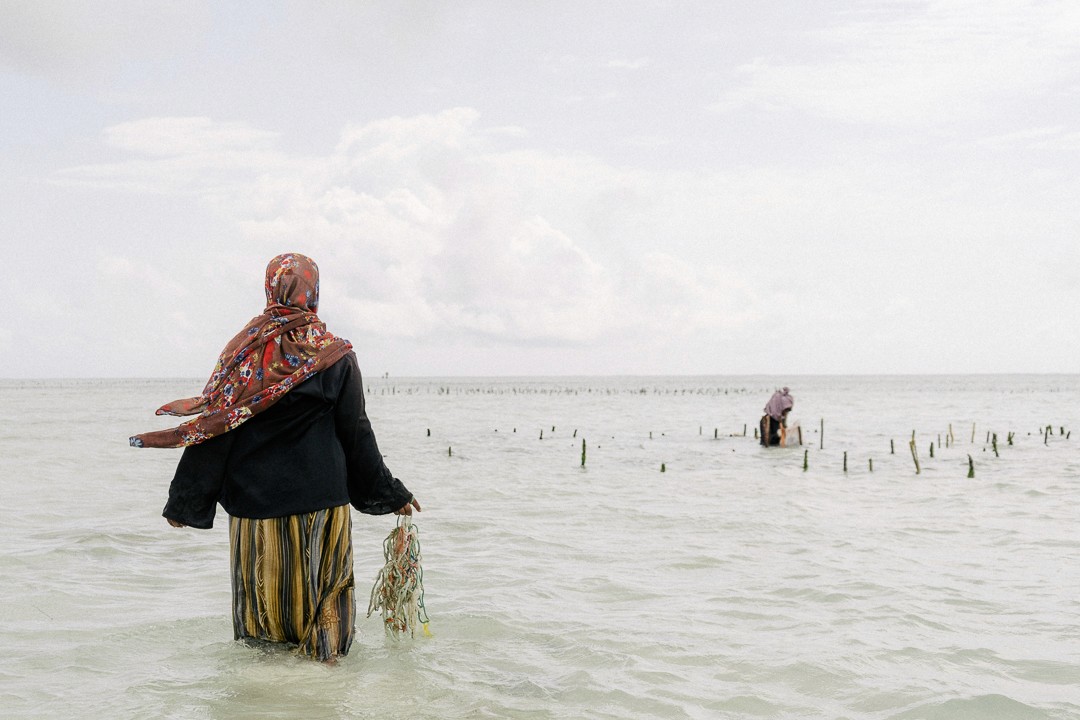
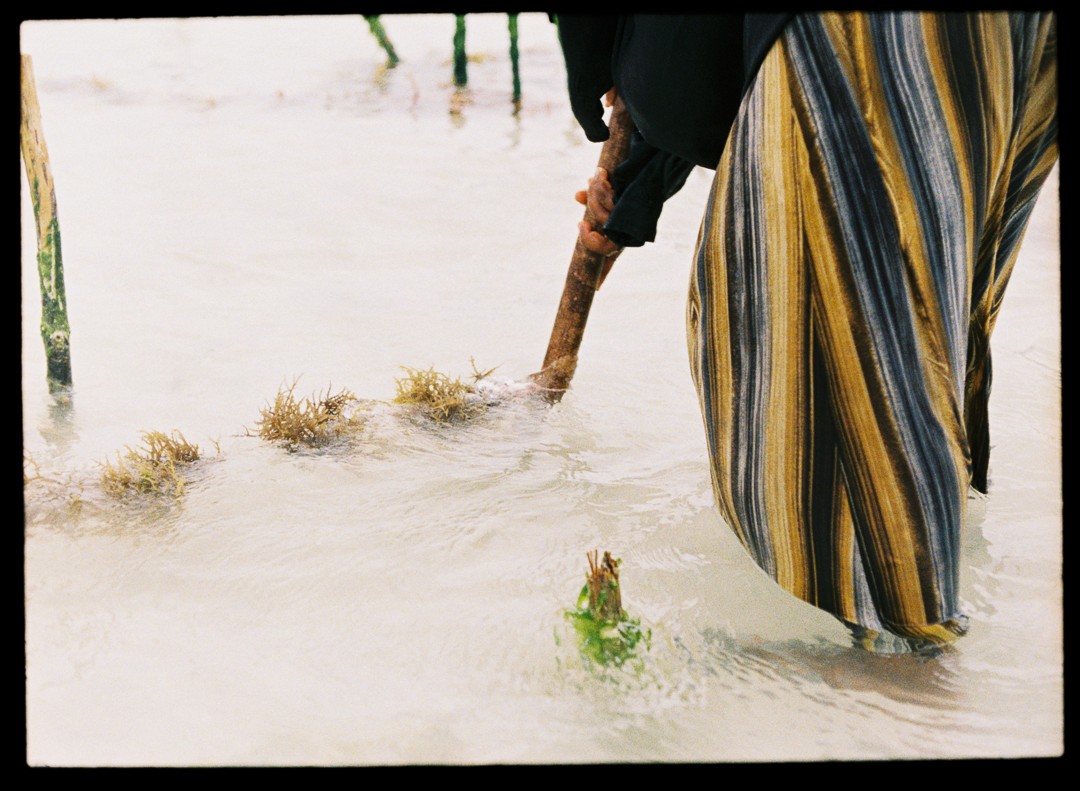
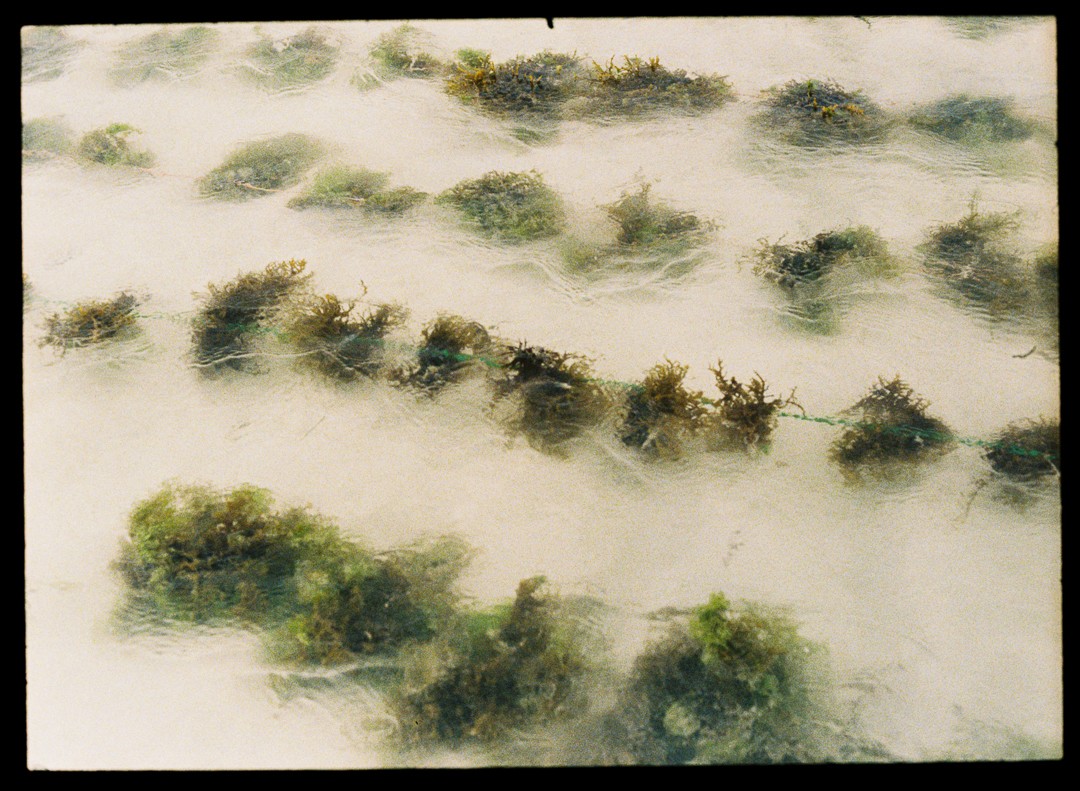
We arrive at their small facility in Paje. Communication is limited since we do not speak Swahili, but the women welcome us and show us happily around. As we approach the shore, I begin to notice thin sticks rising from the shallow water. That is where the seaweed grows.
The scene feels almost surreal. Tourists are learning to kite surf in the distance, bright kites across the sky, while rows of seaweed farms stretch across the sea beside them.
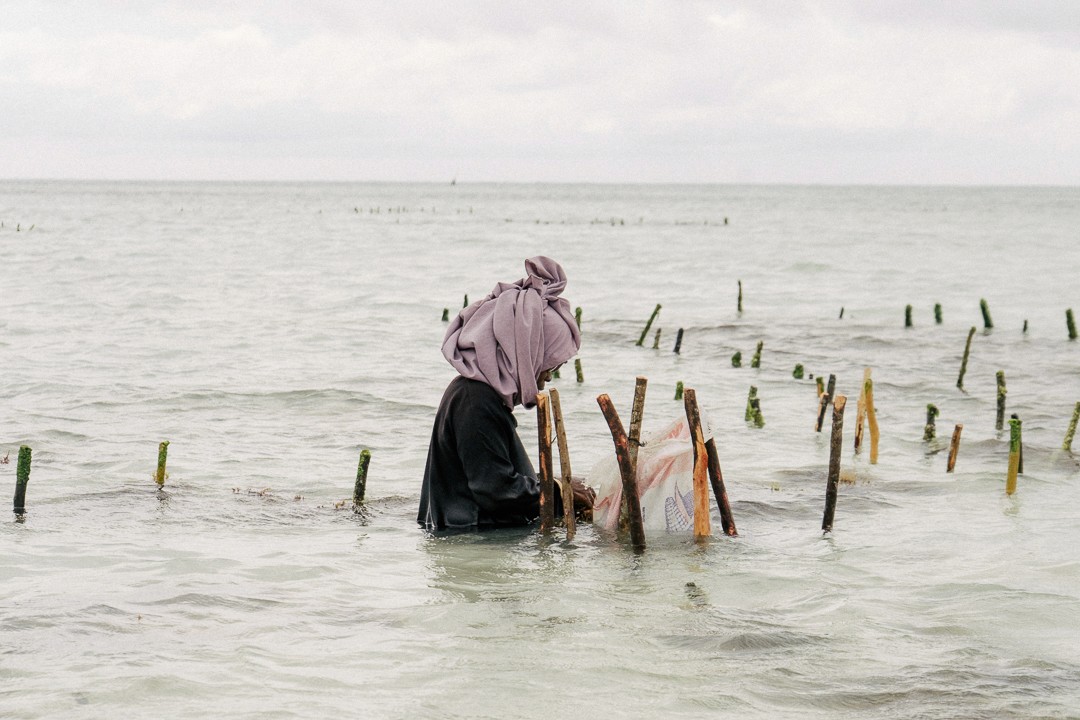
We walk out toward the farms, the tide shallow enough to walk for long with water at our kneews. Around us, women kneel or sit on the seafloor, water sometimes reaching their chests as they gather seaweed from the lines.
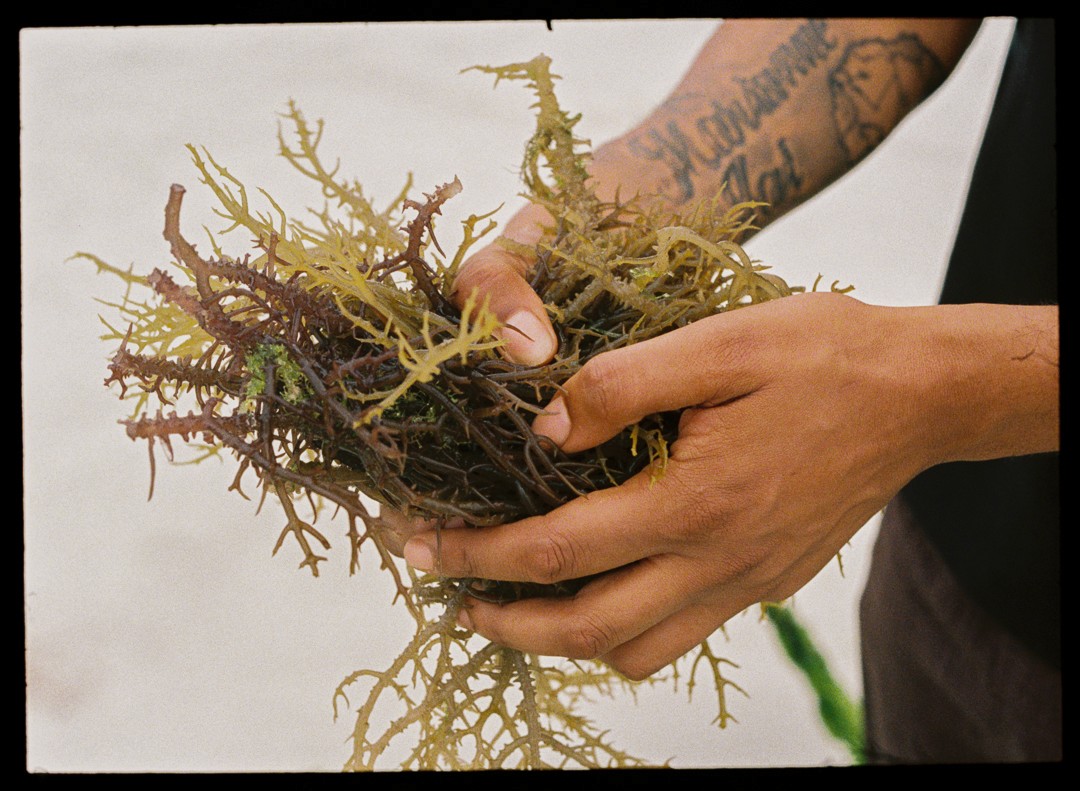
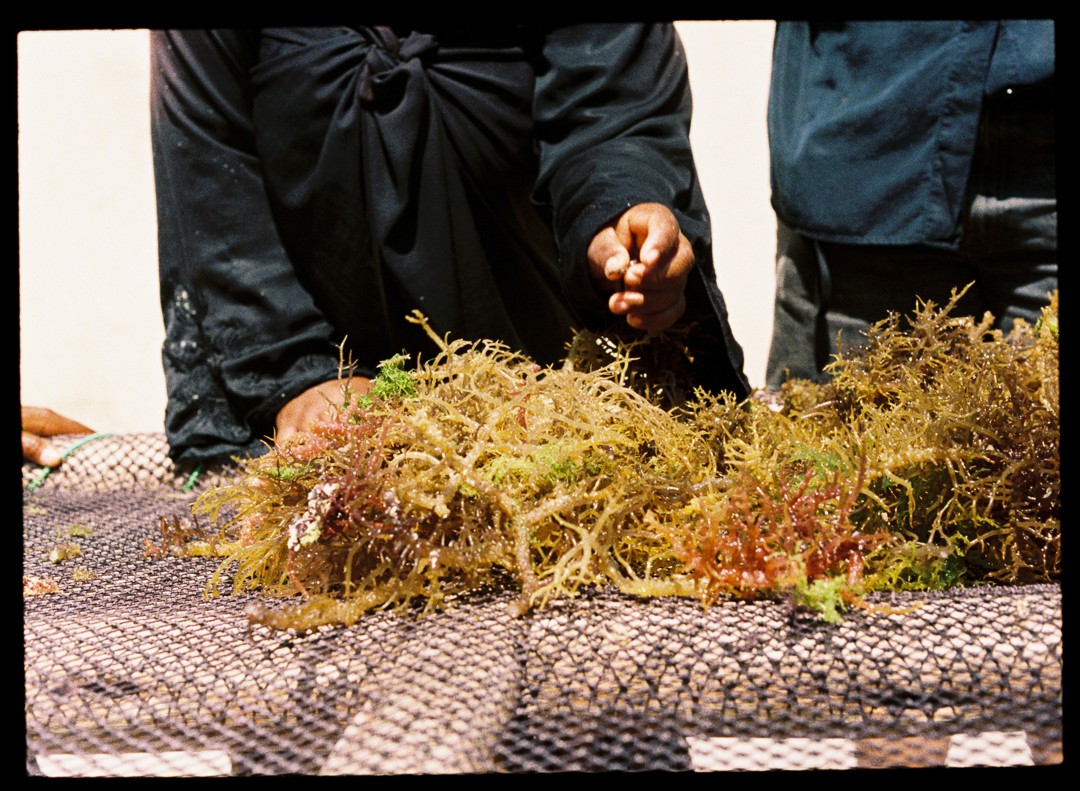
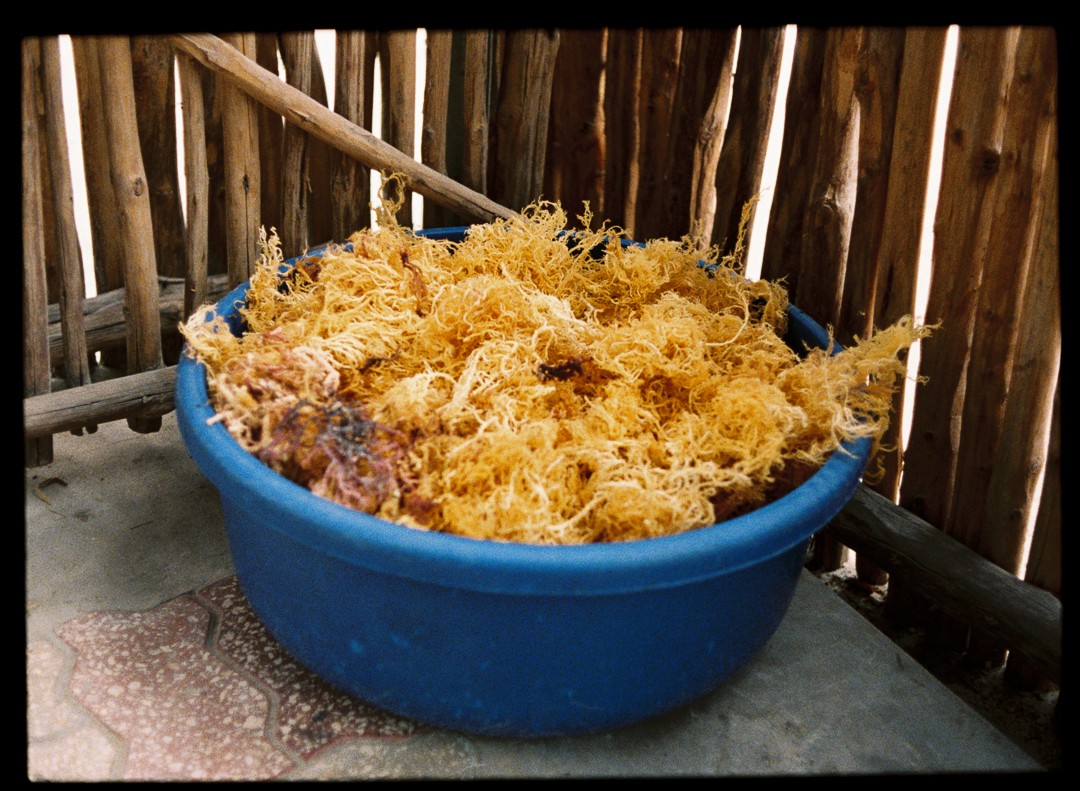
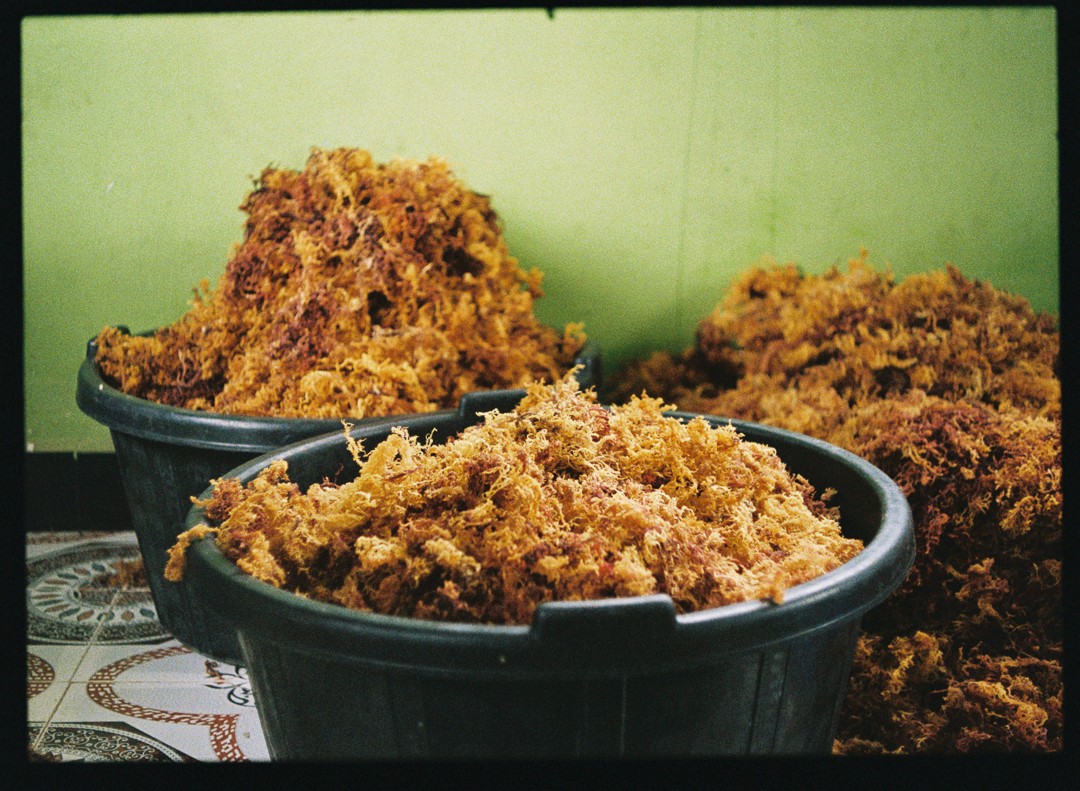
I am naturally drawn to the textures and colors of the algae, to the way it tangles between fingers. I grew up by the Mediterranean, where the sea has no tides. In Zanzibar, the rhythm is different. The tide withdraws dramatically, revealing a completely different world where farming replaces fishing and the ocean floor becomes a workspace.
For generations, seaweed farming has provided income and a degree of independence for women here. But the water is warming. Sea surface temperatures now frequently reach around 29°C, stressing traditional seaweed varieties and making them more vulnerable to disease. Harvests have become less predictable.
In some areas, farmers have tried moving their lines into deeper, cooler waters. But in many Tanzanian communities, women were never taught to swim. The sea that sustains them can also be unforgiving. Going deeper is not simply an adjustment. It is a risk.
Rather than asking women to follow the sea, Coastal Biotech is working to strengthen what grows within it. The Tanzanian start-up focuses on improving seaweed strains so they can better tolerate rising temperatures and environmental stress. The work remains in the shallows, within reach.
The company also develops biostimulants derived from marine algae, natural compounds that help crops cope with heat, drought, and nutrient stress on land. In this way, seaweed becomes more than a coastal crop. It becomes part of a broader climate adaptation strategy, linking marine livelihoods to agricultural resilience.
Through photography, I explore these women’s daily relationship with the sea, their labor under a relentless sun, their knowledge of tides, and their perseverance in the face of a climate crisis they did not create.
Without storytelling, work like this often remains invisible. This series seeks to document these intertidal spaces where vulnerability and innovation coexist. By focusing on the women who depend on the ocean, I hope to reveal both the fragility and the strength that define life along a changing coastline.